Recently in Worker's Compensation Category

May 9, 2011

OSHA Holds Forum to Discuss Combustible Dust and Ways to Prevent Work Injury in Boston and Elsewhere

Roughly 150 workers have been killed, and nearly 1,000 injured, in combustible dust explosions since 1980, according to the Occupational Safety and Health Administration (OSHA). In attempt to better understand combustible dust explosions and to find ways to prevent such incidents OSHA invited outside experts to participate in a Combustible Dust Expert Forum later this month. OSHA is looking to gather experts' views and perspectives on possible regulatory options for addressing the safety issues of combustible dust hazards.

The Combustible Dust Expert Forum will include discussions targeting regulatory options that can help to minimize the costs to small- and medium-sized businesses of reducing or preventing combustible dust hazards. Representatives from various industries, academia, research groups, insurance-underwriter organizations, labor, and government will comprise expert representation at the Forum.
1247058_chemical_plant_explosion.jpg
Our Boston workers' compensation attorneys understand the importance of identifying the cause of these problems in effort to determine safe solutions to help protect workers. All safety measures should be taken by employers and employees to help keep the workplace safe for all.

The National Emphasis Program in 2007 was one of OSHA's earlier efforts to address various combustible dust hazards. They conducted various targeted inspections that took a look at various workplaces that created or handled combustible dust. Results from these inspections illustrated that facilities had an alarmingly high number of general duty clause violations. These findings indicated a strong need for to create a combustible dust standard. This resulted in the publication of an Advance Notice of Proposed Rulemaking in 2009. With even more efforts, OSHA conducted six stakeholders meetings and a Web chat to discuss combustible dust in attempt to expand the opportunity for public and stakeholder participation.

Combustible materials, and sometimes even materials that are normally considered noncombustible, can burn rapidly when they're in a finely divided form. If these types of dusts are suspended in air in the right concentration, the result can be an explosion. The force from these explosions can lead to worker deaths, injuries, and even the destruction of entire buildings.

Combustible dusts can include:

-Various fine particles.

-Chips.

-Fibers.

-Chunks or flakes that can potentially cause implosion of fire when suspended in air.

These various forms of combustible dusts can be made of metal, plastic, wood, sugar, flour, coal, rubber or paper. OSHA's Safety and Health Topics page on combustible dust offers more details information about this dangerous hazard.

The Combustible Dust Expert Forum will be May 13, 2010 at the Department of Labor, 200 Constitution Ave., N.W., Washington, D.C. at 9 p.m.

Continue reading "OSHA Holds Forum to Discuss Combustible Dust and Ways to Prevent Work Injury in Boston and Elsewhere" »

May 7, 2011

OSHA Creates New Rule to Help Protect Shipyard Work Injuries in Boston and Elsewhere

A new and updated rule, created to protect the safety and health of shipyard workers, has recently been put into effect by the U.S. Department of Labor's Occupational Safety and Health Administration (OSHA). The rule has recently been published in the Federal Register and takes the place of an existing rule. It is now more compatible with the recent advances in shipyard industry practices and technology. It provides new protections from hazards that previously the rule did not address. It now includes details pertaining to the control of hazardous energy. The new rule is expected to prevent nearly 400 serious work inures in Boston and elsewhere in the United States.

"This final rule is the result of collaboration between OSHA and the maritime industry," said Assistant Secretary of Labor for OSHA Dr. David Michaels. "Shipyard work is dangerous, and we believe we have crafted a rule that protects workers while balancing employer concerns regarding implementation."
776305_ghost_shipyard.jpg
Our Boston personal workers' compensation attorneys know the dangers inherent in working in shipyards. It is the responsibility of the employer to make sure that working conditions meet all safety requirements and regulations in effort to help keep all employees safe on the job.

The final rule will address fourteen workplace safety and health categories. This will update and clarify provisions in current shipyard employment standards that had virtually gone untouched or changed since 1972, when OSHA adopted the initial rule. The new rules include the creating and enforce minimum lighting on certain work sites, assisting employees at the end of their work shifts and at the end of job tasks when working alone. The rule will also add new uniform criteria to be sure that shipyards have an adequate number of properly trained first-aid providers.

OSHA will also be adding new provisions to help control hazardous energy and to increase vehicle safety. Before the establishment of this final rule, the maritime industry had no specific standards that addressed the control of hazardous energy.

According to data from the Labor Department's Bureau of Labor Statistics' Census of Fatal Occupational Injuries, transportation accidents make up nearly 20 percent of all shipyard deaths. The new rule's provisions aim to significantly reduce these incidents as they will now require everyone use of seat belts while operating a motor vehicle in a shipyard.

A full copy of OSHA's new rule can be found on their web page designated to the updates. Employees and employers are encouraged to familiarize themselves with the new regulations and abide by them on shipyards.

Continue reading "OSHA Creates New Rule to Help Protect Shipyard Work Injuries in Boston and Elsewhere" »

May 4, 2011

Residents Encouraged to Participate in Picture It! Contest to Help Raise Awareness and Decrease Risks of Work Accidents in Boston and Elsewhere

A photography contest, conducted by the U.S. Department of Labor's Occupational Safety and Health Administration (OSHA), urges residents to capture a creative snapshot of workplace safety and health, according to a U.S. Department of Labor press release. The contest, titled "Picture It!", aims to strike up awareness of the importance of a safe working environment to help prevent a work accident in Boston and elsewhere in the United States.
1243035_old_slr.jpg
Our Boston workers' compensation lawyers would like too remind employees, and employers, that a safe working environment should be kept and maintained at all times. It is the responsibility of the employer to ensure that employees are safe and protected from danger and injury while on the job. Our lawyers continue to work tirelessly to recognize and fight for the rights of employees who may have been injured on the job.

OSHA is currently celebrating its 40th anniversary, which they will continue to celebrate throughout the entire year. Picture It! is kicking off the celebration and is open to those 18 and older. The contest will be accepting submissions through August 12.

Residents are encouraged to invite their friends and family to participate in the fun and creative event. You can download the contest flyer from the OSHA website to help share the details.

Photographers are asked to share their visions of workplace safety and health, and they may do so in any way they choose. Photos must be taken in the United States. Prizes will be awarded to the first, second and third place winners. Photographers are asked to use their artistic skills to successfully portray occupational safety and health in such a way that would help to raise interest in the general public.

Submissions will be judged by accomplished photography professionals. They will be judged on the quality of the photograph, their compatibility with OSHA publications, clarity of the conveyed message, creativity and originality. Photos must include workers, employers or workplace imagery.

Photographs submitted by the judged winners and finalists will be posted on the OSHA photo contest web site. First-place will receive a framed letter of congratulations from Secretary of Labor Hilda L. Solis. The three winning photos will be displayed in OSHA's national office in Washington. The organization hopes that the participation and display of these winning photos will serve as a daily reminder for leading policymakers and prominent professionals of the purpose and drive behind OSHA's mission.

OSHA contractors and special government employees are encouraged to participate as well. On-site consultation employees and federal OSHA, "state plan" state OSHA employees are not eligible. They will be asked to participate in a separate and internal contest that will be running during the same time as the public contest.

A complete list of contest rules and regulations and instructions on how to submit your photo can be found on OSHA's website.

Continue reading "Residents Encouraged to Participate in Picture It! Contest to Help Raise Awareness and Decrease Risks of Work Accidents in Boston and Elsewhere" »

April 29, 2011

Massachusetts workers' compensation insurance rates stay the same for another year

The Boston Globe is reporting that Massachusetts employers workers' compensation insurance rates will remain unchanged through at least next year, saving big business money even as industry continues to complain about the cost of protecting workers..
65905_hospital_corridor_1.jpg
Our Massachusetts workers compensation attorneys want you to know that big business should not be arguing that protecting and caring for injured workers is adding to their bottom line. Many employers will vigorously fight a claim to keep those costs down, which is why getting an experienced workers' compensation attorney is crucial after a Boston work accident.

Insurers were seeking a 6.6 percent increase. Massachusetts big businesses are thrilled with the rate freeze which will save them roughly $65 million a year.

"Our goal at the Division of Insurance is to make sure that these rates are fair, they protect workers, and that they do not overly burden employers,'' Insurance Commissioner Joseph Murphy said in a statement. "This agreement does all of those things.''

We certainly agree that saving big business $65 million will not "overly burden" them. Last year, big businesses weren't "overly burdened" when rates were cut by 2.4 percent.

According to the Occupational Safety and Health Administration (OSHA) 4,340 people were killed on-the-job in 2009. Approximately 3.6 per 100 workers have a reported serious workplace illness or injury. Workers' compensation insurance provides for these sick and injured workers.

The Bureau of Labor Statistics reported that 59 Massachusetts workers died due to on-the-job accidents in 2009. Of those, 20 were killed from traffic accidents, 12 died from coming into contact with a dropped object or being hit by equipment, 11 died due to a fall, 9 workers were killed by a violent act or assault while at work and 7 perished after an exposure to a harmful substance.

If you are considering filing a Workers' Compensation claim in Massachusetts, consult an experienced attorney who will fight for the benefits you deserve.

Continue reading "Massachusetts workers' compensation insurance rates stay the same for another year" »

April 25, 2011

Feds shed light on preventing rigging accidents in Massachusetts

Rigging dangers are every where at a shipyard. The Occupational Safety and Health Administration (OSHA) hopes their recently published document illustrates tips to preventing future rigging accidents.

Our Boston personal injury lawyers know that working in a shipyard is one of the most hazardous work environments. Ensuring a safe workplace should be the primary goal of your employer to prevent Massachusetts work injuries.
1343870_battleship.jpg
Rigging in a shipyard uses ropes and cables to secure huge ship parts or sections to lifting equipment in order to move them. Needless to say if the rigging isn't done properly the load could come crashing down, killing someone instantly. A SHIPS (Safety and Health Injury Prevention Sheet) was created for rigging and designed to show the do's and don'ts of rigging in order to reduce the number of death and injuries suffered on the job.

The SHIPS document begins with the common causes of serious or fatal shipyard hazards. Fall hazards are caused by unsafe work surfaces, unprotected openings and improperly used ladders. Struck-by and crushing hazards are caused by many situations including: an unsafe rigged load, being in the wrong position when the load is being moved, defective equipment, improperly used tag lines and the load operator placing the load above workers. Electrical hazards exist when equipment and tools are not grounded properly, electric cables become worn or frayed, electrical tools are defective and the hoisting or hauling equipment comes in contact with live electric lines.

The SHIPS document presents illustrations of different scenarios on how injuries occur and how to prevent them. In each scenario a real case history is reviewed and then analysis and preventive measures are discussed. The pictures make it clear even to a layperson what was done incorrectly and how it can be prevented in the future. SHIPS training documents are made to be user and reader friendly and come with mini-posters for quick referencing.

"Far too many workers in shipyard employment have suffered severe injuries or have died from preventable hazards," said Assistant Secretary of Labor for Occupational Safety and Health Dr. David Michaels. "Employers who follow the guidance provided in this injury prevention sheet will create a safer, more healthful work environment for their workers."

OSHA Maritime Industry Web page offers links to Maritime information including: standards and guidelines, compliance information, advisory committee viewpoints, outreach training program and safety and health topics.

Continue reading "Feds shed light on preventing rigging accidents in Massachusetts" »

April 9, 2011

Employers Urged to Use new OSHA Document, Describing Methods to Prevent Workplace Falls in Boston and Elsewhere

Mainly aimed at new construction, a document issued by the Occupational Safety and Health Administration (OSHA) aims to help employers prevent fall-related injuries and deaths on residential construction sites, according to a United States Department of Labor press release.

The precautionary document compliments the Compliance Guidance for Residential Construction directive from December 2010 by providing employers with methods they can use to help them comply with these new safety standard requirements.
714043_hard_hat_sign_3.jpg
Fatalities from falls are the number one cause of workplace deaths in construction, according to the Occupational Safety and Health Administration. The Administrations provides these safety measures as a way to effectively prevent these work related fatalities in Massachusetts and elsewhere in the United States.

Our Boston workers' compensation lawyers urge employers to read and follow this Fall Protection in Residential Construction document as it is intended to assist employers to comply with OSHA's safety measures. As the spring season is upon us, the number of construction projects across the city will increase.

While the new directive is aimed primarily at those working on new construction, all construction workers are encouraged to become familiar with the safety procedures. The document illustrates various safety methods that employers can use during different stages of their construction plan. The methods used to prevent fall-related injuries and deaths include guardrails, ladders, anchors for personal fall arrest systems and fall restraints, safety net systems and scaffolds.

Prior to the new directive, the previous standard allowed certain employers to use alternative methods of fall protection. With the issuance of the new directive in December 2010, all residential construction employers were now instructed to now comply with 29 Code of Federal Regulations 1926.501(b) (13). If residential builders conclude that traditional fall protection is not feasible within certain residential environments and is not the most effective strategy in providing safe environments to workers, than this code will also allow them to use alternative means of protection after providing a detailed document to OSHA explaining why the new methods may be ineffective on their site. OSHA has provided training and compliance assistance for employers. The agency also offers a webinar for those interested in learning more about the compliance.

The Occupational Safety and Health Act of 1970 was set to ensure that employers understand that they are responsible for providing safe and healthful workplaces for their employees. OSHA's role in this process is to assure these conditions for America's workers by setting and enforcing these safety standards, education workers and employers and providing proper training and assistance.

Continue reading "Employers Urged to Use new OSHA Document, Describing Methods to Prevent Workplace Falls in Boston and Elsewhere" »

April 5, 2011

Japanese Nuclear Disaster Highlights Risks of Radiation in Massachusetts workplace

Residents experience low levels of radiation on a daily basis. The levels of radiation released through the Fukushima Daiichi power plant, recently threatening the coasts of the U.S. in trace amounts, do not present a threat. We're not completely in the clear however, small traces of acid rain are expected in the Boston area.

You are more likely to be exposed to excessive levels of radiation inBoston work accidents-- particularly those residents who work in the medical or energy fields.
1027221_warning_icon_glossy_18.jpg
Boston workers' compensation attorneys understand that aside from the everyday exposure to residual radiation in the atmosphere and to medical applications, detrimental radiation exposure causes potential danger in local plants and nearby homes. We note the recent report from the watchdog group, Union of Concerned Scientists that listed 14 plants that had near misses last year.

Plants from outside of our state can also pose threats to our residents. Boston state health officials announced that the Japanese power plant explosion has caused a stream of radioactive rain on the Bay State. No need to be alarmed, the levels were declared too low to pose a threat to residents, according to the Boston Herald.

It is to be noted that the half-life of these radioactive materials is approximately 8 days. The matter is expected to dissolve and become virtually undetectable. Officials are continuously testing the state's water supply as a safety precaution.

"The drinking water supply in Massachusetts is unaffected by this short-term, slight elevation in radiation," said Public Health Commissioner John Auerbach. "However, we will carefully monitor the drinking water as we exercise an abundance of caution."

Not all radiation or chemical exposure is life threatening. Everyday, acceptable amounts of exposure can result from medical procedures such as CT scans and x-rays. It is the massive amount of exposure, as the Japanese plant workers are being exposed to or the Danvers Explosion of 2006, that poses life-threatening consequences. While these explosions are unpredictable and sometimes unavoidable, OSHA has established rules and regulations in attempt to avoid any similar disaster from occurring in Massachusetts.

Here are some tips to help you through a nuclear power plant emergency should you every run into one:

-Stay inside your home until instructed otherwise.

-Don't return home if you happen to be out during the incident. Wait until authorities have cleared the area.

-Listen for information from the power company and officials to stay informed. Ignorance can be a harmful burden in this scenario.

-Be sure to bring pets and livestock indoors.

-Do not use your phone.

-If you think you have been contaminated, take a thorough shower, put infected clothes in a plastic bag and seal it.

-Be sure to seek medical assistance if you experience any unusual symptoms that could possibly be related to radiation or chemical exposure.

The best way to limit radiation exposure is to stay informed, shield yourself from the radiation by staying indoors and be patient.

It is the responsibility of employers to provide a safe workplace for factory workers that may come in contact with these dangerous materials. It is also their responsibility to provide any necessary compensation should accident occur.

Continue reading "Japanese Nuclear Disaster Highlights Risks of Radiation in Massachusetts workplace" »

April 3, 2011

Officials Cite Massachusetts companies for work-safety violations

A.C. Castle Construction Co. Inc. of Danvers and C.I.L. Inc have been cited for various violations of workplace safety by the U.S. Department of Labor's Occupational Safety and Health Administration (OSHA). The United States Department of Labor reports the companies exposed employees to fall and electrocution hazards, as well as higher-than-average injury and illness rates. OHSA's Site-Specific Targeting Program directs inspections to workplaces with higher-than-average injury and illness rates and found these companies to be high-risk zones for a work accident in Boston and nearby areas.

Our Boston personal injury lawyers would like to stress the importance of a safe working environment. Ever since the Occupational Safety and Health Act of 1970, employers are help responsible for providing safe workplaces for all their employees. While these conditions are required by law, proper compensation and care is not always provided by the employer. That is why you're encouraged to consult an experienced attorney to help ensure your rights are protected in the event of a workplace injury.
993863_ladder.jpg
A serious workplace violation occurs when there is substantial probability that serious physical harm or death could result from a hazard. Both of the Massachusetts companies were cited for unsafe work conditions, OSHA handed out fines totaling nearly $100,000.

The A.C. Castle Construction Co. Inc. of Danvers just received 21 repeat and serious violations of workplace safety standards, according to the U.S. Department of Labor. The roofing contractor also is reported to have failed to provide safe work conditions for their on-site employees, allegedly exposing employees to fall and electrocution hazards at a residential work site. Employees were observed working without fall protection on the building's roof and on a ladder jack scaffold, exposing them to falls of nearly 19 feet, according to a recent OSHA press release. The company was also cited for additional fall hazards for employees using or working on damaged, misused, unsecured or inadequate ladders.

The company plant of C.I.L. Inc. was also cited and fined by OSHA for repeat and serous violations. C.I.L. Inc. provides metal finishing, anodizing and hard coat services. The company was cited for the use of unapproved electrical equipment in an area where flammable paints and solvents are mixed, excess air pressure for a cleaning hose, unlabeled electric circuits and inadequate ventilation in an area where flammable materials are stored, according to the Department of Labor.

"These citations address basic construction safety hazards that should not have existed in the first place. They should be of vital concern to all employers whose workers labor at heights and near power lines," said Jeffrey A. Erskine, OSHA's area director for Essex and Middlesex counties. "Employers should take the time to perform a spring tuneup, including reviewing their safety programs, equipment, employee training and applicable OSHA regulations to ensure that their workers are effectively protected against falls and other hazards."

Both employers can contest the findings before the independent Occupational Safety and Health Review Commission within 15 business days from the receipt of their citations.

Continue reading "Officials Cite Massachusetts companies for work-safety violations" »

April 1, 2011

Triangle Shirtwaist Factory Fire Hits Centennial Mark, Boston Work Safety Impacted by Historic Tragedy

The Triangle Factory fire -- that happened 100 years ago March 25 -- was remembered late last month at Boston College. The event took place at BC's Robsham Theater Arts Center in the Bonn Studio. The factory fire remained the worst industrial fire in New York City for 90 years, according to Boston College.

Our Boston workers' compensation attorneys would also like to honor the 146 workers killed in this fire -- which is commonly seen as the beginning of workplace safety efforts in the United States. This tragedy was an eye-opening experience that exposed the public to the dangerous conditions in these high-rise factories.
1300912_2010_live_burns_at_the_brayton_fire_fiels.jpg
Triangle Waist Company was, at the time, one of the largest blouse makers in New York City. The company specialized in making a very popular women's blouse, the shirtwaist. IN part through the exploitation of workers, Blanck and Harris became very wealthy, according to historical references.

After the devastating factory fire, the Triangle Factory tragedy suffered decades of repercussions. The incident was one of the first to shape safety and labor laws, first in New York and then nationwide. It also played a key role in organizing garment workers in the labor movement.

This year also marked the 100th anniversary of Massachusetts workers' compensation law as we've previous discussed on our Boston Personal Injury Blog.

Occupational Safety and Health Administration (OSHA) is also celebrating a birthday this year. The administration celebrated 40 years of providing safety regulations for workers. It is reported that in 1970, approximately 14,000 workers died on the job, but after the establishment of OSHA, those numbers fell to approximately 4,340 work place fatalities in 2009.

Continue reading "Triangle Shirtwaist Factory Fire Hits Centennial Mark, Boston Work Safety Impacted by Historic Tragedy " »

March 31, 2011

Electrical Worker Experiences Stuck in Concrete Pillar, Three Hour Boston Work Accident

Two Massachusetts firefighters were called to the scene of a Boston work accident to find an electrical worker trapped in a concrete pillar. The T work crew member was reportedly shutting off a rail for highway contractors when he stepped on a crumbling wooden plank and fell 35 feet into the hollow concrete beam, according to The Boston Herald.

Boston workers' compensation lawyers understand the potential dangers that come with these demanding occupations; It is the responsibility of the employer to properly provide proper safety equipment and adequate compensation should an employee be injured on the job.

In pain, but still conscious, the electrical worker used his radio to contact the Operations Control Center at roughly 4 a.m. after making the 35-foot plunge. Once rescue workers arrived, it took them nearly three hours to harness up and pull out the worker through the shaft, which at times was as small as 2 feet by 2 feet.

The Occupational Safety and Health Administration estimated that more than 4,000 workers died on the job in 2009.

"Absolutely (this was an error). They should be covered in steel or some other substance that can hold the weight of at least a person. Obviously, this wood did not," said General manager Richard A. Davey. "I have ordered a complete review of the entire right of way to ensure that there are no others out there."

It is important for your employer to properly maintain the working conditions on the job site and in the office building in effort to reduce the risk of injury in the workplace. If injury still results, it is the responsibility of the employer to provide for medical care, lost wages and other compensation.

Continue reading "Electrical Worker Experiences Stuck in Concrete Pillar, Three Hour Boston Work Accident" »

March 27, 2011

Four Workers Injured in Middleton Chemical Plant Explosion

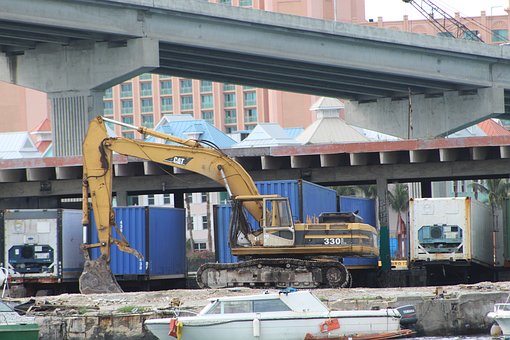
Federal inspectors are now looking over the current safety procedures at the Bostik Chemical Plant in Middleton after a recent explosion and a four-alarm fire injured four workers. The cause of the explosion still remains unknown. Those four injured workers were sent to the hospital. Workers' compensation in Massachusetts is designed to cover their medical bills and lost wages while they recover.

Massachusetts workers' compensation attorneys would like to stress the process is not stress free -- and many workers find it to their benefit to consult an experienced attorney to help ensure their rights are protected throughout the process. It is an employer's duty to provide a safe work environment. In a previous entry on our Boston Personal Injury Attorney Blog we noted that 2011 marked the centennial mark for the Massachusetts workers' compensation law.
1300912_2010_live_burns_at_the_brayton_fire_fiels.jpg
According to NBC 7, a decontamination tent was set up at the hospital for the injured workers because of the concern about hazardous chemicals. Several teams, including hazardous-materials and environmental protection teams, were called to the scene of the explosion to monitor air and water quality to avoid runoff into neighboring residential areas, where many rely on wells.

Authorities are now moving into the next phase of the investigation where third-party experts will be brought in to conduct chemical testing at the plant, reports Boston.com.

"OSHA (Occupational Safety and Health Administration) remains committed to protecting workers from toxic chemicals and deadly safety hazards at work; ensuring that vulnerable workers in high-risk jobs have access to critical information and education about job hazards; and providing employers with vigorous compliance assistance to promote best practices that can save lives," said In a message from Assistant Secretary Dr. David Michaels about the future of OSHA.

OSHA, established in 1971, has been dedicated to making the workplace safer. In 1970, nearly 14,000 were killed on the job -- in 2009, approximately 4,000.

Continue reading "Four Workers Injured in Middleton Chemical Plant Explosion" »

March 23, 2011

Crane and derrick accidents a common cause of construction injuries in Massachusetts

Our Boston workers' compensation lawyers often report about the dangers of working at a construction site. Operators of cranes and derricks are at increased risk of being injured or electrocuted on construction sites, where job accidents can lead to life-altering work injuries in Massachusetts.

As a follow up to a rule change last year, the Occupational Safety & Health Administration recently came out with a Small Entity Compliance Guide for Cranes and Derricks, which is meant to help small businesses comply with the new standards set last August for the use and operation of cranes and derricks.
812383_caution_1.jpg
The final rule is meant to help employers at construction sites achieve a safer work environment.

There are approximately 200 fatalities or injuries each year as a result of cranes and derricks work accidents in the construction industry. The original standard set back in 1971, needed updated to help reduce the number of injuries and fatalities occurring each year at constructions sites.

A few of the notable changes proposed by the Final Rule which are addressed in the compliance guide are:

-By 2014, crane operators will need to be certified or officially qualified.

-The newly designed certification requirements are meant to work in combination with local and state laws.

-Employers will be responsible for paying for all training required by the final rule, as well as, certification of equipment operators who work for them.

-Employers are required to use a qualified rigger for assembly/disassembly during rigging operations.

With certified operators and other noted changes the number of injuries should diminish each year, which is the ultimate goal of the U.S. Department of Labor.

"Over the past four decades, we've continued to see a significant number of worker injuries and deaths from electrocution, crushed-by and struck-by hazards while performing cranes and derricks operations," said Assistant Secretary of Labor for Occupational Safety and Health Dr. David Michaels. "This guide will help employers understand what they must do to protect their workers from these dangerous, sometimes fatal incidents."

Continue reading "Crane and derrick accidents a common cause of construction injuries in Massachusetts" »

March 21, 2011

Explosive dust may lead to catastrophic work accidents in Massachusetts

Most workers don't realize what kind of risk they are in at their workplace when it comes to combustible dust explosions because so often such dangers go undetected. Our Massachusetts workers' compensation attorneys want to remind employers and employees what a dangerous hazard combustible dust is if it ignites and causes an explosion on the job.

Many industries are affected by combustible dust; explosions may result in serious or fatal work injuries in Boston and elsewhere in the state.
1300912_2010_live_burns_at_the_brayton_fire_fiels.jpg
According to the United States Department of Labor Occupational Safety & Health Administration, if dust is suspended in air at just the right absorption, it can become explosive in nature. When finely divided in form, combustible materials can burn quickly. Most explosions are extremely dangerous because of the force they bring, causing injury or even fatality to employers or employees on the job.

If the building crumbles in an explosion it can cause entrapment, which can lead to lasting effects if the victim becomes burned or inhales too much smoke from the fire.
There are a number of industries at risk of combustible dust hazards. Some industries at risk include: metal processing (zinc, magnesium, iron and aluminum), recycling operations, rubber, furniture, agriculture, chemicals, food (candy, sugar, spice and flour), pharmaceuticals, tire and rubber manufacturers, tobacco, plastics, and wood.

Employers have a responsibility to be proactive in detecting combustible dust before it becomes explosive. OSHA recommends a thorough hazard assessment of all spaces, potential ignition sources, materials handled, and operations taking place.

In order to control dust and ignition, OSHA recommends the following:

-A program should be implemented that inspects, tests, and controls hazardous dust.

-Appropriate systems and filters should be used at all times.

-Keep dust from escaping equipment and ventilation systems.

-Surfaces that have minimal dust accumulation should be used and maintained.

-Periodic inspections for dust residues in open and hidden areas should be performed.

- Approved dust collection vacuums should be used at all times.

-Minimize static electricity, mechanical sparks and friction, smoking, open flames, and sparks as much as possible from the workplace.

-If foreign materials that have the ability to ignite combustibles are detected, use a separator device to keep them from firing.

-Dust should be separated from heating systems and heated surfaces.

-A program should be followed for equipment preventive maintenance.

Industries need to be proactive in reducing the risk of a combustible dust explosion. Taking preventative measures can keep workers safe and free from preventable risk in the workplace.

Continue reading "Explosive dust may lead to catastrophic work accidents in Massachusetts" »

March 14, 2011

40 years of federal workplace safety oversight; 100 years of Massachusetts workers' compensation

In a previous blog posted on our Boston Personal Injury Attorney Blog we reported that 2011 marks the centennial celebration of Massachusetts workers' compensation law. OSHA will also be celebrating their 40 years of making the workplace safe.
Our Massachusetts workers' compensation lawyers acknowledge the nation's progress in workplace safety/ But we also recognize workers continue to be injured or killed and employers need to be held accountable.
950101_bronze_casting.jpg
Established in 1971, the Occupational Safety and Health Administration (OSHA) is celebrating 40 years of making the workplace a safer place to be. In 1970, an estimated 14,000 workers died on the job. By 2009, approximately 4,340 were killed in the workplace.

Of course more people are working now then in 1970; an estimated 130 million employees are working at over 7.2 million job sites. Serious workplace illnesses and injuries have dropped from 11 per 100 workers in 1972 to 3.6 per 100 workers in 2009 since the passage of the OSH Act.

Some OSHA highlights over the last 40 years:

-In the 1970's safety standards were established for Asbestos, Construction Safety, 14 Carcinogens, Diving, Lead and Protecting Textile Workers.

-In the 1980's safety standards for Hearing Conservation, Ground Fault Circuit Interrupter, Protecting Grain Workers, Benzene, Farm workers, Protecting Meatpacking Workers, Testing Laboratories Regulations, Excavation & Trenching and OSHA Coverage for Federal Workers were established.

-In the 1990's safety standards for Laboratory Safety, Blood borne Pathogens, Confined Spaces, Stronger Asbestos Standard, Fatal Falls in Construction, Logging and Fatal Falls in Construction.

From 2000 to today safety standards were implemented for Protecting Healthcare Workers, Steel Erection, Fire Protection for Shipyard Employment, Payment for Safety Equipment, Falls in General Industry and Crane and Derrick.

In a message from Assistant Secretary Dr. David Michaels about the future of OSHA, "OSHA remains committed to protecting workers from toxic chemicals and deadly safety hazards at work; ensuring that vulnerable workers in high-risk jobs have access to critical information and education about job hazards; and providing employers with vigorous compliance assistance to promote best practices that can save lives."

Continue reading "40 years of federal workplace safety oversight; 100 years of Massachusetts workers' compensation" »

March 12, 2011

Economic recovery increases risk of Massachusetts work accidents

The Bureau of Labor Statistics reported the unemployment rate for January 2011 had dropped 0.4% to 9.0%. The last time it was that low was April 2009 when it was 8.9%.

Our Boston workers' compensation attorneys are glad to see the economy recovering. If you are a new hire make sure you receive proper safety training to avoid a Massachusetts work accident.
269548_emergency.jpg
As reported by the Workers' Comp Gazette it appears that some members of Congress blame OSHA for jobs lost because they are punishing employers rather than promoting prevention.

Common sense rules to protect employees have been in place for over 40 years but 12 workers die every day from injuries sustained at work. Another 3 million are injured. Safety regulations must be maintained and for some companies getting hit in the bottom-line is the only way they will get the message. Employees have the right to feel safe in the workplace. In fact, they have a right to BE safe in the workplace.

Assistant secretary of labor for the U.S. Department of Labor's Occupational Safety and Health Administration (OSHA), Dr. David Michaels, released the following statement as the Subcommittee on Workforce Protections of the House Committee on Education and the Workforce holds a hearing on 'Investigating OSHA's Regulatory Agenda and Its Impact on Job Creation.'

"I think we can all agree that the American economy must succeed but never at the cost of the safety or health of American workers. OSHA's goal is to ensure that everyone who goes to work returns home safely. I think we can also agree that the size of a business should not determine the level of protection that a worker receives. All workers have the same right to a safe workplace."

"Despite concerns about the effect of regulation on American business, there is clear evidence that OSHA's commonsense regulations have made working conditions in this country today far safer than 40 years ago when the agency was created, while at the same time protecting American jobs. The truth is that OSHA standards don't kill jobs. They stop jobs from killing workers. OSHA standards don't just prevent worker injuries and illnesses. They also drive technological innovation, making industries more competitive."

"The failure to issue sensible regulations endangers not only workers' health and safety but also hurts American competitiveness. For example, because OSHA has a weak noise standard and weak enforcement, U.S. employers have no incentive to buy modern, quieter machines, which means that U.S. manufacturers don't build them, and there are few jobs in the U.S. for engineers who could design them. A recent study by the National Academy of Engineering concludes that European manufacturers are way ahead of us in designing and building modern, quieter machinery. Today, when businesses anywhere in the world want to buy quieter equipment, they look not to the United States but to Europe."

"As we approach OSHA's 40th anniversary, the agency's success has been well documented. An estimated 14,000 workers were killed on the job the year that Congress created OSHA. That number had fallen to approximately 4,340 in 2009. At the same time, U.S. employment has almost doubled and now includes more than 130 million workers at more than 7.2 million worksites. Since the passage of the Occupational Safety and Health Act, the rate of reported serious workplace injuries and illnesses has declined from 11 per 100 workers in 1972 to 3.9 per 100 workers in 2008."

Continue reading "Economic recovery increases risk of Massachusetts work accidents" »