August 16, 2012

Many Drunk Drivers Double Legal Limit in Fatal Accidents, Not Truckers

Drinking and driving is a big problem along our state's roads.

Some drivers are more likely to do it than others. According to a recent study from the National Highway Traffic Safety Administration (NHTSA), trucks drivers were the group who were least likely to be involved in a fatal alcohol-related accident. In 2010, less than 5 percent of fatal accidents involving truckers involved an impaired driver. They only accounted for 2 percent of American drivers who were involved in a fatal accident with a blood alcohol concentration (BAC) of .08 or higher, according to FleetOwner.
mi5ErRm.jpg
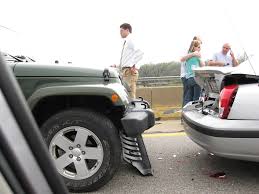
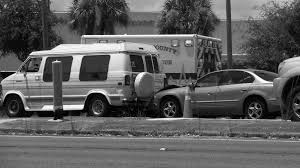
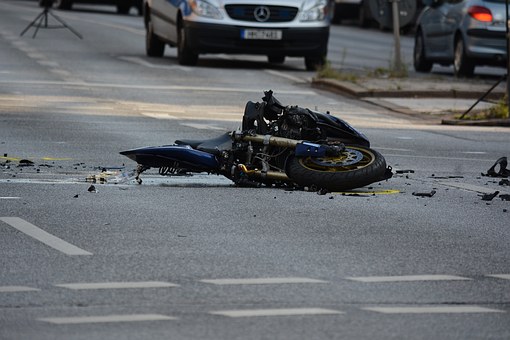
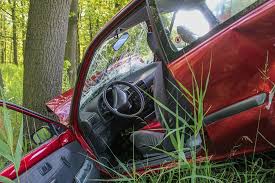
Alarmingly, the new statistics from the NHTSA show that about 70 percent of drunk driving accidents from 2010 involved a driver who had a BAC nearly twice the legal limit of .08.

Our Boston drunk driving accident lawyers understand that there were more than 10,000 people killed in alcohol-related car accidents in 2010. These accidents accounted for about a third of all traffic fatalities in the country, meaning someone was killed every 51 minutes. During this same time, about 70 percent of these accidents involved a driver who returned a BAC reading twice that of the .08 legal limit. As a matter of fact, the most frequently recorded BAC among drunk drivers involved in fatal crashes was .18.

Regardless of how drunk a driver is when involved in a fatal car accident, the truth of the matter is that they're breaking the law. Drivers should never get behind the wheel after consuming alcohol, of any amount but especially when they're drunk. These kinds of accidents are completely preventable.

To help to get drivers to be more responsible and to avoid these kinds of accidents, officials with the NHTSA are teaming up with law enforcement agencies across the nation, with Mothers Against Drunk Driving (MADD), with the National Center for DWI Courts and with Governors Highway Safety Association (GHSA) for the nationwide anti-drunk driving campaign "Drive Sober or Get Pulled Over." The campaign kicked off on the 17th of August.

There are more than 10,000 law enforcement departments across the nation that are supporting this year's campaign. It will be going strong through the Labor Day holiday weekend.

"Drunk driving remains a serious, unacceptable threat to our families and our communities. Our campaign is clear -- if you choose to drive drunk, you will be held accountable," said USDOT Secretary Ray LaHood.

As we close up the summer season, we know that residents and visitors will be heading out for one last celebration. This is how most people view Labor Day weekend. We're asking drivers to stay sober during this time. The Labor Day holiday weekend is one of the deadliest on our roadways and this is a direct result of drunk driving car accidents. Remember to always have a sober way to get home. You can use a taxi, a bus, the subway a train, a friend, a family member or even a trolley. Remember these options to help you to stay safe and out of a potentially fatal car accident.

Continue reading "Many Drunk Drivers Double Legal Limit in Fatal Accidents, Not Truckers" »

August 12, 2012

MBTA Safety Watch: Ridership Increases for 17th Consecutive Month

More and more people are using the Massachusetts Bay Transportation Authority's (MBTA) services to get to where they've got to be. According to a recent release, there were more than 400 million individual riders on the MBTA during the last fiscal year.

This was the first time ridership has ever reached that milestone. On average, officials say that nearly 1.5 million people took the bus, trolley or train each weekday. This was the first time in history that the daily ridership averaged more than 1.3 million, according to The Boston Channel. The biggest jump in ridership was experienced by the buses, with a near 6 percent grown in the number of weekday riders.
1144348_business__5.jpg
Overall, the average number of weekday ridership increased by more than 5.5 percent. These were the numbers of the last fiscal year, which just ended on the 30th of June.

Our Boston MBTA accident lawyers understand that the month of June serves as the 17th month in a row in which ridership with the MBTA has increased. Jonathan Davis, General Manager with the MBTA, says that the increase can be credited to a number of factors, including more reliability by riders in the services, better and more efficient real-time schedule information and the improving economy. Whatever the reason may be though, it's important to know how to keep yourself safe when sharing the same rides as millions of other people.

With more riders and more trips being taken, accident risks with the MBTA are rising. While transportation officials are working to eliminate these risks, there's no getting around it. The MBTA prides itself on working every day to help to ensure the security and the safety of both riders and employees. According to officials with the MBTA, Safety Department officials are always in the field inspecting subways, buses, boats, commuter tails and stations to help to ensure the safest possible environment for everyone.

Personnel with the T are supposed to be trained in how to handle various emergency response situations. They follow their own Safety Program, which has been coordinated with federal, state and local law enforcement agencies in addition to the MBTA Police. Through this program, transportation officials undergo a number of simulated emergency response exercises that are used to help personnel to be ready with state-of-the-art emergency response techniques.

When you're traveling with the MBTA, there are some safety tips that you should remember to help yourself from becoming a victim of a crime or another type of accident.

Personal Safety with the MBTA:

-Always keep an eye on your surroundings. Know where you are and who's around you at all times.

-Try to avoid listening to headphones.

-Don't talk to strangers, especially when you're in an isolated area.

-Hold your purse of briefcase close to your body.

-Keep your wallet in your front pocket, not your back.

-If you're attacked by someone, blow a whistle or scream to draw attention to your situation.

Continue reading "MBTA Safety Watch: Ridership Increases for 17th Consecutive Month" »

August 8, 2012

Rising Temps and Risks for Heat Injuries in Boston

It's hot out there and we're seeing temperatures well over 90 degrees. To help to keep everyone cool, Mayor Thomas M. Menino recently announced that he would be keeping the city's 16 public indoor pools open even longer. According to the City of Boston, the pools will now stay open until 9:30 p.m. Boston's two outdoor pools with still be closing at dusk for safety reasons. Residents are also welcomed to cool off at several water spray features throughout the city that are operated by Boston Parks Department -- or in air conditioned community centers.
mlKxfEO.jpg
"Keeping pools open later this evening will help our residents find a few more hours of relief on this dangerously hot day," said Menino.

Boston personal injury attorneys understand that there are a plethora of safety concerns and dangers that accompany this heat we're experiencing. According to the Mayor and Boston's Elderly Commission, seniors are to take extra safety precautions in this heat. Young kids and our elderly residents are particularly at risk for a heat-related injury or illness during this time. Still, residents of all ages are urged to keep an eye on how long they hang out outside. You should drink plenty of water and stay away from alcohol of caffeinated beverages.

"A lot of the calls are coming in as minor illnesses because a lot of folks don't realize that they're dehydrated," said Captain Jose Achilla with Boston EMS.

Help to Beat the Heat:

-Limit strenuous activity when working outside.

-Wear sunscreen.

-Wear loose clothing.

-Wear light-colored clothing.

-Take frequent breaks and rest in the shade.

-Consider taking cool showers of baths whenever possible.

-Stay in air conditioned areas whenever you can.

-Familiarize yourself with the symptoms of heat-related injuries and illnesses.

"No doubt, summer temperatures are here," said Mayor Menino.

Typically, close to 200 people die every year because of heat stroke. If there's a major heat wave, the number of deaths can increase to over 1,500 people. Many times, victims of heat injuries don't even recognize the symptoms until it's too late. You might be experiencing a heat injury, illness or heat stroke if you have a throbbing headache, if you get dizzy, light-headed, have red, hot and dry skin, if you get nauseous or weak, experience cramps, seizures, behavior changes, lack of sweating or even notice an increase in your heartbeat. If you notice any of these symptoms you're to remove yourself from the heat, cool off immediately and drink water or Gatorade. If you don't feel better immediately, call authorities.

Residents are asked to be cautious of the weather, cautious of their internal temps and cognizant of the welfare of loved ones and neighbors. We can all work together to get through this heat wave safely, it just takes a group effort. It's important to especially keep an eye on your elderly loved ones and the young ones in your life as they're the most vulnerable in these kinds of situations.

Continue reading "Rising Temps and Risks for Heat Injuries in Boston" »

August 6, 2012

Child Injured after Fall From Second-Story Window in Lawrence

A toddler from Haverhill is extremely lucky to have escaped almost certain death after a fall from a second-floor window in Lawrence.

According to local officers, the 20-month-old child was taken to the Lawrence Memorial Hospital after the fall and was treated and later released. The accident happened before 10:00 a.m., according to The Republic.
mluvmf4.jpg
Police reports indicate that the boy pulled himself up onto a bench that was near an open window. He pushed through the screen on the window and fell to the pavement below. The boy escaped with only scrapes on his back and elbow.

Our Boston child injury lawyers understand that there were nearly 100,000 children treated for injuries sustained from falling from windows between 1990 and 2008. That means about 5,000 kids end up at the hospital every year because of these accidents. You might not think that it's a big deal and that it won't happen to you or your child, but the truth of the matter is that falls are a leading cause of traumatic brain injury and toddler death.

As you could believe, children are more likely to fall from windows when the weather's a little warmer, like it is during this time of the year. Boys are more likely than girls to fall from windows, too.

According to a recent study from Pediatrics, children under the age of 4 are most likely to suffer from head injuries and to be hospitalized from head injuries. It doesn't have to be a long fall either. Children who fall out of first-floor windows can end up in the hospital with some serious injuries. Make sure that your house has the proper safety precautions to make sure that children can't access windows. Talk with their babysitters and other childcare providers to make sure that they're taking the same safety precautions. You can never be too careful. This can help to drastically cut down on the risks for these kinds of accidents.

Homeowners, daycare centers, churches, hotels and landlords should consider placing cushioning of some sorts beneath windows, instead of concrete, asphalt or even plain dirt or grass. It's also wide to block windows so small children cannot access them.

Other Safety Tips to Prevent Child Falls:

-Keep windows and doors locked whenever children are present.

-Never place any kind of furniture near a window. Children will climb.

-Always open windows from the top and not the bottom.

-Install child safety window guards.

-Always supervise children.

These kinds of falls are such a serious problem that the Boston Public Health Commission has launched the "Kids Can't Fly" campaign. Falls are the leading cause of death for kids under the age of 6. It only takes a second for one of these accidents to happen, too. Be ready and take all of the necessary safety precautions to stop it beforehand. By combining education and engineering, we can help to protect children from dangerous falls.

Continue reading "Child Injured after Fall From Second-Story Window in Lawrence" »

August 4, 2012

Sky Express Cited for Neglecting Safety Standards in Fatal Accident

Remember that busing accident that happened last year in Caroline County on Interstate 95? It was the accident that killed 4 bus passengers and injured another 50. Well, officials think that they've finally determined the cause -- a drowsy bus driver.

It happened when the Sky Express was heading to New York City when it went off the road just before 5:00 a.m., according to the Richmond Times-Patch.
375_arrow_at_a_bus_door.jpg
Federal officials conducted an investigation into the accident and say the company was at fault. The driver was only allowed 6 and a half hours to sleep before he was sent out on that trip, a trip that was scheduled for the time of day in which drowsy driving is most common. Drivers are to be scheduled with enough time to get rest between shifts. There are also hours of operation rules that prohibit a driver from spending too much time behind the wheel. Drivers need sleep and the safety of everyone involved relies on it.

Our Boston bus accident attorneys understand that commercial busing companies must allow their drivers enough rest before each trip. Allowing employees with this time is in fact a federal requirement that is used to help to reduce the risks of these kinds of accidents . The company reprimanded for not allowing the driver adequate rest time. Federal regulators were also reprimanded for allowing this company to continue to do business after it had received a number of safety violations prior to the accident.

"On the morning of May 31, it wasn't just the bus driver asleep at the wheel," said Deborah A.P. Hersman, NTSB Chairwoman. The company is also in big trouble for not complying with federal safety procedures.

The bus driver is now facing four counts of involuntary manslaughter. He will be in court on these charges later this year. The company had received more than 200 violations through nearly 95 roadside inspections in 2010.

The federal investigation determined that the company was at-fault for not meeting vehicle safety standards. Passengers were unrestrained, were thrown from their seats and were crushed underneath the vehicle's collapsed roof.

Two of the bus' passengers died from asphyxiation when they were crushed between the roof and seats. The other two died from blunt-force trauma. They were thrown through the windows on the bus and were stuck between the vehicle and the pavement.

A federal law, which went into effect last month, is working to tighten the safest standards for these kinds of buses. Officials are looking to enact even more, like ones to require seat belt usage and stronger roofs.

What's most alarming to safety advocates is that this accident, and many others just like it, are completely preventable. Still, we continue to lose lives. In this accident, three stages of safety failed: the driver, the operator and the regulator.

Continue reading "Sky Express Cited for Neglecting Safety Standards in Fatal Accident" »

August 2, 2012

New England Boating Accident: Father and 2 Children Rescued

Boating accidents in Boston and elsewhere are likely, especially during this time of the year!

According to New England officials, a 41-year-old father and his two children, 5- and 3-years-old, were in a pretty serious accident in a New Hampshire lake. The Boston Globe reports that the father throttled up the motor and shifted his weight. The boat listed heavily and ejected him.
866863_seattle_boating.jpg
The father was injured by the boat's propeller is it circled the area. During the incident, he say that his son's life jacket was caught on a part of the boat. He lifted the outboard motor to free him. He was also able to get his daughter off of the boat before it sank. A pontoon boat that was passing by was able to swoop in for the rescue. According to officials, the outboard motor was never intended for a craft of that size.

Our Massachusetts boating accident attorneys understand that boating is getting more and more dangerous. Nationwide, the number of boating fatalities remains high. Accident and injury stats are up there, too. In 2006, about 70 percent of the more than 700 boaters who were killed in accidents were on vessels captained by those with no formal boating training. Many of these accidents were caused by excessive speed, recklessness and operator inattention. The most common cause of boating accidents is alcohol. Alcohol-impaired drivers account for about 20 percent of those involved in fatal boating accidents.

These are all extremely common happenings in the New England area, too. Accidents have been all too common in the recent months, since we've had such warm weather. Residents and visitors are flocking to the water and enjoying the summer season to the fullest.

In 2008, there were nearly 15 people who were killed in boating accidents in the state of Massachusetts. That's up from the 9 fatalities recorded in 2007. None of these accident victims were wearing a life jacket.

"Probably half the boaters don't have a clue what they're doing," said Tommy Gardner of Weymouth, captain of a 46-foot SeaRay. "It's every time you go out. You just have to fend for yourself."

Our state has close to 1,500 miles of coastline, hundreds of lakes and ponds, four major river systems and the Quabbin Reservoir. If recreational boating is your thing, Massachusetts is the place to be. But be careful, there are about 100 officials with the Massachusetts Environmental Police (MSP) that are patrolling our waterways from the Berkshires to Cape Cod.

"There is never enough," said Captain George Agganis with the MSP. "Our numbers really need to increase on coastal areas."

To help to keep boaters safe, officials with the MSP recommend that all boaters under the age of 12 to wear a personal flotation device. Just like driving a car, you've got to keep safety as a top priority when in a boat.

Continue reading "New England Boating Accident: Father and 2 Children Rescued" »

July 29, 2012

Risks for Boston Car Accidents Increasing Significantly, According to Recent Stats

You may have heard some of the talk. The risks for car accidents in the U.S. are diminishing. WRONG!

Well, they were until we set foot in 2012. According to CNN, the number of people killed in car accidents in up close to 15 percent. Officials recently calculated the year's first quarter numbers and it's not looking good. During the first quarter of 2012, there were close to 8,000 people who died in motor vehicle accidents. In the first quarter of 2011, we saw about 1,000 fewer roadway fatalities.
250307_wrecked_beemer.jpg
Our Boston car accident lawyers understand that officials haven't pinpointed the cause, but they've got some suspicions. One of the most likely, officials say, is the weather. Since we had a warmer winter season than normal, drivers were more likely to be on the roads. Warmer weather brought ideal driving conditions, drivers ventured out, increased the number of vehicle miles traveled and increased the risks for accidents. The more time drivers spend behind the wheel, the more accidents we see.

"AAA agrees that warmer-than-average winter weather may have contributed to higher vehicle miles traveled, and ultimately more fatal crashes," said Jacob Nelson, director of traffic safety advocacy with the Automobile Association of America.

This is the largest year-to-year increase that we've seen since these stats were first recorded back in 1975. What might be most alarming about it is that it's only expected to get worse. Typically, the first quarter of the year is the safest.

The number of vehicle miles driven has increased by nearly 1.5 percent from last year. This is also expected to rise as the year progresses. The more time we spend on the road, the higher the risks are for an accident. It's a trend we've seen for decades now. The number of accidents directly correlates with the number of vehicle miles traveled.

Since 2006, we've been seeing accident rates across the country decline, until now. With this turnaround, safe driving advocates are asking for more emphasis. They're asking for stricter road laws and for tougher enforcement of them by law enforcement officers. In many cases, such as the seat belt law and enforcement, tough laws and strict enforcement have helped to decrease the number of roadway fatalities. Safe driving advocates are asking for officials to do more of the same with drunk driving, distracted driving and other dangerous driving habits. They also want more education, saying that knowledge is another key point in helping to make our roadways safer for everyone.

Talk with your friends and family members about the risks associated with dangerous driving habits. Safer streets are a group effort. Practice your most responsible driving habits during every car ride to help to stay out of a potentially fatal car accident in 2012.

Continue reading "Risks for Boston Car Accidents Increasing Significantly, According to Recent Stats" »

July 27, 2012

Boston Ranked Safest Driving City, Critics Skeptical

Boston was recently ranked, by the Center for Disease Control and Prevention's (CDC) Morbidity and Mortality Weekly Report (MMWR), as the safest city in the country in which to drive. As you know, our personal injury attorneys have been reporting about a plethora of dangers and risks that can be found on our roadways.

And Boston drivers need no introduction. So, we're a little skeptical about these findings. Boston drivers are notorious and your risk for an accident in the city is still high.
mytYRbK.jpg
There were nearly 20 fatal car accidents in Boston in 2009. In these accidents, nearly 30 vehicles were involved. Drunk drivers accounted for 6 of these accidents. More than 20 people were killed. Many of those who made it out alive were seriously injured. It's not just motorists who are affected in these accidents either. Pedestrians, bicyclists and other travelers are all facing the same risks.

According to the CDC's report, posted on the WebMD, the most dangerous city in the nation was Orlando.

Even though the number of overall traffic fatalities has decreased in recent years, car accidents continue to be the number one cause of death for Americans. Just in 2009, there were nearly 34,500 people who were killed in car accidents. Young people are highly affected by these dangers. More than 20 percent of these fatalities were residents between the ages of 15- and 24-years-old.

"Proven population-based intervention such as strong graduated-driver licensing and alcohol-impaired driving prevention polices offer the potential to reduce more vehicle crash deaths among teens and young adults," said the CDC's Scott Kegler, PhD.

We're asking drivers to take a look at their driving habits and the habits of their young drivers and make the necessary changes to help to make our roadways safer. We're in the middle of the summer travel season, which makes risks for a potentially fatal car accident even higher. Be on the lookout for road dangers, be courteous of other motorists on our streets and drive defensively.

In the state of Massachusetts, car accidents cost nearly $400 million each year. Young adults racked in nearly 50 percent of these costs.

Although the number of car accidents in recent years has been decreasing ever so slightly, the risks are making a turnaround. That's right. Car accidents are becoming more and more common on our roadways. As a matter of fact, there have already been thousands killed in the first three months of 2012. This is one of the largest year-to-year increases that we've seen in decades.

Parents are asked to talk with their teens. Reiterate the importance of following road laws, wearing a seat belt and practicing safe driving habits. Your teen wants to listen! Parents are the most influential in forming a young driver's habits behind the wheel.

Continue reading "Boston Ranked Safest Driving City, Critics Skeptical" »

July 25, 2012

Massachusetts Dog Bites: Don't Ignore Risks of Stray or Injured Animals

A cute little pup was left of the side of Chichatawbut Road with a broken leg over the Fourth of July holiday. Now, officials with the Milton Animal League are looking for more information on the pup. They are also reaching out for help from the community and are trying to collect donations for his $5,000 emergency surgery, according to the Milton Patch.
mif7Ifo.jpg
Dogs are abandoned each and every day through no fault of their own. We're working to get each and every deserving pup a safe and comfortable home. Unfortunately, many of these pups aren't properly trained and may take some T.L.C. Our Boston dog bite injury attorneys are here to help you to get more acquainted with your new pup and to reduce the risks of any mishaps should you decide to adopt one.

"This little guy is only five to six months old and has a sweet and loving personality," said Nancy Bersan, Animal Control Officer.

On the Fourth of July, a Good Samaritan stopped to help the pup who was injured and was limping down the middle of Chickatawbut Road. The passerby contacted local authorities for a little more help. When state police officers arrived, they were greeted with puppy kisses.

Officers took the sweet puppy to the Canton Veterinary Hospital where he was rushed off for surgery on his broken leg.

The dog has been named Trooper in honor of the officers who stepped up to save his life. Donations for Troopers' surgery can be sent to the Milton Animal League at 181 Governor Stoughton Lane Milton, MA 02186.

If you're looking into adopting a dog, there are a few things you should consider first. Review the following tips to help you to make the transition as smooth as possible.

You've got a new dog!

-Make sure that your dog is safely secure on the ride home!

-Figure out where your dog will be spending most of their time. Choose an area that's best for "cleanup" as they may not be house-trained or will not remember any of their training in a new place.

-Make sure your home is dog proof. Keep chemicals out of reach, keep breakables out of reach and put away rugs or plants that you don't want ruined.

-Make sure that you talk with the young ones in your family about the responsibilities and the dangers of having a dog. Make sure they know how to properly act around their new family member.

-Make sure the dog is introduced to everyone in the home. Allow the dog to smell and get to know each family member.

-For the first few weeks, remain calm and quiet around your dog, limiting too much excitement (such as the dog park or neighborhood children). Not only will this allow your dog to settle in easier, it will give you more one-on-one time to get to know him and his likes/dislikes.

Continue reading "Massachusetts Dog Bites: Don't Ignore Risks of Stray or Injured Animals" »

July 25, 2012

Infant Drowns in Littleton in Family's Koi Fish Pond

Infants, toddlers and young children need to be supervised when playing around virtually all bodies of water, whether it is a bathtub, a toilet, a swimming pool, the ocean or even a small Koi fish pond.
mf88T76.jpg
According to CBS Boston, a 10-month-old died after drowning in Littleton. The infant died after drowning in a Koi fish pond on the family's property. Emergency response teams found him in their Koi fish pond at their home on Harvard Road. He was already unresponsive when they found him.

Firefighters arrived at the scene and pulled him from the pond. He was transported to Emerson Hospital and then later taken to Massachusetts General Hospital. He was first listed in serious condition for quite some time. According to officials with the Middlesex district attorney's office, the toddler died just a few days after, reports ABC 40.

According to the boy's neighbors, the family is new to the area and had not installed the Koi fish pond. It was left behind by the previous homeowners. It's about two feet deep and about four feet wide. Unfortunately, it was large enough to cause some serious injuries to the toddler.

According to accident reports, there were a number of kid toys lying near the pond when officials arrived.

The accident is being investigated by the Middlesex County District Attorney's office.

Swimming pools aren't the only areas where infants are at risks for drowning accidents. They're also at serious risks around lakes, ponds, beaches, bathtubs and other bodies of water. Every year, about 1,000 kids are killed in drowning accidents.

It's important to make sure that you secure all lakes, ponds and swimming pools when you have a young child present. It's a good idea for you to take a CPR course specialized in helping infants and toddlers. Avoid keeping toys near any ponds or lakes near your home. You also want to make sure that children are always supervised when they're around these bodies of water. Consider enrolling your child into a swim course to help them to get a head start.

You even need to keep an eye on the bathtub. You might not think about it, but these are common places for drowning accidents to happen.

Bathtub Safety Tips:

-Cover the surface of the tub with a suctioned mat to help to reduce the risks of slipping.

-Fill the tub with no more than 4 inches of water.

-Never leave a child unattended while they're in the bathtub.

-Put a soft cover on the faucet so they don't get hurt in the event of a fall.

-Make sure water temps are appropriate for their young bodies.

-Don't allow newly potty trained children to use the restroom without supervision.

-Never allow water to get hotter than 120 degrees. Any hotter can cause scaling injuries.

-Never allow children to drink the water.

-Keep toilet lids down and bathroom doors closed at all times.

Continue reading "Infant Drowns in Littleton in Family's Koi Fish Pond" »

July 21, 2012

New Guidelines Addressing Sport Injuries in Massachusetts

Massachusetts has some new concussion guidelines. The laws are just now taking effect although they were passed back in 2010. The new guidelines were developed by the Massachusetts Department of Public Health and work to help parents, guardians, coaches and all others who are involved in child athletics to recognize, manage and treat a concussion, according to Common Health.
2dQN1WH.jpg
Each and every day we're hearing more and more alarming news about concussions and mild traumatic brain injuries (TBI). According to a recent study, published in the journal Archives of Pediatrics & Adolescent Medicine, children who suffer from a TBI report an increase in both somatic and cognitive symptoms for as long as a year after the injury was sustained. To add fuel to the fire, a recent article in the New York Times reported on the risks of long-term effect of concussions among recreational athletes and concluded that they are higher in comparison to professional athletes.

Our Boston sporting injury lawyers understand that the new guidelines say that an athlete who suffers a concussion have to be taken out of the game or out of practice immediately. You'd think that would be common sense, but the problem is that many athletes may not even be able to recognize their own concussion. You can't see a concussion like you can a bruise or a cut. Most times, athletes will get a concussion without ever losing their consciousness. So how do you recognize when an athlete has a concussion.

Symptoms of a Concussion:

-Suffering from a headache.

-Feeling of nausea.

-Having a tough time balancing.

-Blurry vision.

-Sensitivity to bright light.

-Sensitivity to noise.

-Feeling unlike yourself.

-Having a tough time concentrating.

-Having a fuzzy memory.

-Becoming confused easily.

-Forgetfulness.

-Feeling sad.

-Becoming irritable.

-Feeling anxious.

If you're watching your child play their sport and you feel that they're suffering from too many of these symptoms and believe that may have sustained a concussion, let their coach know and take them to be evaluated by a doctor.

Under the new law, everyone involved in children's sport are to be trained in recognizing, managing and preventing these types of injuries. The Centers for Disease Control and Prevention and the Brain Injury Association of Massachusetts have information available on their web sites and downloadable training courses to help.

Once it's determined that a child has a concussion, they're to sit out for the rest of practice or the rest of the game and have to be cleared by a doctor before they can come back and play.

There are also guidelines to follow after the injury. Children are also instructed to sit out on cognitive activities, including school tests, as some of the symptoms can get worse under these circumstances. School officials are to allow reduced school hours and workloads during this time. Students are not recommended to take standardized tests during recovery. They're also to be allowed with extra time to complete school work.

Continue reading "New Guidelines Addressing Sport Injuries in Massachusetts" »

July 16, 2012

Ghost Bikes to Raise Awareness of Bicycle Accidents in Massachusetts

Recently, friends, family members, the community and other bicycling advocates gathered at the corner of Neck Road and Boston Post Road to participate in a Ghost Ride to ride in "in support of cyclists' rights to travel safely," according to the Madison Patch.
mC2HQDo.jpg
One of the women who showed up for this awareness event, Colleen Kelly Alexander, was actually still recovering from a horrific bicycling accident that happened back in October of 2011. She was run over by a truck at that very same corner while bicycling her way home from work. After she was run over, she flatlined twice, but was able to be revived. After that, she underwent a number of painful and extensive reconstruction surgeries to fix the parts of her body that were mangled in the accident.

Alexander isn't able to work yet, but spends what time and energy she can helping to raise money for organizations and groups that have offered her assistance since the accident. She also helps groups who work to raise awareness about bicycle safety.

Our Boston bicycle accident lawyers understand the risks cyclists face on our state's roadways. Every year, there are hundreds of bicyclists who are killed in traffic accidents across the country. Many of these accidents are drivers' faults. Oftentimes, motor vehicle drivers aren't paying attention or fail to recognize bicyclists along our roadways. With all of these accidents and all of these fatalities, we now see a number of Ghost Bike memorials throughout the state. These Ghost Bikes are small and somber memorials that are set up to remember bicyclists who were killed or were hit by a motor vehicle. These bikes are painted all white and they're locked to a street sign near where the accident happened. Accompanying these bikes is a small plaque. These bikes are meant to help remind drivers about these kinds of accidents and the vulnerability of our bicycling friends.

A number of supporters of the Ghost Bike program say that they're hoping that these bikes help to remind drivers to be safe and cautious when traveling near bicyclers. They also say that they hope that the bicycle will serve as a reminder about the congestion and the dangers at that particular intersection, so that any future accidents can be avoided.

Since the accident, transportation officials have reviewed that intersection to see if anything more could be done to make it safer. Besides a few new yellow stripes, nothing has changed. Still, residents complain that there is no line to alert drivers where to stop when approaching the intersection and drivers complain that the stop sign is so far back that that have an obstructed view going both ways.

Since the roadway doesn't seem like it's going to be changed, drivers are urged to be extra careful in this area. Unfortunately, these are problems that we see at many intersections across the country. Drivers are asked to be on the lookout for our vulnerable two-wheeled friends at all times, but especially when approaching an intersection.

Continue reading "Ghost Bikes to Raise Awareness of Bicycle Accidents in Massachusetts" »

July 14, 2012

Man Dragged Down Tracks by MBTA Train

According to local police officers, a man was seriously injured as he attempted to get off of a moving train at the Nantasket Junction Depot. Officers say that they located the victim reclining on a bench at the station shortly after the accident happened. Emergency response crews arrived on scene and quickly transport him to South Shore Hospital in Weymouth, according to the Patriot Ledger.

He was later transported to Boston to the Brigham & Women's Hospital.
mqpSSTQ.jpg
Transit Constabulary report that the train that came from Boston was leaving the Nantasket Junction station in route to Scituate at about 1:30 p.m. when the accident happened. The man opened a closed door on the train and tried to get out. One Hingham official says that it appears that the man may have been dragged by the train nearly 200 feet.

Our MBTA accident attorneys understand that travelers need to be cautious when using public transportation. When we're not careful and don't follow rider rules, accidents result. In other cases, hazardous conditions can lead to an accident through no fault of your own.

It's important to make safety a top priority to help ensure you reach your destination safely. There are a number of ways that we can all help to protect ourselves from accidents on the T. Officials with the Massachusetts Bay Transportation Authority (MBTA) offer some safe traveling tips.

MBTA Train Riding Safety Tips:

-When you're waiting for your train to arrive, make sure that you're in a central location where there are other patrons. Never wait alone. There's safety in numbers!

-When you're riding the T during off hours, make sure that you ride as close to the train operator as you can.

-If there is someone bothering or harassing you on a car, move seats and let the operator of the train know.

-There are intercoms on every train that call the operator directly. In case of an emergency, contact the operator. They can then contact Transit Police directly.

-Transit Police can then be dispatched to any location.

- Be aware of when your stop is coming up. Gather your belongings and get ready to exit the car.

-Stand away from the tracks when waiting for the train. Do not cross the yellow line.

-Allow riders to exit before entering the train car.

-Sit down or hold on to the hand rails once you've entered the train car. Keep your belongings nearby, but out of the way of others.

-Keep kids close by and hold hands. Pack up strollers and hold your child's hand when using stairs or the escalator.

The T is an awfully convenient way to get around town. Unfortunately, it can be dangerous. Keep safety as a top priority when riding and keep a heads up for potential dangers. Report any suspicious activity to the operator or to Transit Police.

Continue reading "Man Dragged Down Tracks by MBTA Train " »

July 12, 2012

Summertime Risks for Accidents in Boston

The sun is shining, the heat is here and the pools are now open!

The good news is many pools in the area are opening 7 days a week, according to the City of Boston. Mayor Menino recently made the announcement of 10 city pools that will be open every day of the week for residents to enjoy!

Unfortunately, with more time outdoors and more time in the pool, the risks for accidents are much higher.
mtJBN8K.jpg
The City departments as well as non-profit and corporate partners are working to help to integrate and increase summer programming within the city, to help to make sure that each child resident has an opportunity to do something positive every day of the summer season. In addition to the programs that are being held at community centers across the city, the City of Boston and the Mayor are holding hundreds of city pool parties, movies series, outdoor programs and concerts across the city and in local parks.

Our Boston personal injury attorneys understand that children are out of school for the summer and are looking for a good time. Unfortunately, many of these good-time activities involve some serious risks for accidents, especially with the heat we've seen in recent weeks. We've seen temps in the upper 90s! For that reason, it's important you do your part to help you to keep our little ones safe in the summer heat and when playing in and near the pool. Unfortunately, heat injuries are likely for children when we've got weather this hot. It only takes a few minutes for them to endure a heat illness. This happens when the heat quickly increases your body temperature beyond its comfortable 98.6° F.

"Now we are also making our City pools accessible to residents 7 days a week, for the first time ever, for anyone who wants to cool off from the summer heat," said Major Menino.

If you'd like to know what's going on in your neighborhood, you're urged to check out the Find Your Summer website. But before you do though, we're asking parents, guardians and childcare providers to review the follow safety tips to help make sure that everyone is safe during this summer season.

Summertime and Pool Safety Tips:

-Make sure everyone is well hydrated. Drink plenty of water.

-Make sure that you use your sunscreen!

-Never allow children to swim unsupervised.

-Keep a cell phone near you at all times in case of an emergency.

-Consider outdoor activities early in the morning before the heat swoops in.

-Never stay out in the sun for too long.

-Never push others into the pool.

-Teach children to float or swim as soon as possible.

-Avoid drinking and swimming or hanging out in the heat.

-Keep electronics away from the pool and away from other water sources.

-Keep rescue devices and first-aid supplies nearby.

Continue reading "Summertime Risks for Accidents in Boston " »

July 10, 2012

Accidents in Boston: Careful of the Anderson Memorial Bridge Reconstruction

According to Richard A. Davie, CEO and Secretary of the Massachusetts Bay Transportation Authority (MBTA), officials recently broke ground on the Anderson Memorial Bridge to help to make the necessary improvements connecting Cambridge and Boston via the Charles River.

The restoration project on the bridge is costing the city nearly $20 million and it is being funded through the Patrick-Murray Administration's Accelerated Bridge Program (ABP). The bridge helps to get North Harvard Street across the Charles River. The project will be done in 4 phases and is expected to be done by the fall of 2014. Until then, drivers and water travelers are urged to be cautious in these areas. Construction work brings about an increase in the risks for accidents in Boston.
mHCddiK.jpg
"The rehabilitation of this important bridge reflects our Administration's commitment to investing in infrastructure improvements in cities and towns across the Commonwealth," Lieutenant Governor Timothy Murray said.

Our Boston personal injury lawyers understand that the bridge is nearly 450 feet in length and is a three-span structure, meaning there's a lot of work to be done. While construction teams are working on the bridge, they will always keep two arches open so that water travelers can continue their travels down the Charles River. Land travelers don't have to worry either. They'll be able to get by too, but only with one lane open in each direction. Traffic will be directed through barrels and striping so you've got to be careful! Risks of boat, car, bicycle and pedestrians accidents are significantly increased in construction areas. If you can, you're urged to avoid this area altogether. If you have to use the bridge, make sure that you do so carefully and be sure to allow yourself plenty of time for traffic and congestion.

According to transportation officials, this bridge and the reconstruction is benefiting everyone. Not only will it last for decades, but it will also provide better and safer accommodations for pedestrians and bicyclists. Frank DePaola with the Massachusetts Department of Transportation (MassDOT) says that these kinds of improvements will help to make sure that everyone has an easier and safer way to get around.

There is nearly $500 million in ABP funds to help to improve seven of the bridges that make their way across the Charles River. The Anderson Memorial Bridge serves as the third bridge to get a makeover. The Craigie Drawbridge and the Craigie Dam Bridge have already gotten their turn.

The Anderson Memorial Bridge was built back in 1951 and was named after the builder's father.

Drivers are asked to be cautions when driving through construction areas. Be on the lookout for other vehicles and for roadside workers. Accidents are likely when travelers are not paying attention. Keep it slow and keep your full attention on your surroundings.

Continue reading "Accidents in Boston: Careful of the Anderson Memorial Bridge Reconstruction" »