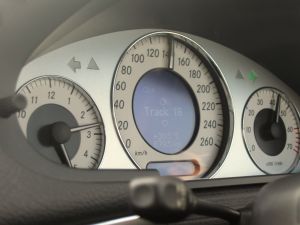
Like most states, speeding is a common denominator for Boston car accidents and traffic accidents elsewhere in Massachusetts. Speed limits are established for the safety of drivers but the warning signs posting the speed are often ignored. Drivers need to accept the responsibilities of following the law and the speed limit signs that are posted on the state’s highways and byways this holiday season.

In 2009, the National Highway Traffic Safety Administration reported a total of 9,478 fatal crashes as a result of speeding. Massachusetts was responsible for 68 of the fatal crashes where speeding was involved. In the United States, one third of traffic fatalities in 2009 were a result of a speed-related crash. Massachusetts had a total of 76 of those fatalities.
722346_speeding.jpg
According the NHTSA, Suffolk County had a total of 4 fatalities for crashes involving speed in 2009. This was a new low over the last 5 years and substantially lower than the 12 fatalities reported in 2007. Of course, heavy traffic plays a role. And the issue is chronically under-reported when factors like speed too fast for traffic conditions, tailgating and other related causes are taken into account.

Suffolk County has had a significant decrease over the last 5 years in fatalities per 100,000 people killed in speed related crashes. In 2005 there were 1.83 fatalities per 100,000 people where as in 2009 there were only .53 speed related fatalities per 100,000 people. In fact, Suffolk County had the lowest fatality rate per 100,000 people in 2009, with the exception of Franklin and Nantucket counties where no fatalities were recorded for that year.

Speeding is detrimental to driving for a couple of reasons. Speeding makes it difficult to control your vehicle around sharp corners or S curves. It is also much more difficult to stop your vehicle quickly. The higher the velocity of speed, the farther you travel when slamming on the brakes to avoid something in the road like an animal, another vehicle, or worse yet a pedestrian.

Speed also exponentially increases the seriousness of a resulting crash.

Safe driving tips for Massachusetts drivers include:

-Stay within 5-10mph of the cars driving on the roadway with you.

-Refrain from driving in the fast lane when you have the chance to move over into the next lane.

-If your vehicle has cruise control, set it to a speed that is appropriate with the traffic flow.

-If you tend to drive at a pace slower the speed limit, stay in the far right lane.

-Don’t swiftly change lanes or cutting off other drivers to get out of the way Continue reading

As we enter the final holiday season shopping rush, customers and employees are at increased risk of Boston elevator accidents or escalator accidents. Poor maintenance, large crowds, aging equipment, wet or slippery flooring and injuries caused by other passengers are the leading causes of such accidents.

Children and the elderly are most at risk. As we reported earlier this year on our Boston Personal Injury Attorney Blog, accidents on MBTA property may also cause such injury. In July, a child was seriously injured after getting his shoe caught in an escalator at an MBTA station while visiting Boston with family.
1094356_escalator.jpg
Each year, the Consumer Products Safety Commission and the Bureau of Labor Statistics estimates that 30 people are killed and 17,000 are seriously injured in elevator and escalator accidents.

The Consumer Product Safety Commission offers the following safety tips:

-Secure loose clothing. Shoe laces, drawstrings, scarves and mittens may be trapped in escalators.

-Hold a child’s hand and do not permit children to sit on steps and play on walls or railings.

-Do not bring carts or strollers onto escalators.

-Always face forward and utilize hand rails.

-Avoid the edges, where entrapment most frequently occurs.

-Know where the shutoff is located in case of emergency.

Industry safety standards require a number of safety features, including:

-An emergency shutoff located at the top and bottom.

-Sidewalls made of low-friction material.

-Use of skirt obstruction devices, which shut off the system if foreign objects are present.

-Clearance of no more than 3/16ths of an inch at the edges.

-Warning signs regarding the danger to children.

-Brightly colored foot prints or borders on each step.
Continue reading

Shoppers are at increased risk of Boston premise liability accidents as the holiday shopping season enters full swing and winter weather descends on the East Coast.

We reported last month on our Boston Personal Injury Attorney Blog that the government had warned retailers about the risk posed to employees by intentionally advertising heavy discounts meant to draw large crowds for Black Friday.
789697_mall.jpg
As the Boston Globe reports, the holiday shopping season has gotten off to a fast start and is responsible for upwards of half of retailer profits. As such, retailers will look to keep the momentum going right through the holidays, and will no-doubt hold closeout sales right through the first of the year.

Business and property owners must put at least as much emphasis on the safety of employees and guests as they do on reaping holiday profits. When a negligent condition leads to a serious or fatal accident on business property, a Boston personal injury lawyer or wrongful death attorney should always be consulted to help protect the physical and financial well-being of you and your family.

Massachusetts premise liability claims may include:

Slip and fall accidents

-Wet floors
-Dark parking lots
-Broken or uneven sidewalks or walking surfaces
-Loose handrails or fault stairwells
-Merchandise or shelving fixtures falling from height
-Elevator or escalator accidents
-Assault on business property
Negligent security

-Parking lot accidents Continue reading

Many of us will visit relatives in nursing homes this holiday season. In fact, area homes will see more visitors during the next three weeks than at any other time of the year. Our Massachusetts nursing home abuse lawyers encourage you to pay attention when visiting a home and to share any concerns you may have with the authorities or with an experienced attorney.

For others, a long visit over the holidays will make clear the looming need to provide a loved one with living assistance or nursing home care.
1282579_nursing_house.jpg
The fact is the majority of the state’s homes are part of large chain- corporations operating for-profit nursing facilities. Mass Resources reports the average cost of nursing home care in Massachusetts is $75,000 a year.

What kind of care should you receive for more than $200 a day? Unfortunately, the answer is better care than is often provided in the more than 400 nursing homes in Massachusetts. Tragically, residents are sometimes afraid to report neglect or abuse. In other cases, they do not want to trouble family or loved ones by sharing such concerns.

The Massachusetts Department of Health and Human Services offers a number of resources:

Nursing Home Reports are available here.

Guide to Nursing Home Care.

Massachusetts Nursing Home Regulations are available here.

Massachusetts Nursing Home Guidelines are available here.

Signs of nursing home neglect or abuse in Boston:

-Unexplained bruises, broken bones or other injuries
-Bed sores, sepsis or other related medical conditions
-Unsanitary conditions
-Reluctance by staff to permit unsupervised visits
-Disrepair
-Frequent staff turnover
-Unexplained changes in loved one’s behavior
-Unexplained financial transactions
-Overmedicated state
-Malnutrition or dehydration Continue reading

Our Boston personal injury lawyers urge you to speak with older drivers about the importance of safe-driving habits this week during Older Driver Safety Awareness Week. Family and friends can help by staying aware of their loved ones driving skills as they age each year.

As we age our body changes and some of these changes can affect our ability to drive safely. The National Institute on Aging highlights some issues facing older drivers.
833820_hands.jpg
-Hearing changes will affect your ability to hear warn sounds like sirens or horns. More importantly, strange sounds from your car indicate a mechanical problem that you need to hear.

-Reaction time in a vehicle is very important. There are times drivers need to think and act fast. As we age reflexes get slower, muscles are weaker and we may not think as fast as we use to.

-Eye diseases like cataracts and glaucoma affect the elder driver’s sight. Having trouble seeing at night can become a problem. Glare from the sun, street lights and headlights will present difficulties. It may become harder to read street signs and seeing people and objects outside your vehicle.

-Weakened muscles and stiffer joints may make turning the steering wheel or braking quickly more difficult. Also you may have a harder time turning your head, lessening your ability to see all that is around you.

As we get older our health changes and medications are needed to keep our bodies functioning properly. Elder drivers should be aware of medication side effects like drowsiness or lightheadedness which can affect your driving ability. This applies to all drivers not just the elderly.

Some states have special requirements when senior drivers renew their license. Some require a road test or a vision check so renewals can’t be done by mail or online.

As we reported in July on our Boston Car Accident Lawyers Blog, the state’s new law banning drivers from text messaging also includes a provision requiring drivers over the age of 75 to have their vision tested and to renew their license in person, rather than online.

Aging affects us all differently so there isn’t a way to determine when everyone should stop driving. But here are some clues that might suggest you put away those car keys for good.

-Are you having fender benders?

-Are you getting lost in previously familiar places?

-Are drivers blowing their horns at you?

-Do you find yourself drifting out of your lane?

-Have you been told by loved ones to stop driving?

-Are you worried about your own driving?

-Do you ever confuse the brake and the gas pedal?

-Do objects and people suddenly appear in front of you?
Continue reading

The Somerset Herald News reports a sanitation worker suffered a Massachusetts work accidents after falling off a garbage truck last week.

The employee reportedly suffered a head injury, although indications are that he would be back at work this week. Our Massachusetts’ workers compensation attorneys urge anyone injured on the job to undergo a through evaluation, particularly when a head injury is involved. Consequences of a head injury may take weeks, or months, to become apparent but can have serious or even fatal health consequences.
1166890_bin_garbage_trash.jpg
Reports indicate heavy rain may have been a factor in the accident, which happened after 5 p.m. at the intersection of New Boston Road and Freelove Street. The paper reports the Fall River Department of Public Waste has had its share of accidents. Two other workers have been seriously injured in the past several years and at least three others have been hurt, primarily from falling off the trucks.

A spokesman noted that neither private nor public waste removal services use helmets or safety tethers to help reduce the risk of falling from trucks. One employee lost both legs after falling from the truck and being pinned by another vehicle.

Eight members of the 71-employee department are currently out on Massachusetts workers’ compensation claims, including three who have been off work for upwards of a year or more.

The Bureau of Labor Statistics ranks trash collection among the Top 10 most dangerous occupations, with injury rates surpassing even those reported by law enforcement.

More modern trucks use side-loaders instead of crews. Only 3 of the city’s 18 trucks are newer side-load models.
Continue reading

Given the nature of our work, the Boston car accident attorneys at Jeffrey Glassman Injury Lawyers frequently post reports about motor vehicle and highway safety tips and trends on our Boston Car Accident Lawyer blog. Our goals is simple: to educate motorists wanting to avoid a Massachusetts car accident.

With this in mind, we share updates made to the National Transportation Safety Board’s “most wanted” list of vehicle and driver safety improvements.
868517_a_driver.jpg
The NTSB has chosen to focus on five key safety issues – seat belt/child restraint use, impaired and distracted driving habits, and motorcycle safety. Their “most wanted” list recognizes both the advances and shortcomings of each state while reminding state legislators to persists in enacting laws that promote safe driving conditions for all motorists. NTSB Chairman Deborah A.P. Hersman notes that state governments are in a “unique position to effect the most significant improvement” regarding transportation safety through legislative and enforcement practices.

The following review of Massachusetts traffic safety directives on these five issues is provided by the NTSB:

~ Child occupant protection: Massachusetts is one of 29 states to have in place a booster seat law requiring all child passengers use a booster seat through age 8.

~ Primary seat belt enforcement: Massachusetts one of 19 states that has no law in place regarding primary seat belt enforcement. NTSB officials recommend that a law be enacted requiring all vehicle occupants wear proper safety restraints, be they conventional lap and lap/shoulder belts or installing car seats and booster seats for use in tandem with safety restraints.

Furthermore, the Board requests that law enforcement be unrestricted in observing and ticketing motorists who fail to buckle up. By enacting “primary” enforcement laws, cops are free to stop (and cite) drivers solely upon visual confirmation that any occupants are unrestrained and non-compliant with the law.

~ Distracted driving: Massachusetts is one of 46 states with a Graduated Drivers License program that meets all NTSB recommendations. As for passenger restrictions, Massachusetts is one of 15 states that have enacted some, but not all, of Board directives. Therefore, currently implemented law fails to meet Board safety standards. (Of note, the NTSB reports that with each additional teenage passenger, so increases the risk a teen driver will crash.)

Regarding the matter of wireless communication restrictions, Massachusetts is one of 26 states to fully restrict (meaning: no cell use for novice, intermediate and “learner” status drivers; no hand-held or hands-free phone use) “interactive wireless communication” while driving.

~ motorcycle safety: Massachusetts has enacted a universal helmet law requiring both driver and passengers helmet-up, so to speak.
Continue reading

The Massachusetts Turnpike Authority is among the defendants that have agreed to pay a state trooper’s family $9 million after he was killed when his motorcycle slammed into Big Dig handrails, the Boston Globe reported.

Our Boston accident attorneys reported earlier this year on our Boston Car Accident Lawyers Blog about the railings. Originally put in place to protect construction and maintenance workers from falling onto the highway, the railing have been involved in the deaths of seven motorists in recent years.

New documents now show that the U.S. Department of Transportation warned the director of the Big Dig that the rails were unsafe as far back as 1992. But the director replied that they were safe.

The trooper was one of seven victims to be killed after striking the railings lining the tunnels; most of the victims were dismembered. One victim lost an arm but survived.

While the trooper’s family said they hope the case will result in the removal of the railings, the settlement did not address the safety issue.

The Massachusetts Department of Transportation expressed sorrow for the accident and the loss of the trooper’s life but referred all other comment to the insurer, AIG.

AIG had no comment.

Other defendants included Big Dig contractors.
Continue reading

A woman being described as an environmental fugitive has been captured in the Dominican Republic, the Boston Herald reported. The former head of Massachusetts’ largest asbestos removal training school, she was convicted in November 2008 of selling certificates to immigrants who never took the mandatory training course.

Our Boston injury lawyers understand the serious threat posed by asbestos exposure in Massachusetts. Exposure to the material once used in building and ship construction has been linked to mesothelioma and other cancers and health consequences.
68486_safty_mask_2.jpg
In this case, the defendant allegedly sold the certificates from Environmental Compliance Training of Methuen, Mass. Prosecutors contended that several hundred immigrants were then sent to work at asbestos demolition sites through the defendant’s temporary employment agency.

They were also paid “under the table,” saving more than $1 million in tax and insurance costs. The company was shut down in May 2007.

Mesothelioma is a cancer that develops in the protective lining that covers many of the body’s internal organs. Many who develop the cancer have worked on jobs where they were exposed to asbestos fibers or inhaled asbestos particles. Development of cancer frequently occurs decades after exposure, thus many victims do not associate the illness with an event or exposure.

Seeking the advice of an experienced Boston injury attorney can help determine whether your cancer can be linked to exposure in the workplace and whether you and your family are entitled to be compensated for your loss.
Continue reading

The Occupational Safety & Health Administration will hold hearings in January on ways to reduce work accidents caused by slip, trip and fall hazards.
521304_attention.jpg
Our Boston workers’ compensation attorneys know that fall accidents are among the leading causes of serious Massachusetts work injuries. Nationwide, 617 workers died in fall injuries last year, according to the Bureau of Labor Statistics. Eleven peopled died from falls on the job in Massachusetts.

“These public hearings will provide an important opportunity for stakeholders who will be impacted by the rule to share their concerns and provide input on the proposal,” said OSHA Assistant Secretary Dr. David Michaels. “Injuries and fatalities from fall hazards are a leading cause of work-related injuries and we need to have the best rule possible to ensure that we effectively address this serious hazard.”

The new rules aim to reduce the more than 3,700 cases of lost-time accidents resulting from work-surface fall accidents.
Continue reading

Contact Information