The Occupation Safety & Health Administration is reminding New England employers of the dangers of Boston work accidents, and work injuries elsewhere in the Northeast, that can result from winter weather and snow removal.

Our Boston, Massachusetts workers compensation lawyers and premise liability attorneys understand the risk of serious or even fatal injuries that winter weather, icy and snowy parking lots and walking surfaces, and other winter conditions can bring to employees and customers alike.

1272047_snow.jpg
“Cleaning up after a storm encompasses a variety of tasks, each of which can carry risks if performed incorrectly or without proper safeguards,” said Marthe Kent, OSHA’s regional administrator in Boston. “We want people to know what those risks are and what steps they can take to protect themselves against these hazards.”

Hazards can include:

-Electric shock from downed power lines or underground equipment.

-Being struck by trees or other structures that collapse beneath the weight of snow.

-Chainsaw accidents or accidents involving snow blowers and other heavy equipment.

-Motor vehicle accidents.

-Falls from roofs, lifts or ladders.

-Carbon monoxide poisoning from generators, heaters and other power equipment that is not properly ventilated.

-Falls from snow or icy walking surfaces.

-Hypothermia, frost bite and other injuries from cold exposure.

Safety Tips Include:

-Coordinate downed power lines with utility companies.

-Use effective fall protection.

-Use caution around surfaces weighted with snow.

-Make sure electrical equipment is properly grounded and gas-powered equipment is properly ventilated.

-Wear appropriate eye and body protection.

-Clear walking surfaces of snow and ice and use salt or its equivalent where needed.

-Establish clearly marked work zones.

-Wear reflective clothing.

-Wear clothing appropriate for weather conditions, take plenty of breaks.

Information on safe cleanup after severe weather is available here.
Continue reading

The Occupational Safety & Health Administration is moving to reduce the risk of construction accidents in Boston and roofing accidents in Massachusetts.

“Fatalities from falls are the number one cause of workplace deaths in construction. We cannot tolerate workers getting killed in residential construction when effective means are readily available to prevent those deaths,” said Assistant Secretary of Labor for Occupational Safety and Health Dr. David Michaels. “Almost every week, we see a worker killed from falling off a residential roof. We can stop these fatalities, and we must.”
915719_construction_workers_on_a_roof.jpg
According to the Bureau of Labor Statistics an average of 40 workers are killed each year in falls from residential roofs. Latino workers account for one-third of such deaths. Typically, Latino workers also lack sufficient access and understanding of basic work-safety rights and protections.

Latino workers comprise one-third of those employed in the construction industry.

The new directive requires strict compliance with residential construction fall protection standards. Previously, a temporary rule had been in place since 1995 that allowed for some alternate methods. Such alternative methods are now only permitted if traditional fall protection is not feasible due to the residential environment imposed by the job site.

Construction and roofing companies have six months to comply with the new standards. OSHA is also hosting a webinar.

More information on residential fall protection in Massachusetts is available here.
Continue reading
In the fight to lure “green jobs” the government is working to make sure state and federal safety regulators are prepared to ensure worker safety and to prevent Massachusetts work accidents and employee injuries.

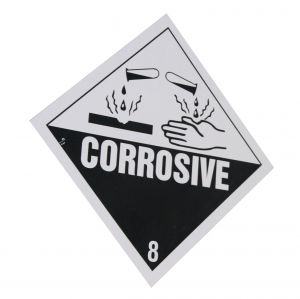
Defined loosely as products and jobs that improve the environment, the so-called “green jobs” include wind energy, solar, insulation and sealants, hydrogen fuel cells, geo-thermal energy, biofuels, recycling and green roofs. Employees in these industries may be exposed to new manufacturing processes and may be at increased risk of a work accident covered through a Massachusetts workers’ compensation claim.
699500_corrosive_sign.jpg
The Occupational Safety & Health Administration cites exposure to Cadmium Telluride as an example. The chemical is a known cancer-causing agent and is used in the solar-energy industry.

“We’re all aware of the job opportunities that green jobs offer, and in the present economy, new technologies with the potential of new jobs are especially welcome,” said Dr. David Michaels, assistant secretary of labor. “We must use our knowledge and skills to identify potential hazards as they emerge. We can’t wait years for hazards to be completely characterized, to let industries shift their responsibility or defer workplace protections by producing “doubt” instead of actively practicing prevention.”

Accordingly, OSHA is pushing for Prevention through Design, which means instituting manufacturing processes and designing equipment with worker safety in mind. By utilizing worker safety and health professionals in the design process, engineers are encouraged to “design out” hazards employees may otherwise face.

The government notes that jobs in green technology will already carry many of the same risks as traditional employment, including transportation accidents, fall accidents and electrical or fire injuries.
Continue reading

Four children were injured in Boston after the porch on a three-story house collapsed, sending them plummeting to the ground, according to a report in the Boston Globe.

Landlords and property owners have an obligation to ensure the safety of their property. Boston’s older housing stock, combined with the weight of snow and the damage caused by the winter’s freeze-and-thaw cycles, can leave porches and outside stairwells susceptible to failure. When tenants or guests are injured on homeowner’s or landlord’s property, a Boston premise liability case may be brought to recover damages for medical bills, lost wages, pain and suffering and other damages.
1190967_old_deck_wood_1.jpg
This collapse occurred New Year’s Day and injured four children, including two 11-year-old girls, a 10-year-old-boy and a 7-year-old boy. All were transferred to Boston Medical Center.

A maintenance man said the third-floor porch collapsed into the second-floor porch, which then collapsed into the porch on the first floor. The children were on the top floor building a snowman when the porch collapsed from beneath them shortly after noon.

Cause of the collapse is under investigation by the Boston Inspection Services Department.
Continue reading

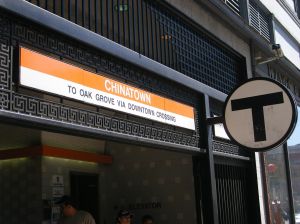
The driver responsible for a Boston subway accident that injured more than 60 people has admitted to text messaging at the time of the accident and pleaded guilty to criminal charges in connection with the May 2009 rush-hour crash, the Associated Press reported.

As our MBTA injury lawyers have reported, the crash lead to tough new rules preventing MBTA employees from using cell phones while on the job.
550783_boston_chinatown_t.jpg
The driver pleaded guilty in Suffolk Superior Court to gross negligence by a person in control of a common carrier. He was sentenced to two years of probation and 100 hours of community service. He admitted to texting his girlfriend in the moments before the accident at the Government Center subway stop. He ran through red and yellow warning lights and crashed into the two-car train ahead.

He was fired. The assistant district attorney had asked for a six-month jail sentence, citing the number of injuries and the cost of the crash — which has been tagged at about $10 million.

The driver submitted a letter of apology to the court.

“Not a day goes by where I am not reminded of the suffering that my actions caused and the broad impact of my accident,” he wrote. “I pray that one day I will be able to make amends in some ways to the affected persons.”

Several personal injury lawsuit remain pending as a result of the accident.

Since the Massachusetts Bay Transportation Authority enacted the ban, which prohibits operators from possessing cell phones or similar devices while on the job, 22 MBTA employees, including bus and train workers, have been discharged or suspended for violating the policy.
Continue reading

Distracted driving accidents are happening more frequently than ever before, likely due to the fact that cell phone use, whether it be talking or texting in vehicles, is a common occurrence. Such distractions can take your mind and your eyes away from the road where they belong. Boston car accidents continue to occur every day because of distracted driving.

Certainly, resolving to put your cell phone down and drive would be a great way to start 2011. Our Boston car accident attorneys encourage you to do so and to talk to your friends and family members in an effort to keep them safe.
1131636_no_cells.jpg
In the news recently was the arrest of a woman who was reportedly texting when she kiled an 80-year-old pedestrian crossing the street. The Hartford Courant reported that the driver will be charged with gross vehicular manslaughter.

Texting is the most dangerous form of driving distracted according to Distraction.gov because it involves three key components of taking eyes off the road, hands off the steering wheel, and the mind off of driving. In 2008, almost 6,000 people died because of distracted driving accidents. Distractions were the cause of 20% of all crashes in 2008, while the younger generation with less driving experience was the most at-risk age group. In fact, drivers who use hand held devices are four times as likely to get in a car crash and be seriously injured as someone not driving with a distraction of some sort in their hands.

Massachusetts now has a ban on cell phone use for bus drivers and drivers under the age of 18 with a learner’s permit, as well as a ban on texting for all drivers. Law enforcement officials no longer need a secondary reason to pull you over. As of September, texting is considered a primary offense and reason enough for officers to hand out a ticket to drivers in violation.
Continue reading

Purchasing a car is likely a big decision presuming the number of hours you spend in your vehicle per week. Like your home, you are looking for comfort as well as safe being during the hours that you spend in your vehicle.

The last thing we want is to purchase a vehicle to be followed by a recall notice a few months later that there is a defect in the car. Our Boston personal injury attorneys want to remind you to do your research prior to buying a vehicle so that you can make a well-informed decision.

It was recently announced that Toyota, one of the leading car producers, will pay penalties based on two different investigations for failure to report recalls on vehicle defects in a timely manner. The National Highway Traffic Safety Administration put Toyota Motor Corporation under investigation for the recall of two items. Ray LaHood, Secretary for US Transportation, stated “Safety is our top priority and we take our responsibility to protect consumers seriously.”

In 2007, Toyota recalled 55,000 vehicles due to a defect in the floor mats entrapping the accelerator pedal. Almost two years later there was a fatal crash in California involving a Lexus in which the floor mat, which was intended for another model, entrapped the gas pedal and lead to the crash. As a result, the NHTSA found that Toyota did not communicate the initial defect within the five business days that is required by law. To date, there have been almost 5 million vehicles recalled. Toyota will pay the maximum penalty of $16.375 million dollars to the Treasury Department’s general fund.

The second investigation resulting in a $16.05 million fine was with regard to failing to report defects in several Toyota models with steering rod malfunctions that caused a possible loss of steering control while driving. In 2004, Toyota recalled some truck models in Japan with this problem but reported no knowledge of this defect in any other models. Later, in 2005, Toyota admitted to the defect in several U.S. models and recalled over one million vehicles as a result. Consumer complaints of the defects led to the investigation by NHTSA where they found that Toyota did not comply with standards when it comes to recalling model defects in their vehicles.
Continue reading

Texting on your cell phone while driving is a common danger we face today and can heighten the risk involved with Boston truck or car accident on a daily basis.

The National Highway Traffic Safety Administration reports that for 2009 almost 5,500 people were killed because they were involved in a distracted driving crash. It is reported that 18% of the fatalities involved a cell phone.
1131636_no_cells.jpg
Texting While Driving sites several studies illustrating how dangerous texting and driving can be. One study was simply to stop your vehicle while traveling at 35 mph. When the driver was intoxicated it took them 4 feet longer to stop than the sober driver. The texting driver needed 25 feet to stop the vehicle. Some studies indicate that texting drivers travel out of their lane 10% of the time. Others say while texting your eyes are off the road for as much as 5 seconds at a time. Statistics show that drivers who text increase the chances of getting into an accident to twice that of an intoxicated driver. An intoxicated driver has a 4 times greater chance of crashing than a sober driver.

The Insurance Institute for Highway Safety reports that 30 states have banned text messaging for all drivers. In 8 states additional bans have been place on texting regarding novice or bus drivers. Massachusetts doesn’t have a handheld ban for all drivers but does ban cell use for drivers under 18 and bus drivers. The state also enforces the no texting law as a primary violation, something that just went into effect this fall.

Last month Automotive Industry Today reported the rule announcement from The Federal Motor Carrier Safety Administration (FMCSA) banning bus and truck drivers from texting. Commercial motor vehicle drivers that operate within interstate commerce are affected by the rule. A hefty fine of $2,750 can be placed on the driver and a bigger fine of $11,000 placed on the carrier. Research done by FMCSA concluded that commercial motor vehicle drivers have a 23% chance of crashing or being in a near crash if texting. A loophole was also closed that involved intrastate hazardous waste haulers who don’t have to follow The Federal Motor Carrier Safety Administration (FMCSA) rules where an additional 12,000 drivers and 1,490 carriers will also be banned from texting.

As a rule, when you are driving in your vehicle you should power off your cell phone and refrain from using it by placing it in the glove compartment or console so there is no temptation to answer when the ring tone comes in.
Continue reading

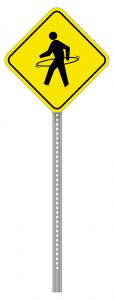
Pedestrians doing their holiday shopping on the city streets of Boston should use extra caution this holiday season. Boston pedestrian accidents are a concern every day, but especially this time of year when the numbers of cars and people increases with holiday shopping.

Boston Public Health Commission reports that on any given day, there are over 2 million residents, workers and visitor pedestrians in Boston. This equates to a tremendous amount of foot traffic.
1207118_pedestrian_sign.jpg
The BPHC discovered a few interesting facts:

-Pedestrians jaywalk 1/3 of the time.

-88% of the time pedestrians don’t wait for the ‘walk’ signal.

-Only 5% of drivers don’t yield to pedestrians when they have the right of way.

-When pedestrians cross against a light only 50% of the time drivers will yield to them. Few drivers slow down for jaywalkers.

The 2009 National Highway Traffic Safety Administration report confirms that Massachusetts pedestrian fatalities were significantly lower in 2009 at 48 than the previous 4 years where the recorded fatalities ranged between 61-76.

What may have caused this decrease? In 2008, Pedestrian fatalities matched a 5 year high of 76. As a result, Massachusetts police needed to beef up patrols to enforce pedestrian (and bicycle) traffic laws. They needed money in order to do this so a grant was applied for and awarded. Almost $100,000 in grants were given to police departments throughout Massachusetts.

This money allows for overtime to be paid to extra officers to enforce pedestrian (and bicycle) safety. This money is adding more police presence to the streets to issue tickets to violators and to educate the public. The effort has worked, only two counties had an increase in pedestrian fatalities in 2009.

Some helpful tips to be safer when walking busy city streets:

-Check in all directions multiple times before crossing, and keep checking until you are safely across.

-Pay attention, don’t be on a cell phone and take the earphones off.

-Always obey the traffic signs and signals.

-When waiting to cross don’t stand behind parked cars or other stationary objects.

-Make eye contact with the driver; never assume a vehicle will stop.

-When possible use crosswalks and intersections to cross the street.
Continue reading

Winter can be one of the most challenging times of the year for Boston drivers to be on the road. As the cold weather approaches so does the dangers of winter driving. Black ice is a common danger of winter driving but its difficulty to detect increases the risk for a Boston car crash as the temperatures begin to drop during the winter months.

Driving on black ice is dangerous because it’s so difficult to see. It is a thin coating of ice on a road surface. Black ice is transparent so the surface below the ice shows through. If you notice the road surface you are driving on looks dull or is darker than the rest of the road use extra caution. These are two warning signs that can indicate you are on a black ice area. Those involved in a winter-driving accident in Massachusetts can contact a Boston injury attorney to discuss their rights.
1317107_ice.jpg
Drivers should use extra caution when the temperature drops below 40 degrees. Water takes longer to freeze than the actual surface. Road areas where underpasses or bridges exist don’t get much sun during the day so the surface tends to freeze first. If you feel like you are driving where black ice is a possibility then slow down. Don’t tailgate the vehicle in front of you in order to give yourself ample time to stop. Make sure your windshield is clean by defrosting it thoroughly before putting your vehicle in motion. Good tire traction is the best defense when driving on ice. Although four-wheel drive vehicles are known for being a little better in snow these vehicles do not keep you from sliding on ice. Remember, it is your responsibility as a driver to drive at a speed safest to you and other drivers under the current weather conditions.

How to stay in control if you encounter black ice :

-Don’t brake fast if you need to slow down. Remove your foot slowly from the accelerator instead.

-Steer in the direction you want to go if your vehicle is sliding.

-No swift or jerky movements when steering.

-Never pump anti-lock brakes, keep your foot on the pedal. The anti-lock system will keep the brakes from locking up and slow you down.
Continue reading

Contact Information