Steroid injections used to treat back pain have now been linked to the a fungal meningitis outbreak that has claimed at least five lives. Other patients have suffered strokes believed to be the result of infection.

Massachusetts Personal Injury Attorney Jeffrey S. Glassman urges patients taking steroid injections for back pain seek independent medical evaluation if concerned. Certainly anyone experiencing flu-like symptoms should take the matter very seriously. 1028452_syringes_and_vial.jpg
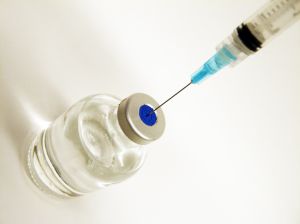
Meningitis-related deaths have been linked to injectable steroids distributed by the New England Compounding Center — a compounding pharmacy based in Framingham. Confirmation came as an unopened vial from the facility tested positive for the bacteria. As ABC News reports, there is increasing health and safety concerns about such drug compounding facilities, which operate with little federal oversight.

Roughly 7,500 such pharmacies specialize in concocting custom medicines. While FDA-approved ingredients are used in the compounded products, the final product does not receive such federal oversight.

“Obviously something egregious must have been going on at the New England Compounding Center,” said Dr. William Schaffner, president of the National Foundation for Infectious Diseases and chairman of preventive medicine at Vanderbilt University Medical Center in Nashville, Tenn. “The breaches in good manufacturing practice and infection control must have been substantial in order for something like that to occur.”

Because of the nature of meningitis, which infects the membranes around the brain and spinal cord, injections for back pain may be a particularly effective way to transmit life-threatening infections. The National Institutes of Health reports infections are extremely serious and may result in death or brain damage — even with the proper medical treatment.

Acute bacterial meningitis is a medical emergency that requires immediate hospital treatment.

Symptoms of meningitis include:

-Chills or fever
-Nausea

-Headaches and stiff neck
-Changes in mental status, agitation, decreased consciousness

-Poor eating
-Rapid breathing, fast heart beat

Jeffrey Glassman Injury Lawyers is aware that dozens of these cases have been reported in the last 30 days. Patients who have contracted fungel meingitis from the use of methylprednisolone acetate, a corticosteroid that is injected into the spine, have been reported in at least 6 states. Health officials continue to be concerned about more cases spreading throughout the country.

The Framiningham lab is a compounding facility, which prepares and mixes drugs and solutions. Early reports suggest the company had been previously warned by the Food & Drug Administration about practices that increased the risk of drug contamination. The FDA reports fungal contamination was found in a sealed vial of methylprednisolone acetate collected from NECC and that the firm has voluntarily ceased all operations and surrendered its license to the Massachusetts Board of Registration in Pharmacy at the beginning of this month. The product is also being voluntarily recalled.

Anyone who has purchased a product from NECC is advised not to use it. For more information, visit the Centers for Disease Control and Prevention’s website.

The first case was reported Sept. 21 by the Tennessee Health Department, after a patient began experiencing symptoms of infection 19 days after injection. At least 42 cases have already been reported in six states, including Florida, Indiana, Tennessee, Maryland, North Carolina and Virginia.

The New England Compounding Center located in Framingham voluntarily recalled the following lots of methylprednisolone acetate (PF) 80mg/ml:

Methylprednisolone Acetate (PF) 80 mg/ml Injection, Lot #05212012@68, BUD 11/17/2012 Methylprednisolone Acetate (PF) 80 mg/ml Injection, Lot #06292012@26, BUD 12/26/2012 Methylprednisolone Acetate (PF) 80 mg/ml Injection, Lot #08102012@51, BUD 2/6/2013
The facility has recalled nearly 18,000 vials. Thus far, 75 clinics in 23 states have received the recalled vials and have been told to begin notifying affected patients.
Continue reading
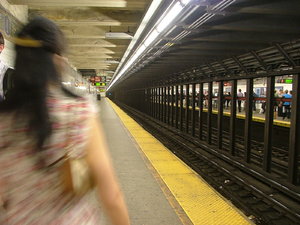

MBTA ridership increased again!

According to the Commonwealth Conversation‘s Transportation page, the Massachusetts Bay Transportation Administration’s (MBTA) new cars on the Blue Line at Maverick saw increased ridership this August, compared to last year.

Transportation officials report a more than 1 percent increase, meaning there was an average of close to 1.3 million passenger trips taken every weekday. We’ve seen year-to-year increases in 18 out of the last 19 months.
mqKAycg.jpg
Our Boston MBTA accident lawyers understand that the Blue Line wasn’t the only system to see an increase during this time period. Ridership on the subway also increased, by more than 2.5 percent. The Trolley-Green Line also saw a weekday average ridership increase by about 1.5 percent. The Commuter Rail was up by close to 1.5 percent as well.

Bus ridership dropped by more than .5 percent. With ridership increases, residents and visitors are warned. With more congestion, we face higher risks for accidents. Be calm and be safe out there to help to reduce these risks. Keep safety as a number one priority.

“The robust demand for public transit is a clear sign that we need to maintain a strong transportation system in the Commonwealth,” said Richard A. Davey, MassDOT Secretary & CEO.

Officials with the MBTA are ready to take it to the next level, too! Recently officials kicked off a number of statewide public hearings to help to bring residents, community leaders and business owners on board with a plan for the advancement of the transportation system through the Commonwealth area.

Back in August, legislation was passed that required the Massachusetts Department of Transportation (MassDOT) to hold a minimum of six public meetings before deciding whether to create a long-term financing plan for the Massachusetts’ transportation system. To help to make sure that everyone in the Commonwealth area is represented, officials with MassDOT have decided to hold 15 different meetings.

At these meetings, reps for each of MassDOT’s divisions (MBTA/Rail and Transit, Aeronautics, Highway, RMV) will be on site to answer question and provide any additional information to attendees.

Before, agencies worked alone to finalize these decisions. Now, under the Act Modernizing the Transportation Systems of the Commonwealth, agencies are working with one another to find new and better ways to get residents and visitors from point A to point B. In addition, MassDOT has implemented more than 90% of the recommendations issued in 2007 by the Transportation Finance Commission.

With ridership increasing and construction taking place, our risks for an accident increase significantly. It’s important to keep safety as a number one priority while riding any of the MBTA’s forms of transportation. Keep an eye on your surroundings and remember to be a courteous travelers. Awareness can be your best defense against a serious accident or injury on the MBTA.
Continue reading

Chances are that there are some products in your home that can cause serious injury to you and your family. Chances are also that dangerous products like these are listed on the U.S. Consumer Product Safety Commission‘s (CPSC) website.
mhGyhQG.jpg
defective products injuries also commonly impact children. You ca’t deal with defective products or reduce your risks if you don’t know about them. That’s why we’re asking families to check out the CPSC’s recall site and to check it often. We’re here to get you started and to give you some information on some of the latest recalls.

42-inch LED-TVs Recalled by Haier America:

There have been roughly 5,000 of the Haier® 42-inch LED TVS recalled by Haier America Trading L.L.C., of New York, N.Y. because the neck of the stand for the TV support can snap and can cause the TV to come toppling over. This poses a serious risk of injury to your household. There have been close to 200 reports of these incidents. If your TV has the model number LE42B1380 on it, then we’re talking to you. If you have this television, you should contact Haier America for a free replacement stand neck. Call the company at (877) 813-8516.

Off-Road Utility Vehicles Recalled by Kubota:

There have been close to 1,000 Off-road Utility Vehicles recalled by Kubota Manufacturing of America Corporation, of Gainesville, Ga. because there are some serious risks for carbon monoxide poisoning. What can happen is that the carbon monoxide can accumulate in the vehicle cab when the engine is idling and the vehicle isn’t moving. The vehicle involved in the recall is the Kubota RTV500 with cab. The model number is “RTV500.” If you have one of these vehicles, you’re urged to contact the company at (800) 752-0290 to schedule a free repair of the recalled vehicle.

Early Model Suspension Trainer Devices Recalled by Fitness Anywhere:

There are close to 50,000 Suspension Trainer Devices that have been recalled by Fitness Anywhere LLC, of San Francisco, Calif. What can happen is the strap length-adjustment buckles can break and can pose a serious fall hazard to users. There have already been more than 550 reports of the buckles breaking. More than 80 users have fallen and close to 15 have sustained injuries to the shoulder, face, head and/or hip. Falling under the recall are the “Professional” (P1) and “Tactical” (T1) TRX Suspension Trainer devices. If you have one of these devices, you’re urged to stop using it immediately and contact the company at (888)-221-7417 to arrange to return the recalled product for a replacement TRX Suspension Trainer device.
Continue reading

As we recently reported on our Boston Personal Injury Attorney Blog, the state of Massachusetts has celebrated its 500th Safe Routes School Partner. This means that the 500th school has joined the program to help to get kids to and from school safely while promoting a healthy and active lifestyle.
mHF4UJ4.jpg
Recently, to celebrate the new participation, officials with the Massachusetts Department of Transportation (MassDOT) and the Registrar of Motor Vehicles teamed up with these teachers, students and parents to celebrate the program through International Walk to School Day.

Our Boston pedestrian injury attorneys understand that our young ones are the most vulnerable when it comes to pedestrian accidents. According to SafeKids USA, there were close to 250 kids who were under the age of 14 who were killed in pedestrian-traffic accidents in the United States in 2009. During this same time, there were close to 16,000 of these young pedestrians who were injured in traffic accidents. Parents, guardians and teachers need to step in and speak up about the importance of safe walking habits to help to keep our young ones safe. Drivers also need to take some responsibility in the matter and make sure that they keep a heads up for pedestrians, especially young ones, along our roadways.

“The Safe Routes to School program focuses on promoting healthy and sustainable transportation modes for students and their families,” said Registrar Kaprielian.

During the most recent celebration of the program, there were about 300 students from Waltham’s Northeast Elementary in Woburn who made the journey around the Common. This was the school that marked the 500th participant. All of the participants were between the ages of 7 and 12. Joining in on the action were students from Reading’s Parker Middle School, Whittier Schools, Everett’s Keverian, Somerville’s Kennedy School, Holmes Elementary, Russell Elementary and Malden’s Forestdale School.

Currently, officials with MassDOT are partnered up with more than 500 middle and elementary schools in the area with close to 250,000 students in more than 150 communities across the Commonwealth to help to promote safe child pedestrians and to enforce the Safe Routes to School program.

More than 40 countries were expected to participate in this year’s International Walk to School Day.

On average, there is a pedestrian-traffic accident fatality every 2 hours. A pedestrian is injured every 4 minutes. As a matter of fact, pedestrians are about 2 times more likely than passenger vehicle occupants to be killed in a car crash. Children are at the highest risks. In 2008, one in every five kids between the ages of 5 and 9 who were killed in traffic crashes was a pedestrian.

Parents are urged to make sure that children are never walking near vehicular traffic unsupervised. When your child is old enough to walk without you, make sure they never walk alone.
Continue reading

You might think that dog is man’s best friend, but we all have our days — even dogs.

According to the Centers for Disease Control and Prevention (CDC), there are more than 4.5 million people who are bitten by a dog each year in the United States. Close to 1 million of these incidents require medical attention and about half of those happen to children. Of those who seek medical treatment, close to 400,000 visit the emergency room. To make matters even worse, more than 15 people die from dog bite injuries every year!
1397094_running_boy_with_dog.jpg
There are certain laws in the state of Massachusetts that you have to follow if you’re planning on getting certain types of dogs. Our Quincy personal injury attorneys are here to make sure you have all of the proper information before bringing Sparky home.

According to the City of Boston’s Dog License Fees & Application page, you’re going to have to follow some special requirements if you’re planning on getting a pit bull or any kind of put bull mix. You’re going to have to dish out $50 for starters. You’re also going to have to:

-Make sure that you can provide proof of ownership on your home or a letter from your property manager or landlord that says that you are allowed to have this kind of dog in the home.

-Submit a picture of your dog that was taken no longer than a month prior.

-Submit a picture of the owner of the dog that was taken no longer than a month prior.

-Submit proof that the dog has completed rabies vaccinations.

-Submit proof that the dog has been spayed or neutered.

You’re not off of the hook if you’re getting another breed of dog. All other owners are required to dish out a $17 application fee and the following:

-Submit proof that the dog has completed rabies vaccinations.

-Submit proof that the dog has been spayed or neutered.

If you’re not sure where to license your dog, we’re going to tell you. You can visit the Animal Control Office at City Hall or the shelter in Roslindale.

When bringing a new dog into your home, you want to make sure that the transition is smooth for everyone, including the dog. Spend some time with it before you decide to adopt it.

Never leave small children along with a dog. You might also want to consult with a professional before choosing a breed to make sure that the dog you choose will mesh well with the members of your family. Teach your dog submissive behaviors, like having them roll over to face their belly upward.

It’s also important that you’re sensitive to cues that your kid is fearful or apprehensive about your new dog. If a child seems frightened by dogs, wait before bringing a dog into your household.
Continue reading

It’s easy for you to improve fire safety at home.

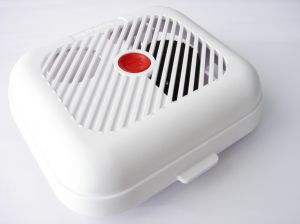
All you have to do is keep an eye on your smoke alarms and make sure your household not only has a fire escape plan, but that everyone knows and practices the plan. According to the City of Boston’s Home Fire Safety page, all of the smoke alarms in your home should be tested at least once a month and you should replace their batteries annually. Each family should also make sure that the fire escape plan is practiced at least twice every year. To help you to remind you of this, officials are soon launching Fire Prevention Week, from October 7th through October 13th.
684720_smoke_alarm.jpg
Our Boston personal injury lawyers understand that there are roughly 3,000 people who are killed in residential fires each and every year. Most of the victims in these accidents are killed from the inhalation of toxic gases and smoke and not as the result of any burns from the fire. Most of the fatalities and injuries happen in fires that occur at night while residents are asleep, too!

The truth of the matter is that smoke alarms can save lives, they can prevent injuries and they can help to minimize properly damage by helping to make sure that residents are alerted when a fire is developing in the home. The risk of being killed by a fire in your home is about twice as high in a home that does not have a properly-working smoke alarm.

Make sure that you always follow the instructions from the manufacturer when testing smoke alarms and replacing the batteries.

If your smoke alarm is powered by batteries and it starts to send off a low-power warning, which is usually a beep or a chirp, you’re urged to replace the batteries immediately with new ones.

You never want to disable your smoke alarm. This is never acceptable, not even if you experience a “nuisance” from it while showering or cooking. When this happens, you want to clean out the smoke alarm and make sure that you follow the manufacturer’s instructions while doing so. If you can, you might want to place it somewhere else, like away from the bathroom or the kitchen.

Develop an Escape Plan:

-Practice your escape plan at least twice a year.

-Make sure that children, babysitters and elderly family members are familiar with this plan.

-When practicing, remove any obstacles that could hinder a safe evacuation in the event of a real emergency.

-Parents should hold a practice fire drill at night to make sure that children are able to wake up during the real thing.

When changing the batteries in your home’s smoke alarm, it’s also a good idea to change the batteries in the Carbon Monoxide (CO) alarm, too! CO is an odorless, colorless gas that is created when fuel is incompletely burned. Each year, there are close to 200 people who are killed from CO, non-fire poisonings that are associated with home fuel-burning heating equipment.
Continue reading

The Massachusetts Department of Transportation (MassDOT) recently announced a pretty big milestone. They were able to enroll the 500th Safe Routes Partner School. This is a program that’s federally funded but organized by MassDOT. It’s the first statewide program in the U.S. of its kind to achieve this level of school participation.
mzajUqo.jpg
“This achievement is a testament…of our communities to make walking and bicycling safer and more widely used travel modes for our school children” says Frank DePaola, MassDOT Highway Administrator.

Our Boston personal injury attorneys understand that there are now close to 250,000 students from kindergarten through 8th grade in some 150 communities throughout the Commonwealth who are benefiting from the Massachusetts Safe Routes to School pedestrian safety initiatives and outreach education programs and services. The 500th partner to join the effort was the city of Woburn. The city reports close to 3,500 students currently enrolled. With more students involved in this program, we continue to help to make our young ones safer and reduce the risks of accidents through awareness and education.

The Massachusetts Safe Routes to School Program is different from other states’ programs because ours provides a central source of Safe Routes services to every school that’s interested within the entire state. Schools that participate are provided with year-long bicycle and pedestrian safety education instruction, environmental and safety priorities, engagement initiatives and infrastructure improvements.

Safe Routes to School pushes the five E’s: Engineering, Evaluation, Enforcement, Encouragement and Education. Through stakeholders in the community and the partnered schools, the program works to improve children’s physical and mental health all while helping them to do so safely. These efforts are also working to help to improve air quality and cut down on traffic congestion.

Currently, the state has 25 Safe Routes to School projects going on that total close to $10 million. The safety program works alongside all members of various school boards to help to make sure that all schools are well equipped to help their kids to get to and from school safely.

Children are some of our most vulnerable pedestrians. They don’t oftentimes understand the dangers that accompany vehicular traffic and are at high risks for accidents — oftentimes fatal. According to the Centers for Disease Control and Prevention (CDC), one in every five children between the ages of 5 and 9 who were killed in traffic crashes was a pedestrian in 2008.

Altogether, there were close to 4,500 pedestrians who were killed in traffic accidents across the U.S. in 2008. There were another 70,000 pedestrians who were injured in these same incidents. This means that someone was killed in these accidents every 2 hours and injured every 8 minutes.

Typically, pedestrians are 1.5 times more likely than motorists to be killed in a car accident on each trip.
Continue reading

Do you go through your medicine cabinet ever?

The truth of the matter is that we should all take the time to do so because there’s a good chance there are expired or unused drugs in there. According to the National Safety Council (NSC), these drugs can be a serious safety hazard for young children, for teens and for other members of your household.
mgyptbs.jpg
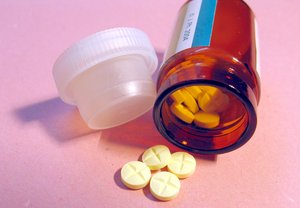
Our Boston personal injury lawyers are urging adults to take an inventory of their medicines. You want to check the expiration dates for prescription medications and even over-the-counter medicines. If you’ve got any leftover medicines, you want to safely dispose of them!

On the 29th of September, officials with the NSC are conducting the 5th National Prescription Drug Take-Back Day. From 10am to 2pm, local communities throughout the country will be collecting unused prescriptions and will safely dispose of them. There are a number of National Takeback Initiative Collection Sites in the state of Massachusetts. Find one near you!

Drugs can affect both your body and your mind in a number of ways and is greatly determined by the dosage. Kids who try drugs may see a change in their mood, in their appearance and in their development. Some of the most common side effects of being on drugs include anxiety, dizziness, confusion, paranoia, sleepiness and even hunger. Because young brains ard still developing, children run a serious risk of developing lifelong disabilities when consuming drugs not prescribed to them. These young ones are also more prone to overdose because of their size.

Why should I safely dispose of my unused medicines?

-Once a medicine has expired, it’s no longer effective. These drugs can be dangerous to your health, especially if you have certain medical conditions.

-Recommendations can change on your drugs and even on over-the-counter medicines. For example, cold medicines in many cases are no longer made for children under 5. Before they were recommended. Be sure you have newer medications and drugs to ensure safe dosages.

-Unused and leftover medicines can be of harm to kids and teens and other who might not understand that it’s dangerous to take drugs they’re not prescribed.

-Some prescription medicines, like painkillers, can be removed from your home without your knowledge and contribute to your community’s drug abuse problem. You never know who has an eye on your medicine cabinet.

When you break it down, drugs are defined as any kind of substance other than food that has the ability to change the way your mind and/or your body functions. Drugs have some serious side affects and these affects can be fatal to children and teens. Not only are these addictive, but they’re dangerous and can have some lasting effects on kids! Make sure that you take the proper safety precautions to protect your young ones and get rid of your unwanted prescriptions and other drugs on National Prescription Drug Take-Back Day!
Continue reading

Officials with the Federal Motor Carrier Safety Administration (FMCSA) recently announced a number of improvements to the Compliance Safety Accountability (CSA) program. This is the program that helps safety officials to identify and address safety concerns among bus and trucking companies.
609764_playing_it_safe.jpg
“Good data plays a key role in keeping our nation’s roads safe,” said Transportation Secretary Ray LaHood.

Our Boston personal injury attorneys understand the risks that accompany commercial buses and large, commercial trucks on our roadways. Not only do we expect commercial buses to be safe for passengers, we expect them to be operated in a safe manner. When a commercial truck or bus driver fails in that regard, it’s typically the occupants of passenger vehicles who pay the price.

The power and the weight of these large vehicles overpower other vehicles on the road. That’s why it’s so important that these vehicles are properly regulated and that they’re kept in safe operating condition.

The changes in this policy will be finalized and implemented by December. The changes include:

-Altering the Changing the Cargo-Related BASIC (Behavior Analysis and Safety Improvement Category) to the Hazardous Materials (HM) Compliance BASIC. This is going to help safety officials to better point our compliance and safety issues. According to FMCSA, this change will help to supervise more carriers.

-Fatigued Driving BASIC will be changed over to Hours-of-Service (HOS) Compliance BASIC. Officials think that this change will help them to better keep track of these kinds of violations and will allow them to monitor both electronic and paper records more efficiently.

-Now, there will be separate busing classifications for buses that carry more than 15 passengers and those that carry fewer.

-There will no longer be classifications for those carrying fewer than 8 passengers, like taxis, limos, vans, etc.

-Violation records will be kept in accordance with the specifications of the inspections. Drivers’ violations will be kept under driver inspections instead of in the broad “inspection” category.

Last year, there were close to 4,000 people who were killed in accidents with large trucks and buses — down about 4.5 percent from the previous year. Still, enforcement of exisiting laws is critical to improving safety for everyone. Consumers are urged to check out a company’s safety rating before hiring a busing company. Drivers are also asked to beware when driving near large, commercial vehicles.

Drivers who operate these vehicles are required to have their Commercial Motor Vehicle (CMV) driver’s license. Even the most experienced drivers are at serious risks for engaging in dangerous driving activities that could end up caused fatal accidents, according to the FMCSA.

Common Dangerous Driving Habits Among Truck and Bus Drivers:

-Failing to alter driving habits to accommodate current weather and traffic conditions. Never travel too fast for safety.

-Neglecting to look for other vehicles before making a move in traffic.

-Being too tired to drive.

-Driving under the influence of alcohol or drugs.

-Inattention and even daydream oftentimes affect these drivers on long road trips.
Continue reading

A bus carrying Thayer Academy kids was unfortunately in an accident recently. According to the Braintree Patch, the bus slipped out of gear when it was being loaded with baggage at Camp Bourndale. It rolled down some stairs and right into the camp’s function hall. Luckily, no one was injured in the accident.

89537_bended_bus_stop_sign_1.jpg
Our Plymouth car accident lawyers understand that school buses are used for much more than getting kids to and from school. They’re used for after school activities, for camps, for church events and for so much more. It’s important that everyone knows how to behave in and around a bus to help to make sure that everyone remains safe.

Capt. John Rogers of the Plymouth Police Department likes to remind kids walking to and from school bus stops to always use crosswalks and to stay on the sidewalk. You should avoid walking alone too, stay with parents, guardians or a group of friends.’

You should never accept a ride from someone you don’t know.

Most kids in the area take buses to and from school and use them for after school activities.

First Student offers young passengers some safety tips to help to make sure that each and every bus ride is a safe one. Parents are urged to talk with their children about the safety tips listed below to help ensure their safety on buses of all kinds.

Bus Safety Tips:

-Make sure you allow yourself plenty of time to get to the bus stop. If you have to rush, you may not follow safe traffic rules.

-Always walk on a sidewalk when there is one available.

-Always be alert. Don’t listen to MP3 players, play on phones or play hand-held video games. You want to know what’s going on around you.

-Don’t wear your hood up if you don’t have to. It makes it tougher for you to see.

-Wait for the bus away from the street. Stay at least 5 big steps away from the street.

-Avoid horseplay when waiting for the bus.

-Make sure that drivers can see you at all times.

-Wait for the bus to come to a complete stop before approaching.

-Find a seat and sit down immediately once you’re on the bus.

-Never toss anything out of the bus’ windows.

-Make sure you know your bus driver’s name and your bus number to make sure you’re always on the right bus.

-Stay quiet on the bus so that the driver can concentrate on the traffic and work to keep you safe!

-If you drop something near the bus, tell the driver first! Never go down to get it.

-Stay away from the bus wheels at all times – especially the back wheels where it’s hard for the driver to see you.
Continue reading

Contact Information