Articles Posted in Car Accidents

The Government Accountability Office recently concluded that only 70 percent of cars and trucks that were recalled ever got repaired within 18 months. If you’re not notified in a timely manner of these recalls, then your risks of being involved in a car accident in Massachusetts quickly increase.
mTFZ8Wa.jpg
Our Boston personal injury attorneys understand how common these vehicle recalls are nowadays. It’s important that there’s an effective system in place to make sure that consumers are being notified as quick as possible about these dangerous defects. The Government Accountability Office says that the NHTSA needs to step up their efforts in doing so. They suggest that the Administration improves their recall database website and provides notifications to used car buyers more quickly.

Some recalled vehicles are never even repaired. These vehicles are all over our roadways. When a car switches owners, it may be difficult for the car manufacturer to contact the new owners. When a manufacturer isn’t able to contact an owner, the job falls into the lap of the NHTSA.

The NHTSA currently has a database, safecar.gov, which allows motorists to look up their vehicle’s investigations and recalls. Drivers can even sign up to receive e-mail alerts for their specific vehicle. Another perk of the website is that it will provide you with a list of dealers that will perform recall repairs to your car even if the vehicle’s warranty has expired. Many times these repairs will cost you nothing.

It all started after a recent string of Toyota recalls. It wasn’t until then that Congress started to question the effectiveness of the auto safety defect recall process.

In response to these investigations, the GOA reviewed current laws and documents and interviewed the NHTSA and stakeholders about:

– The extent of NHTSA’s role in the recall process. They inquired about how its authorities compare to selected federal and foreign agencies that may also oversee recalls.

-The benefits and challenges of the current recall process for NHTSA and affected manufacturers.

-Some of the possible options for improving the recall process.

Through this investigation, the GOA came up with some recommendation to improve the system. They concluded that in order to encourage vehicle owners to comply with vehicle recalls, they would have to ensure that these owners would be provided with relevant information pertaining to their vehicle. They also concluded that the Secretary of Transportation should direct the Administrator of NHTSA to modify the requirements for defect notification letters to include information that would include the word “urgent” and the VIN number of the recalled vehicle so that the owner recognizes that this recall is specific to their vehicle.

We understand that it is extremely important to stay on top of the recalled vehicle’s list. If you’re vehicle has been recalled and you’ve not been notified, then you face an increased risk of being involved in an accident that could have been avoided if there would have been an effective notification system in place.
Continue reading

The Government Accountability Office is cracking down on the defective car list provided by the National Highway Traffic Safety Administration (NHTSA) because they’re claiming that the Administration is not doing its job of making sure defective cars get recalled and repaired, reports The Car Connection.

As a matter of fact, the Government Accountability Office recently concluded that only 70 percent of cars and trucks that were recalled were repaired within 18 months. If consumers are not notified in a timely manner of these recalls, then the risk of being involved in a car accident in Massachusetts sharply increases.
1341923_hotrod_dash.jpg
Our Boston personal injury attorneys understand how common these recalls are. It is important for there to be an effective system in place to make sure than consumers are being notified as quickly as possible about the possibly dangers defects. The Government Accountability Office says the NHTSA needs to step up their efforts.They suggest that the Administration improves its recall database website and provide notifications to used car buyers quicker.

These concerns may be backed by solid numbers as a number of vehicles that are recalled are never repaired. When vehicles are sold or traded to dealerships or random independent buyers, getting that information to the deserving individual may be rather difficult, a lot more difficult than if the car is sold to a family member or close friend of the original owner. While vehicle manufacturers are virtually unable to track down current owners that are not listed in their databases, it is then the job of the Administration to ensure recall compliance.

Right now, the NHTSA has a database that anyone can search. This database includes vehicle investigations and recalls. Consumers can even sign up to receive e-mail alerts about vehicle recalls. They can also be notified about dealers that can perform recall repairs, which will generally do for free for the consumer even if your vehicle’s warranty is expired.

If you’ve still got some doubt, you’re urged to get in contact with a local dealer. They can help to verify if a particular recall repair has been completed on your current vehicle.

As a matter of fact, the Chrysler Group recently recalled more than 11,350 cars, minivans, and other models. The recall was made after a manufacturing problem was discovered that can cause the steering wheel to collapse improperly during the event of a collision.

Chrysler says that it does not know of any accidents or injuries caused the by the problem. The recall affects 11 of the 20 models that Chrysler has on sale for the 2011 model year. The missing or incorrectly installed rivet on the Chrysler vehicles can cause the problem and increase the risk of injury in a crash.

Recalled Chrysler vehicles:

  • Chrysler 200 midsize sedan and convertible
  • Town and Country minivan
  • Dodge Avenger
  • Caliber compact car
  • Caravan
  • Journey crossover vehicle
  • Nitro SUV
  • Jeep Compass wagon
  • Patriot
  • Liberty
  • Wrangler SUVs

The vehicles that are recalled were built from mid-April to mid-May.

The improperly installed rivets are supposed to hold the steering column adjustment mechanism in place. If one is missing or misaligned from the steering wheel then the steering column may not collapse properly when the driver’s body strikes it in the event of an accident, according to The Associated Press.

Dealers are available to check to make sure the rivet was installed correctly on your vehicle if needed. If not, they will be making repairs free of charge.
Continue reading

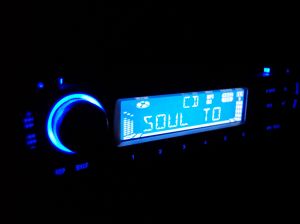
Technology is forever advancing, and some would argue that these through these technologies we continue to put our lives in danger for a car accident in Boston and elsewhere in the United States. A recent conference, Telematics Detroit 2011, met to celebrate and to share these new advancements in vehicle technology, according to Government Computer News. But everyone in attendance wasn’t supporting these new features, as David Strickland of the National Highway Traffic Safety Administration showed up to rain on their parade.
820032_car_radio.jpg
“I’m just putting everyone on notice, a car is not a mobile device,” said Strickland. “I’m not in the business of helping people tweet better. I’m not in the business of helping people post on Facebook better.”

Our Boston personal injury attorneys recognize that many of these new car features have proven to be extremely beneficial to drivers, such as useful IT-based functions, such as Global Positioning System navigation, automated emergency notification and internal diagnostics. There are other features that safety advocates would say do nothing to help increase the safety of drivers on our roadways, like hands-free web surfing apps that allow you to check your Facebook or make a tweet.

Strickland attended, and spoke at this conference, to warn attendees that he and the U.S. Department of Transportation plan on fighting these unsafe technologies. He and the DOT believe that is it these types of advancements that are largely contributing to distracted driving, which oftentimes results in deadly accidents. He continued on by declaring vehicles as mere modes of transportation and not personal infotainment centers.

Participants of the Telematics Detroit 2011 may have not of been the best audience for Strickland to speak to about his anti-entertainment vehicle theory because as their website states, “Telematics is Here to Stay! Take Note of Consumer Demands As the Car Becomes the Ultimate Mobile Device.”

Safe driving advocates clearly oppose these features that the attendees of this conference stand for. Advocates oftentimes point to the Chevy Cruze ad as an example of unnecessary vehicle technology. This was the vehicle ad that aired during the Super Bowl that showed a driver using a built-in car app to read his Facebook updates. Users of this device would say that they’re actually increasing driver’s attention because had their not of been a hands-free device for this function, a driver would have probably used their smart-phone to thumb through the site which would have taken real attention off the roadway.

According to the Insurance Institute for Highway Safety, hands-free may eliminate some of the physical distraction but does nothing to eliminate any amount of cognitive distraction. Using a phone, or app, of any type greatly increases a driver’s risk of being involved in a motor-vehicle accident.

As the intention of some of these features seem genuine, many believe the only way to increase safety on our roadways is to eliminate these habits altogether. Strickland, with the help to Transportation Secretary Ray LaHood, plans on taking on this market in an attempt to save motorists nationwide.
Continue reading

Safety advocates used to frown upon sport utility vehicles because of their high rollover rate, but not anymore, according to USA Today. Now, SUV drivers are among the safest motorists on our roadways, as they are least likely to die in a car accident in Massachusetts or elsewhere throughout the United States. Research shows that SUV drivers are more safe in an accident than occupants of smaller cars. This newly released information has been put out by the Insurance Institute for Highway Safety.
458058_concept_jeep.jpg
One of the main factors that safety advocates point to for the increased safety of the large vehicle type is the installation of electronic stability control. This new technology uses the vehicle’s engine power and brake system to keep the vehicle level on the road It reduces skidding and rollover incidents. Of course, this technology has been introduced quicker on SUVs than in normal sized passenger cars.

Our Boston personal injury attorneys understand that the type of vehicle you choose could possible mean the difference between life and death in the event of a traffic accident. For this reason, drivers and parents are urged to take the time to investigate the characteristics of each vehicle before making a purchase.

“The rollover risk in SUVs used to outweigh their size/weight advantage, but that’s no longer the case,” Anne McCartt, the Arlington, Va.-based group’s senior vice president for research, said in the report.

As a matter of fact, the death rate for drivers of SUVs has seen a 66 percent drop. The death rate used to be 82 deaths per million registered vehicles for the 1999 to 2002 models, where it is now only 28 deaths per million for the 2005 to 2008 vehicles.

“It’s not just weight that gives SUVs an advantage. It’s also their height and other factors. When cars and SUVs of similar weight are compared, the SUVs have lower death rates,” says McCartt.

Drivers of smaller passenger cars weren’t as thrilled about the news as SUV drivers were. Smaller vehicles have become much more popular on our roadways ever since years of extreme increases in gas prices over the past few years. This only means that more motorists on our roadways are at an increased risk for car accident that results in serious injury or death.

The death rate of cars has decreased slightly. The death rate for these smaller vehicles was 110 deaths per million registered vehicles for the 1999 to 2002 models while the newer cars, the 2005 to 2008 models, have a death rate of 72 deaths per million vehicles.

“For years, small cars have represented the low end of the economic spectrum and received fewer safety and enhanced design features,” says Sean Kane of Safety Research & Strategies, which advises plaintiff lawyers, government and auto suppliers. “Undoubtedly, that has an effect.”

In 2010, there were roughly 11.5 million vehicles sold in the United states, 5.6 being cars and 5.9 million being vans, SUVs or pickup trucks.

If you were to compare death rates among current models of vehicles, minivans would rank as the number one safest vehicle type with a death rate of 25 driver deaths per million registered vehicles. SUVs would rank right behind the minivan with a death rate of 28, followed by pickup trucks with a death rate of 52 per million vehicles. In last place is the death rate of cars with an average of 56 deaths per million, but cars are separated into two categories. Larger four-door cars have a death rate of 46 while the smaller four-door cars have a death rate of roughly 72 deaths per million registered vehicles.

Top 10 safest ranked vehicles with the lowest driver death rate:

-Audi

  • Mercedes-Benz E-Class
  • Toyota Sienna
  • Ford Edge
  • Nissan Armada
  • Land Rover Range Rover Sport
  • Land Rover LR3
  • Honda CR-V
  • Jeep Grand Cherokee
  • Acura MDX

Continue reading

Massachusetts has recently climbed from 19th to 10th on the League of American Bicyclists “Bike Friendly State” list. Our state has also been recognized with the special Bronze level award. As our state has climbed the safety list for riders, motorists are still asked to be cautious to help to decrease the risks of a Massachusetts bicycle accident even further.
1177205_bicycles_in_amsterdam.jpg
“These prestigious national honors are an important recognition of all the changes that we have implemented since becoming MassDOT on November 1, 2009,” said MassDOT Secretary and CEO Jeffrey B. Mullan. “Key to these honors has been the teamwork across divisions in recognizing and promoting the value of bicycling. The RMV, MBTA, Highway and even the Aeronautics divisions have made important contributions to bicycling as MassDOT becomes a truly multi-modal DOT focused on customer service and safety.”

Our Boston bike accident attorneys would like to point out that this award comes after the Bay State just wrapped up our Bike Safety Week. This event, held last month, proved to be very successful. MassDOT worked with the Massachusetts Bicycle Coalition (MassBike) to hold this week-long event that celebrated bicyclists and safety awareness across the state.

In 2010, MassDOT became the first state DOT in the country to organize a statewide Bike Week celebration. This year’s Bike Week celebrations held nearly 200 bike-related events, spanning Massachusetts from Pittsfield to Orleans.

MassDOT prides itself on its commitment to pedestrian and bicycle safety as a key part of their overall transportation vision. Riding bicycles throughout our city allows people to reduce traffic congestion, improve air quality and the environment and promote healthy lifestyles.

The beginning of the GreenDOT policy, MassDOT’s comprehensive sustainability initiative that includes promoting walking, bicycling, and public transit as one of its central goals, has largely contributed to these milestones in travel and safety.

GreenDOT asks that residents of the Bay State incorporate sustainability into nearly all of their daily activities. The DOT has vowed to do the same with the strategic planning to project design and construction to system operation.

According to the National Highway Traffic Safety Administration, nearly 650 bicyclists were killed in motor-vehicle accidents in the United States in 2009. Another 51,000 bicyclists suffered injuries from these types of accidents. These bicycling fatalities made up roughly 2 percent of all motor vehicle traffic fatalities, and another 2 percent of all injuries in these accidents, throughout the year. Nearly 10 of these bicyclist fatalities occurred in Massachusetts in 2009.
Continue reading

The U.S. Department of Transportation (DOT) is now urging that all motorists inspect their tires to help prevent a car accident in Massachusetts and elsewhere during the hot summer months. Motorists are urged to check that their tires are properly inflated and to make sure that there are no signs of tread wear or damage. This information was recently released in a consumer advisory from the DOT.
1197254_motion.jpg
In an additional attempt to increase the awareness of proper vehicle safety measures, the Department has kicked off their National Tire Safety Week campaign. This campaign aims to spread the word of these precautionary steps as the summer travel season begins and resident driving increases.

Our Boston personal injury attorneys urge that all motorists regularly check their vehicles as the safe upkeep of your car can help to keep you safe from potentially fatal car accidents. It is encouraged that motorists always keep an eye on tire pressure, oil levels, oil pressure and other important details of your vehicles performance, not only for safety but to help you save money and avoid a costly mishap.

“As the weather warms up, it’s especially important for drivers to ensure their tires are properly inflated,” Secretary Ray LaHood said. “For your safety and the safety of others on the road, inspect your tires regularly and maintain the proper inflation.”

The National Highway Traffic Safety Administration recently released new data that showed nearly 3,500 people died from tire-related accidents between 2005 and 2009. The data also concluded that roughly 116,000 people suffered injuries from these preventable accidents.

“While it’s true improperly maintained tires can contribute to a crash at any time of year, it is particularly critical for motorists to check tires during hot weather, when families and luggage often overload vehicles for long vacation trips,” NHTSA Administrator David Strickland warned. “Underinflated tires spinning on hot asphalt for extended periods of time can be a recipe for disaster.”

This newly released consumer report suggests that motorists check their tire pressure before venturing out on long trips and to check it periodically. Aging tires and hot weather can be a recipe for disaster as older, more worn tires are more susceptible to heat stress. They’re even more susceptible if they’re not properly inflated or taken care of.

Vehicle owners are urged to check the sidewall to see how old their tires are. They’re also urged to check with the vehicle’s manual or tire manufacturer for the recommendations on how often to change the tires.

Properly inflates tires will not only help to keep you safe during your summer travel, but will help you to save a little money too. The Department of Energy reports that under-inflated tires can lower gas mileage by nearly 0.5 percent for every 1 PSI (pound per square inch) drop in pressure of all four tires.

This means that a typical fuel-economy rating of 30 MPG and a 35 PSI tire pressure recommendation, a drop of 25 percent in tire pressure would mean that you’re losing out on nearly 9 percent in fuel economy. This means a drop of 2.6 MPG. That’s a big loss!
Continue reading

Massachusetts saw at least two tornadoes this week — the first tornado experience since 2008, according to CNN. Wednesday our state was hit with chaotic weather conditions that took the lives of at least 4 residents. Commonwealth has only reported 55 tornadoes since 1950, according to the National Oceanic and Atmospheric Administration (NOAA).
1194710_tornado.jpg
A pack of wild storms rolled through the Springfield area yesterday and caused some serious damage and the aftermath poses some real threats of storm damage and injuries in Massachusetts.

Our Boston personal injury attorneys urge residents to be extra careful before, during and after these storm conditions. Some of the most serious risks for injury occur after storms have hit the area. Residents are urged to be alert for fallen power poles, loose debris in the area and flooding that could put your car at risk for submersion.

“It was obviously an incredible surprise … we’d been monitoring the weather all day and by early afternoon nobody was overly concerned … but by late afternoon some storm clouds started to appear,” spawning tornadoes that battered several towns, said Peter Judge of the Massachusetts Emergency Management Agency.

Residents of 19 small communities in Massachusetts that were hit by the tornadoes are left to deal with the catastrophic damage. These two late-afternoon tornadoes shocked residents and emergency officials. Our area is more accustomed to dealing with snow and bone-chilling cold weather than these funnel clouds and tornadoes.

“I can see the plywood of roofs, and see houses where most of the house is gone,” said Marrone, pastor of The First Church of Monson. “The road that runs up in front of my house … There’s so many trees down, it’s completely impassable.”

To make matters worse, the National Weather Service in Taunton, Massachusetts has issued a flood advisory for several counties in the Bay State because of the storms throughout the state, according to the Nashua Telegraph. It is estimated that these storms could produce up to two inches of rain an hour, which could cause flooding in urban areas.

The National Weather Service in Taunton has issued a flood precautionary and preparedness advisory: “Do not drive you vehicle into areas where the water covers the roadway. The water depth may be too great to allow your car to cross safely. Move to higher ground.”

It is important to avoid flood water. If you cannot see the road, it is critical for you to steer clear of that area. Water depths may be unpredictable and could take control of your vehicle. It is also important to remember that all vehicles are vulnerable to submersion, even SUV and trucks.

Safety Issues offers these tips to help residents that get caught up in the dangerous flood water and find themselves in a submerging car:

-Remain calm. It is important to thinking clearly and effectively to escape the vehicle.

-Open a window. You may want to keep your seat belt fastened at this time so that you are able to strike the window with more force if you have to break it open.

-Unfasten your seat belt and prepare to exit.

-If your car is sinking, you are urged to let the some of the water into the cab so that you can stabilize the pressure and open the door more easily.

-Once you’re out, swim with the currently to safety.
Continue reading

Baby Boomers influence a new safety program aimed to help save victims of serious car accidents in Boston and elsewhere in the country, according to USA Today.

The new program, Yellow Dot, will provide a simple and efficient way for emergency responders to collect necessary information from those who have suffered serious injury in a traffic crash. The goal is to get this information within the first 60 minutes following an accident, or the “golden hour”, as this is the time that can mean the difference between life and death for those suffering serious injury.
800256_retro_cars_3.jpg
Our Boston personal injury attorneys understand the importance of personal information in the event of an accident and collecting that information from a seriously injured motorist can be difficult. We are proud to be 1 of the 8 that currently participate in the program.

Here’s how the Yellow Dot program works:

-Residents receive a yellow dot sticker to place in their rear window.

-Residents then place a folder in their glove box, with a corresponding yellow dot sticker, containing important information including, a photograph, prescription information, medical conditions, and other necessary information.

-If involved in an accident, emergency responders will know, from the yellow dot sticker on your window, to look in the glove box for information that can help them to assist you quicker and more efficiently.

“It is very nice to see innovative programs to address the unique risks associated with older Americans and car crashes,” says Peter Kissinger, president and CEO of AAA Foundation for Traffic Safety. “Since older individuals tend to have more medical conditions, are on more medications and are generally more fragile, this sounds like a well-justified program, especially in light of the growing number of older Americans.”

The first Yellow Dot program in the U.S. started in Connecticut back in 2002. Since then, 8 states picked up the system including Kansas, Illinois, Iowa, Minnesota, Massachusetts, Virginia, Alabama and New York. Georgia is currently considering the program.

“It’s a promising approach,” says Jonathan Adkins, spokesman for the Governors Highway Safety Association. “Actually, this is one of the goals of automated crash notification systems. Eventually, when there is a crash, these key data such as medication needed will automatically be available to EMTs, etc. The Yellow Dot program may be a system that can be helpful in the meantime.”

This system was created with Baby Boomers in mind as, in 2009, motorists over the age of 65 experienced nearly 5,500 fatalities as a result of car accidents, according to the National Highway Traffic Safety Administration. Another 187,000 motorists of this age group suffered injuries in this same time period. This age group account for nearly 20 percent of all fatal car accidents during the entire year and another 8 percent for the year total for injuries. Baby Boomers experienced nearly 100 fatalities from car accidents in 2009 alone and without this vital information readily available for emergency responders, these statistics could have been much higher.
Continue reading

The 2011 edition of the pedestrian safety report has recently been released by Transportation for America. This newly released data analyzes fatalities from pedestrian accidents in Boston and elsewhere in the United States between 2000 and 2009.

After the release of this data, Dangerous by Design 2011 will examine the problem areas and construct potential solutions to prevent these deadly accidents. Dangerous by Design will be looking at the 47,000 pedestrian fatalities, and 688,000 pedestrian injuries.
750441_traffic_sign_10.jpg
Our Boston pedestrian attorneys understand the importance of this report. According to these findings, Massachusetts suffered nearly 1,000 pedestrian fatalities in the study period. These accidents cost our state more than $3 billion. Our state is ranked 42nd, out of the 50 states, on the Pedestrian Danger Index (PDI). Pedestrian fatalities for those over the age of 65 ranks 10th in the nation.

These fatal accidents seriously affected some of Massachusetts’ most densely populated areas:

-Boston/Cambridge/Quincy, 483 pedestrian deaths
-Providence/New Bedford/Fall River, 186 pedestrian deaths
-Springfield, 83 pedestrian deaths
-Worcester, 82 pedestrian deaths
-Barnstable Town, 20 pedestrian deaths
-Pittsfield, 18 pedestrian deaths
That’s the great thing about the newly released data. It comes with state-specific information. It provides the user with an interactive pedestrian map that allows user to zoom in to their own community to see just how many fatal pedestrian accidents have occurred during the study period.

If you look at the interactive map, you’ll notice that a majority of these pedestrian accidents happened along “arterial” roadways across the nation that are not created with pedestrians in mind. These streets are designed to accommodate speedy traffic instead.

Many advocates who support these fast-travel highways protest that pedestrian safety is the sole responsibility of the local government. But, statistics prove otherwise as nearly 70 percent of pedestrian fatalities have occurred along these federal-aid roads over the last 10 years.

This only leads us to believe that federal programs continue to persuade state governments to place their focus of fast-travel roads instead of on the safety of pedestrians in neighborhoods and shopping districts.

Still, Congress continues to contemplate the elimination of such funds altogether.

If you would like to contact Congress and urge them to continue the funding of pedestrian safety projects with your tax dollars, you are urge to submit your zip code to our website to ensure your message to the appropriate recipient.
Continue reading

An oncoming car struck a 22-year-old female pedestrian as she stepped into the road at the corner of Dorchester Avenue and West Broadway as she focused her attention on her text message instead of oncoming traffic, according to Boston.com. To make matters worse, the motorist was paying as little attention as the pedestrian was as the car ran over the young woman’s foot.
1115760_a_girl_with_a_phone.jpg
Last September, Massachusetts banned texting behind the wheel, but texting pedestrians remains legal. With summer upon us, many pedestrians will be hitting our sidewalks to soak up the beautiful weather and motorists are urged to be on the lookout. Distracted driving may soon be a thing of the past as distracted pedestrians are reportedly colliding with cars, telephone poles, tumbling down stairs, slipping off curb, and colliding with into other pedestrians. Pedestrian accidents in Boston may soon outnumber car accidents.

In all seriousness, our Boston personal injury lawyers understand the popularity of our handheld devices, but we need not forget the importance of alert and cautious travel. We urge pedestrians and motorists to work together to help keep our roadways injury-free during these beautiful months that are rolling in.

According to nationwide research conducted at Ohio State University, pedestrian texting accidents resulted in more than 1,000 visits to the emergency room in 2008. Unfortunately, these statistics were examined when Americans were sending a mere 1 trillion texts. Americans are now sending more than 2 trillion texts. The study expects new numbers to come out next month.

“I’m not sure people realize they are putting themselves at risk,” said Jack Nasar, a professor of city and regional planning at Ohio State.

As many pedestrians take their eyes off the road, motorists need to increase their awareness of their travels. While pedestrians create obstacles by themselves with their focus on their phones, a pedestrian’s biggest threat is a collision with a motor vehicle.

According to the National Highway Traffic Safety Administration, more than 4,000 pedestrians were killed in traffic accidents in 2009. Another 59,000 pedestrians were injured that same year. Pedestrian deaths made up 12 percent of all traffic fatalities and 3 percent of traffic injuries in 2009.

Massachusetts witnessed almost 50 pedestrian traffic fatalities in 2009 alone.

To help preserve the safety of pedestrians, PR Web offers these tips to motorists:
-Always be aware of your surroundings. Check your peripheral vision often as dangers can lurk from all sides.

-Look, and look again, before turning. This is especially important to remember when making a right turn on red. Be sure to check that crosswalks are clear before turning.

-Pay attention to weather and traffic conditions. Be sure to adjust your speed accordingly, especially when it is raining and your visibility is reduced.

-Always activate your turn signal when attempting a maneuver. If there are no vehicles around you, you should put on your blinker so that pedestrians you may not have seen know your next move.
Continue reading

Contact Information