Articles Posted in Car Accidents

As we recently reported on our Boston Car Accident Lawyer Blog, drivers throughout the state and elsewhere were urged to ring in the New Year with some resolutions toward safer driving habits.

It may already be April, but our attorneys and officials with the AAA Foundation for Traffic Safety are checking in to make sure residents are keeping up with the plan. Safe driving habits start with you and your actions can help to not only prevent car accidents, but it can help to save lives, too!

mhizINU.jpg
As a matter of fact, drivers do desire a greater level of safety than they currently experience on our roadways. Most of them support more government actions to get it done! Still, most of these drivers refuse to make the changes in themselves to help get there.

It’s the “do as I say, not as I do” complex, meaning drivers expect everyone else to practice safe driving habits, but feel they’re exempt from having to do so. There’s no easy way around it, safe roadways takes a collaborative effort from everyone.

Our Massachusetts car accident lawyers understand that there were nearly 33,000 people who were killed in car accidents in the United States in 2010. During the same year, the state of Massachusetts saw more than 300 traffic accident-related fatalities.

Still, more than 300 traffic accident fatalities in one year is nothing to brag about. For the fourth year in a row, AAA’s survey determined that most drivers across the country feel that it is unacceptable to drive without wearing a seat belt. With those viewpoints, still about a quarter of all drivers admitted to driving around without wearing a seat belt. This wasn’t the only scenario in which drivers were extremely hypocritical.

It also applied to speeding, drinking and driving, driving while distracted, aggressive driving, fatigued driving and running red lights. With the results from the study, you’d think there’s a bunch of mad men out on our roadways. Sadly enough, in a way you’d be right.

AAA and our Boston injury attorneys aren’t giving up through. We ask that drivers keep their New Year’s resolutions and keep up with their safe driving habits. It’s never too late to make a change. Start again now and make a pledge to practice safe and cautious driving. Our roadway safety depends on it.

“Every one death on our roads in unacceptable,” said AAA CEO and Present of AAA, Peter Kissinger. “Take the first step and make a personal goal to be a safe driver.”
Continue reading

Teen girl drivers are most likely to be involved in a distraction-related car accident in Brockton and elsewhere, according to a recent study from the AAA Foundation for Traffic Safety.

These young female drivers are actually twice as likely to engage in activities behind the wheel involving cell phones and text messaging devices than males the same age. Male or female, teenage drivers are the most likely to engage in these distractions. It’s no wonder why they have such high accident rates.
domesticviolencephone.jpg
Researchers concluded that talking on the phone and text messaging was the most common behavior that teenage drivers exhibited behind the wheel. Some of the other top distractions included talking loudly with passengers, engaging in horseplay, drinking, eating, grooming and playing with controls, according to CBS NEWS.

Our Massachusetts car accident lawyers know these findings failed to surprise as car accidents continue to be the leading cause of death for teens in the country. Researchers were looking more at which drivers were likely to engage in specific distractions. In the state of Massachusetts, these young drivers aren’t even allowed to talk on cell phones or text message at the wheel.

According to the Governors Highway Safety Association (GHSA), drivers under the age of 18 are prohibited from using a hand-held cell phone at the wheel. All drivers are prohibited from text messaging while driving. Still, young drivers are playing with these devices all too often behind the wheel, and they’re endangering the safety of our roadways.

“This new study provides the best view we’ve had about how and when teens engage in distracted driving behaviors,” said Peter Kissinger, AAA Foundation President and CEO.

When state law fails, parents are asked to step in. Parental advice, insight and enforcement may be some of the best ways to help to reduce their risks for a car accident.

This study from AAA comes as we enter National Distracted Driving Month 2012. This month-long campaign is used to help raise awareness about the dangers of distracted driving. The National Safety Council (NSC) is urging motorists across the country to take the pledge, the pledge to drive distraction free. You see, these kinds of accidents are completely preventable. This pledge isn’t only for teens, who are more likely to engage in these distractions, but for drivers of all ages. The change starts with you. Take a pledge, be a responsible driver and help to save lives.

According to the NSC, about a quarter of all car accidents involve a cell phone-using driver. As a matter of fact, engaging in phone conversations behind the wheel causes the driver to only see 50 percent of the surroundings. That means 50 percent of traffic lights, other vehicles and pedestrians aren’t seen by the driver. Scary, isn’t it?

Do you part to make our roadways safer for everyone, take the pledge and urge the young drivers in your family to drive distraction free. You’re urged to use the month of April to help spread the message of the dangers of these unsafe driving habits. It can help to save your life!
Continue reading

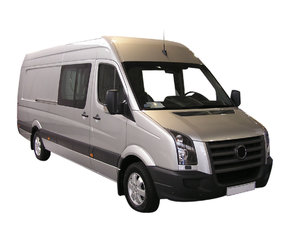
The spring driving season is here and the summer season is quickly following right behind. During this time, friends and family members typically join together and head out for a much-needed vacation. In preparation for the travel season, safe driving advocates with the National Highway Traffic Safety Administration (NHTSA) are warning travelers about the dangers associated with group trips in 15-passenger vans.

This warning from the NHTSA is targeting church groups, spring breakers, college students and other groups who may be using these 15-passenger vans. The NHTSA is asking both drivers and passengers to take the proper steps to stay safe, including always wearing a seat belt during every ride to help prevent injury in the event of a van accident in Dedham and elsewhere.
mp0UVxY.jpg
The Administration would like to point out that these 15- passengers vans are sensitive to loading, meaning that travelers should be cautious not to overload these vehicles. Overloading these vans makes them a lot more likely to flip, rollover and more difficult to handle. Drivers and passengers are urged to review a few safety rules and suggestions before heading out for vacations. These vehicles don’t drive like our everyday vehicles and need to be handled much differently.

Our Massachusetts accident lawyers understand that these vans can be dangerous for travelers, especially when the driver is not familiar with the vehicle. Tire pressure can vary on both the front and the back tires of these vans. For this reason, the NHTSA is asking drivers to make sure that each tire is filled and inflated properly for the vehicle’s load before every trip. You can’t just pack all that you want into these vans. The NHTSA is also urging travelers to using the spare tires sparingly. Tire condition doesn’t hold up forever. Spare tires should not be used in place of worn tires. The NHTSA recommends that tires that are more than 10-years-old should never be used.

Safety Tips for 15-Passenger Vans from the NHTSA:

-Do not overload the van. Make sure you know what the weight limitations are on the van before loading your belongings.

-Passengers and drivers should always wear a seat belt, regardless of how short or long of a trip is being taken.

-If you own one of these vans, make sure that it’s regularly maintained. Preventative measures can help to cut the risks of accidents significantly.

-Owners should have steering and suspension components regularly inspected. Inspection guidelines can be found in the vehicle’s manual.

-Be sure to replace and repair parts as suggested in the vehicle’s manual.

-Tires should fit the load requirements of the van.

-Drivers should be properly licensed and should be experienced in driving these kinds of vehicles.

-Drivers should be well rested before venturing out. Driving these vehicles requires full and alert attention.

-Always adjust side mirrors before starting the vehicle and heading out.

-Remember to keep safety as a number one priority.

-Obey speed limits and drive slowly. These vehicles, especially when loaded with cargo, are highly susceptible to rollover accidents.
Continue reading


Our Boston Car Accident Attorneys recently discussed the launch of the overnight closures of Interstate 93. With those closures and with other roadwork that is being executed throughout the state, we’d like to shine some light on National Work Zone Awareness Week.

According to the Official Website of the Executive Office of Public Safety and Security, this week-long campaign will be taking place from April 23rd through the 27th. During the campaign, traffic officials will be focusing on motorists’ driving habits through work zones in an attempt to help protect the lives of roadway workers and to help to prevent car accidents in Boston and elsewhere.
mmUO4be.jpg
“This campaign will remind drivers to slow down, be aware of their surroundings and protect the lives of the workers around them,” said Richard A. Davey, MassDOT’s CEO and Secretary.

Our Massachusetts personal injury attorneys understand that officers throughout the state practice a zero-tolerance policy for irresponsible driving near construction and roadwork sites. Officers with the Massachusetts State Police will also be using this time to strictly enforce speed limits through these work zones. Motorists beware and be safe!

Back in November of 2011, the Massachusetts State Police, Governor Deval Patrick, the Executive Office of Public Safety and Security, Massachusetts Department of Transportation (MassDOT) and both federal and state officials announced a pilot program to nab dangerous drivers in work zones by targeting motorists who speed.

This initiative was federally funded through MassDOT’s Highway Safety Improvement Program and EOPSS and was the result of an extreme spike in the number of accidents in work sites. These accidents were most commonly the result of speedy and distracted drivers. With the recent increase in the number of construction workers along our roadways as well as the number of officers and cruisers hit by speedy drivers, the Construction Industries of Massachusetts and State Police joined up with the National Highway Traffic Safety Administration, the Federal Highway Administration, MassDOT and EOPSS to create an initiative to step up speed enforcement in work areas statewide. The enforcement effort lasted for about 10 weeks. During that time, nearly 4,000 traffic stops were made for various violations within work zones. With these stops, there were about 2,000 citations issued.

Every April, Massachusetts and other states participate in National Work Zone Awareness Week to focus attention on motorist and worker safety and mobility issues in work zones nationwide. Officials believe that this effort is paying off as the number of fatal work zone accidents has declined significantly, from more than 1,000 in 2006 to just fewer than 600 in 2010. The work’s far from over though. Until we are able to work and travel in these areas safely, the work and the enforcement will continue. Drivers are asked to please be extremely cautious when driving through these areas to help avoid a potentially fatal accident.
Continue reading

We often talk about the dangers of riding bicycles and walking near traffic, but we don’t think about them while on vacation — the risks were probably the last thing on a Medford woman’s mind when she died in Fort Lauderdale. The expectant mother had won a trip to Florida through a church event. It was on that Florida trip where the Massachusetts woman was killed while hanging out by the pool. She was killed by a motor vehicle that sped off of the road, onto the hotel’s property and through the cabana she was in by the pool of her hotel, according to the Boston Herald.
1383244_beach.jpg
“She won a contest writing an essay on how a vacation would bless them,” said Genesis pastor Michael Davis.

Although this freak accident happened in the state of Florida, it’s important to point out that cars can speed into buildings and cause fatal accidents in Massachusetts as well. When an unfortunate accident like this one happens to you or someone in your family, it’s important to contact an experienced attorney to help you to fight for your rights. Fighting for your rights will be difficult with property owners, drivers and victims all fighting for the same thing — justice and compensation. And property owners will typically share the blame for not doing enough to protect customers and guests.

Our Massachusetts personal injury lawyers understand that the expectant mother and her husband were supposed to return home on that previous Saturday, but decided to extend their trip another day and checked into another hotel. It was that Sunday when the tragic accident happened. Fort Lauderdale police are still looking into the cause and details of the accident. It could be weeks before charges are filed, if they ever are.

Here’s the details that have been released on the accident: The woman was in the bathroom of a poolside cabana at the Riverside Hotel on Las Olas Boulevard when a 34-year-old driver lost control off her vehicle, left the roadway and went through that very cabana. The driver was heading down Southeast Fourth Street when she lost control of her vehicle at a curve in the road. She ran over a fence and right into the cabana where the Massachusetts woman was.

Both the Medford mother and her unborn child were later pronounced dead. The husband and soon-to-be father was in an adjoining restroom and only suffered minor bruises and cuts.

The driver of the car was transported by emergency response teams to the Broward General Medical Center with only minor injuries. She cooperated with investigators. Still, no charges have been filed.

“She doesn’t recall the incident,” said Detective DeAnna Garcia.

There was a gathering at the family’s church, Genesis, to celebrate her life. She will be missed.
Continue reading

We’re oftentimes discussing the dangers of talking on a cell phone, text messaging and web-surfing while driving. While these are all common causes of distraction-related car accidents in Massachusetts and elsewhere, other distractions can be just as dangerous, and you may have never even thought about them.

According to a recent study from the Massachusetts Institute Technology (MIT), a motorist can experience the same kinds of distractions they experience while talking on a cell phone while driving when all they’re doing is thinking. That’s right. Thinking can contribute to fatal car accidents. Researchers discovered that when a driver’s mind is deeply focused on any topic, regardless of what it is, then they’re likely to scan the road for dangers less frequently than when their mind is clear, according to USA TODAY.
1183879_hush.jpg
As automakers continue to debate national guidelines to regulate in-car electronic distractions, it seems more and more like the battle against distractions may never end. Researchers with MIT are looking into this scary and unavoidable distraction and looking at just how a driver’s eyeballs can be “looking” at the roadways, but the driver’s focus is in a completely different place.

Our Massachusetts personal injury attorneys oftentimes talk about the dangers that are associated with distracted, aggressive, drunk and drowsy driving. It seems like our driving abilities are being threatened at every turn. The more we get into distractions behind the wheel, the more it seems like distractions are virtually unavoidable. MIT’s AgeLab has recently discovered that a driver’s ability to focus on the roadways and on the task of driving depends on the “cognitive demand” of a non-driving activity. This all means that the deeper the level of thought that a driver is engaging in, the less a driver is going to focus on driving. It’s just another form of distracted driving.

What does this all mean? Are drivers going to have to meditate to clear their mind before getting behind the wheel?

Most of us will scan the road around us and keep an eye out for dangers. This scanning allows us more time to react to roadway dangers. On the other hand, when drivers are facing even light levels of cognitive demand, they’re going to scan the roadway less and risks are going to increase.

“In the past, the emphasis was on whether you’re distracted or not distracted,” said Bryan Reimer, with the MIT AgeLab.

The recent study from MIT was just published in the Human Factors: The Journal of the Human Factors and Ergonomics Society. The study comes on the heels of automakers’ meeting with government officials to discuss the dangers of in-car electronic and its influence on driver distractions. Come to find out, we may never be able to truly escape distractions behind the wheel.

According to Distraction.gov, nearly 5,500 people were killed in distraction-related car accidents in the U.S. in 2009. If these “mind” and “thinking” distractions included in the MIT study were factored into accidents and were tallied as distraction-related accidents, the actual numbers may be much higher.
Continue reading

There’s a new real-time travel information initiative that was recently designed by the Massachusetts Bay Transportation Authority (MBTA) and the Massachusetts Department of Transportation (MassDOT). The new initiative will be found along Interstate 93. It is designed to help alert commuters about the Lowell Line rail option. Officials are hopeful that this information will help to reel motorists off the Interstate and onto the train, helping to reduce the risks of motor-vehicle accidents.
dMIV1k.jpg
Here’s how it will work: A variable-message sign (VMS) will be located near Exit 29, Concord Street, on Interstate 93. The sign will display the exact time of when the next Lowell Line train will leave the Anderson-Woburn Regional Transportation Center. This message will remain on the board to allow commuters to exit the interstate and get to the rail station in time. When drivers wouldn’t be able to make it safely from the sign’s location to the train, the message will be removed. This is to help to eliminate confusion and speeding on the busy Interstate 93. Many times, daily commutes and rush hours can result in serious accidents and injuries because drivers are rushing to their destinations. With real-time updates, we can help to ease drivers’ minds, help to increase roadway safety and help reduce the risks of auto accidents in Boston and elsewhere in Massachusetts.

Our Boston injury attorneys understand that MassDOT’s Secretary and Chief Executive Officer Richard A. Davey continues to keep customer safety and customer service as high priorities. With the new real-time technology, nearby commuters will be alerted about the public transit option. This will help to slow down rushing drivers and maybe even pull a few motorists off our roadways and into the world of mass transit. Spreading the word about the convenience of public transportation in the area may help to significantly reduce the risks of car crashes.

“This is another innovative step in encouraging commuters to park the car and take public transportation to work,” said Jonathan Davis, MBTA general manager.

The new sign on Interstate 93 will be used to display the departure times on the Lowell line from Anderson/Woburn. These displays will be available all day from Monday through Friday. The first train departs just before 6 a.m. and the last one leaves at just after 11:30 p.m. You can expect this display the entire time. Departures with more than a 10-minute delay will not be shown on the VMS.

The parking lot at this station costs motorists $4 to park all day. This train goes to Commuter Rail Zone 2 and has a one-way trip to Boston for less than $5! It takes less than 30 minutes to get to North Station. One train even takes about 20 minutes (the 8:05 train because it has fewer stops).
Continue reading

There is a new public awareness campaign and it could help to save your life! The Massachusetts Department of Transportation (MassDOT) has recently teamed up with a number of public safety partners across the state to help to advise motorists in the event of a breakdown or a car accident in Massachusetts inside our state’s dangerous Metropolitan Highway System Tunnels.
mGZi6IK.jpg
“Drivers finding themselves involved in a crash, or stuck in a disabled vehicle, need to know the safest plan is to remain in their car until help arrives,” said the MassDOT Secretary and CEO, Richard A. Davey.

Our Boston personal injury attorneys understand that vehicle breakdowns and accidents can leave motorists in some scary predicaments. Being stranded on the side of the road is dangerous for everyone, the broken down motorists and the passing traffic. These roadway dangers are amplified even more when one of these scenarios happen inside one of the state’s busy Metropolitan Highway System Tunnels. That’s why MassDOT has decided to launch the new campaign, asking drivers to stay in their vehicles if they’re stuck on the side of the road or have been into an accident in of one of these tunnels.

In addition to asking motorists to stay in their vehicles when these kinds of incidents happen, the safety campaign is also reminding drivers that there are live video streams inside each of the tunnels. These video streams are watched over by officials with MassDOT’s Highway Operations Center. They are observed 24 hours a day and 7 days a week. Massachusetts State Police are also ready to respond to tunnel incidents in a matter of minutes.

To help spread the message and to raise awareness, there is a brochure that’s being handed out at toll plazas in the Airport Tunnels, at the Tobin Bridge and at the Allston/Brighton plaza. Customers who use the Fast Lane at these toll ways will be getting these brochures in their e-mail along with their monthly statements.

To help spread the word to even more people, officials with the Transportation Department will also be setting up billboards that will be displaying tunnel awareness tips. These billboard messages will be located on the digital boards along I-93 in Stoneham and Medford.

The new tunnel safety awareness campaign was created after the fatal accident in the O’Neill Tunnel back in November that took the life of a motorist.

Frank DePaola, the Administrator for MassDOT Highway says that the fatal November accident caused officials to think about how we can all work together to make these tunnels safer for everyone.

Representative William Straus, the Chair of the Joint Committee on Transportation, says that education and awareness can be the simple fixes that can help to promote and enhance public safety in these areas.
Continue reading

After a severe 2009 single-car accident in Newton, a 20-year-old from Waltham knew her life may never be the same. After her accident, the young woman had no feeling in the lower half of her body, according to Wicked Local Waltham. With statistics against her, she’s determined to prevail. She says she will walk again!
mjYBrGg.jpg
The tragic accident happened when her boyfriend drove head on into a tree next to the Charles River. Just a year prior, a 26-year-old woman was killed in a car accident in the same area when her vehicle went into the water. In the most recent crash, the passenger side of the vehicle, where the now-paralyzed woman was sitting, sustained most of the damage from the accident into the tree. After the crash, her spinal cord was injured. That was nearly 16 months ago. She still is unable walk, but says with hard work she’s improving and is determined to walk again one day.

Our Massachusetts spinal cord injury attorneys understand that our roadways are dangerous, and spinal cord injuries (SCI) are some of the most severe. These types of injuries can cause a lifetime of pain, agony, suffering and costly rehabilitation.

The spinal cord is made up of more 31 bones called vertebrae. Seven of these vertebrae are in the neck (cervical), twelve are in the upper and middle back (thoracic), five are in the lower back (lumbar), five are sacral vertebrae and two are fused coccygeal vertebrae (coccyx). Injuries to any one of these vertebrae can result in life-long discomfort and disability.

In the spinal cord is also a central bundle of nerves that is in charge of transporting signals throughout the entire body from the brain, according to the Centers for Disease Control and Prevention (CDC). Damages to the spinal column can ultimately cause permanent neurological impairments.

Right now, there are approximately 200,000 people in the U.S. living with a SCI. Experts predict there are up to 40 new cases each year per million residents. That means there are up to 20,000 new SCI patients every year. Alcohol is a contributing factor in about a quarter of all these new cases.

Top Causes of SCI:

-Car Crashes: More than 45 percent.

-Fall Accidents: More than 20 percent.

-Violence: More than 15 percent.

-Sport Injuries: More than 10 percent.

While most victims of SCIs are males (80 percent) and people under the age of 30, anyone is vulnerable.

These types of injuries can be some of the costliest, too. It is estimated that medical costs can total nearly $30,000 a year for an SCI. This means that a person with an SCI can spend anywhere from $500,000 to nearly $5 million for an SCI in their lifetime. This is why it’s important for you to contact an attorney if you’ve sustained an SCI. It is vital to fight for the deserved compensation to cover such costly injuries.
Continue reading

The dashboards of our vehicles are beginning to mirror a scene out of Star Trek. They’re getting more and more advanced and new technologies are making it easier for drivers to access text messages, phone calls, GPS devices and the internet all while driving. What they’re also doing is increasing our risks for car accidents in Boston and elsewhere, according to the federal government. The Boston Globe reports federal officials are now asking auto makers to put an end to it. They want companies to stop manufacturing vehicles that allow drivers to access these features while the vehicle is moving.
490062_night_traffic.jpg
Car makers have been flooding new-model vehicles with a plethora of gadgets to try to make them appealing to today’s on-the-go buyer. These are the people who try to multitask to get everything done while they’re getting to the next place they have to be. As social media advances, the desire to stay connected with friends, family members and coworkers is growing rapidly. Our Boston car accident attorneys know it’s actually a pretty common sight throughout the state: drivers engaging in activities at the wheel other than driving. To help stop this dangerous behavior, the National Highway Traffic Safety Administration (NHTSA) is stepping in.

Recently, the NHTSA recommended some voluntary guidelines for car makers. In these guidelines the NHTSA suggested they make vehicle dashboards that shut off all interactive features while the vehicle is moving or in the drive setting, meaning drivers can only engage in these distractions when the vehicle is stopped and the car is in park.

“The guidelines we’re proposing would offer real-world guidance to automakers to help them develop electronic devices that provide features consumers want without disrupting a driver’s attention,” said NHTSA Administrator David Strickland.

According to the vice president of the Alliance of Automobile Manufacturers, Gloria Bergquist, automakers are going to look over the new recommended guidelines that come with a two-month comment period.

Since 2002, the industry has operated under its own set of guidelines regarding this matter.

Bergquist says that drivers are still going to use phones, play loud music and look at driving directions behind the wheel automakers are just trying to make these activities safer.

Not all new-car technologies are covered under the new recommendation though. Electronic-warning systems, GPS devices and other navigation devices still have the okay to run while the car is on and moving. The NHTSA is just asking that these technologies have a design that prohibits drivers from messing with them while the car is moving and is in drive.

If you think about it, the only other option is to go back to reading a road map in these cases, which is even more dangerous, according to Strickland.
Continue reading

Contact Information