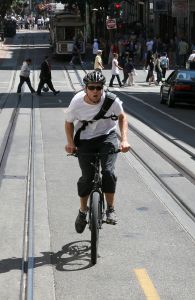
“This intersection makes me nervous,” Marcia Pearson, a Somerville bicyclist, told a newspaper recently.

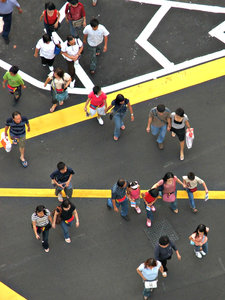
What Pearson is talking about the intersection of Vassar Street and Massachusetts Avenue. According to local police officers, it’s an extremely dangerous intersection. Every day, there are thousands of motorists, pedestrians and bicyclists who use the intersection near the Massachusetts Institute of Technology campus. Intersection car accidents in Massachusetts are common at this intersection because of the high volume of traffic that this intersection withstands all day long.

Our Boston car accident lawyers understand that Cambridge officers responded to nearly 60 accidents at this intersection in 2007. Of those, 24 involved vehicles and bikes. Many resulted in injury, and some in death, according to The Boston Globe. For this reason, officers are targeting this intersection as a part of a roadway safety campaign that is being used by officials to improve traffic safety across the city, cracking down on those who violate traffic laws.
2dRQwpv.jpg
According to Jack Albert, Police Deputy Superintendent, accidents are inevitable with so many people using this intersection daily, even though there have already been efforts made to make the intersection safer.

Last year, road enhancements were made on Mass Ave, but officials with MIT urge the state’s transportation department to change the timing to the traffic lights at the intersections to make the intersection safer.

But even with the improvements, there were 16 accidents at the intersection last year. According to the Police Department’s list of the top five most dangerous intersections of 2011 in the city, this intersection ranked second, right behind Massachusetts Avenue and Gardner Street in Harvard Square.

This is the fourth entry of a 6-part blog discussing simple New Year’s resolutions residents can make to increase the safety of all travelers on our roadways. This blog entry will be discussing simple adjustments that travelers can make at intersections to help reduce the number of accidents that we see every year in these areas.

Safe Driving Tips from the Commonwealth of Massachusetts:

-Always obey the speed limit. Remember that posted speed limits are the limits for ideal weather conditions. Slow down in poor weather conditions, like snow, fog and rain.

-Follow the two-second rule. Never tailgate. Allow vehicles around with you ample space. The more space between you and other vehicles the longer reaction time you allow yourself.

-Always use your turn signal to alert drivers, pedestrians and bicyclists about your intended maneuvers.

-Respect the crosswalk. You want to stop behind the line when stopping for a traffic light. Don’t block these walkways.

-Never blog an intersection. Make sure you can make it safely through the entire intersection safely before proceeding through.

-Put down the distractions. Passing through an intersection requires your full attention.
Continue reading

Just a week ago, the Massachusetts Bay Transportation Authority (MBTA) announced it is discussing higher fares for travelers. That doesn’t excite Boston residents, and many more are expected to turn to bicycles to get around. Residents are urged to be careful when hitting the roadways, as more bicycle traffic increases risks for bicycling accidents in Massachusetts. By taking the proper safety precautions and using the new stretch of bike lanes within the city, we can all do our part to help keep all travelers safe.
222573_172933492760830_100001325410820_378513_199036_n.jpg
Yes, biking through Boston may be a little easier now, as there’s a new stretch of bike lanes on Massachusetts Avenue, according to the Boston Daily. The new stretch of bike lanes stretches all the way from Westand Avenue to the Charles River. Transportation officials nixed about 70 parking spaces to make room for the new lane.

Our Boston bicycle accident attorneys understand that biking in the city can be dangerous times. Transportation officials recently put in new bicycle lanes in between Melnea Cass and St. Botolph Street. Next, they’ll be looking to connect these lanes to Massachusetts Avenue and then later to Melnea Cass. Last summer, Mayor Tom Menino launched the New Hubway bike share program and declared Boston as a biking city. Hubway offers rented bicycles for residents and visitors throughout the city.

“The car is no longer king in Boston,” Menino told the paper.

This is fifth entry of a 6-part blog regarding New Year’s resolutions that motorists, bicyclists and pedestrians can take to make the roadways of Boston safer for everyone. In this entry, we will be discussing bicyclists and the resolution they can make to achieve this goal. It’s no doubt Boston was built for bikes. It’s important to make sure everyone is riding safely to help to reduce the risks of vehicle-bicycle accidents throughout the state.

To help get riders to bike safely, the Commonwealth of Massachusetts is here to offer some safe bicycling tips.

Bicycle Safety Tips:

-Be cautious of the traffic around you. Roughly 1 percent of the traffic deaths in Massachusetts are bicyclists.

-Bicyclists should always follow the rules of the road.

-Always travel in the travel lane on the right. You never want to bike in between lanes.

-Be sure to stop at all stop signs and red lights. These traffic devices aren’t option for bicyclists.

-Be sure to always use turn signals and hand signals when moving through traffic,

-Ride in the same direction as other traffic. You don’t want to ride against traffic.

-You should equip your bikes with lights when riding at night.

-Avoid dooring – or being hit by a vehicle door – by staying out of the door zone. Steer clear of parked vehicles.

-Bicyclists under the age of 16-years-old are required by state law to wear a helmet. Everyone else is urged to do the same.
Continue reading

Bicycle accidents in Massachusetts occur all too often. Many bicycle accidents involve a vehicle or another bicycle, or happen because of a poorly paved road or road debris getting in the way. Do you know what to do in the event of a bicycle accident in Boston or elsewhere in the state?
1192075_riding_a_bike.jpg
Our Boston bicycle accident lawyers offer a complete checklist for what to do in case you find yourself in a bicycle accident. First and foremost, you want to make sure that you’re safe. If you’ve fallen, you want to make sure that you don’t move until a medically-qualified person checks you to make sure you’re not seriously injured. Beyond what needs to be done to make sure that no bones are broken and that you’re not bleeding, you’re going to want to lay there for a couple of minutes. Try not to panic, but relax to calm down and collect your thoughts.

If you or your bicycle is in harm’s way, you want to make a note of where your bicycle and you were after the accident. If there are motor vehicles involved, make a note of their location before they move clear of traffic. You’ll need this information to give to the Registry of Motor Vehicles and for law enforcement officers when you fill out a report for the accident.

If medical responders are called to the scene, do not refuse assistance unless you are absolutely positive you’re not injured. If you have the smallest of doubts, allow qualified medical assistance to help you.

Immediately following an accident:

Identify Principals: You’re best bet is to see the driver’s licenses and registrations of people and vehicles involved in the accident. Jot down their names, driver’s license numbers, insurance companies and addresses. Try to get the same information from witnesses, too. Take note of the injuries that were suffered by other people who were involved in the accident.

What if a driver leaves the scene?: If a driver has been involved in a collision and leaves the accident site before providing identification, he or she has broken the law. Get the license plate number if you can. Give this information to police immediately and then once again when you file an accident report.

Check out your bicycle: Even if you think you’re ready to get back up and ride, don’t do it if your bike has been damaged. Oftentimes bicycles can be damaged beyond our knowledge and can contribute to a serious accident in the future. If you do decide to call a cab, consider grabbing a receipt for the ride as you can get reimbursed after filing a claim with the insurance company.

How to file a bicycle accident report:

-According to state law, you need to file a report within five days for an accident that injures someone or results in property damage of more than $1,000 You can grab one of these reports from a police station or on the Massachusetts Department of Transportation’s RMV website. When you fill out the report, make four copies and send one to the Massachusetts Registry of Motor Vehicles, one to the police department nearest the accident site, one to the insurance companies and keep one for yourself.
Continue reading

The National Transportation Safety Board (NTSB) is looking to stop drivers in all states from using a cell phone behind the wheel, except for during emergencies, according to the Boston Globe. In Massachusetts, drivers under the age of 18, bus drivers and city workers are already prohibited from texting and using the Internet while driving. Now the NTSB is looking to ban all cell phone use for all drivers, saying that too many car accidents in Massachusetts and elsewhere are caused by distracted drivers, even if they’re using a hands-free device. The proposal doesn’t add up to some people as it comes on the heels of a newly released study from the journal Epidemiology that concluded that talking on a hands-free device while driving may not be as dangerous as some suggest.
mfe8zFc.jpg
“More than 3,000 people lost their lives last year in distraction-related accidents,” said NTSB chairwoman Deborah Hersman. “It is time for all of us to stand up for safety by turning off electronic devices when driving.”

Our Boston car accident attorneys understand that the effects of distracted driving have been a hot topic of debate in recent years. Richard Young, an author of the Epidemiology study, says he’s sure that texting and making phone calls at the wheel is dangerous, but hands-free phone calls may not be any riskier than having a conversation with a passenger in the car. And we know the government can’t really ban talking to a passenger. The study suggests that the government needs to take a close look at what’s actually dangerous behind the wheel and go after those habits.

Young’s studies of accident data concluded that drivers who use cell phones are four times more likely to get into an accident, but the equation getting to that conclusion was flawed.

Researchers used cell phone records to look into the usage before an accident and then compared it with cell phone use at the same time on the day before the accident to determine whether or not usage was less when they were driving and lowered their risks for a crash. What other researchers failed to acknowledge is these drivers who were behind the wheel during the same time period on the previous day. Using GPS data, Young determine that about 25 percent of the time, they weren’t.

This, according to Young, completely accounted for that extra risk everyone’s always talking about.

More recent studies used cameras installed into vehicles to look at the effects of distracted driving. These cameras helped to accurately record cell phone use. These studies found that there was no increase in risk from drivers who used hands-free phones though, says Young. Young says his discovery could explain the discrepancy.

He admits though, he’s done some brain-imaging studies and agrees that using a hand-held cell phone can be a little bit distracting and slows a driver’s reactions slightly, but he says that people don’t change lanes as much and they place more focus on the road when they’re talking to accommodate for the extra task.
Continue reading

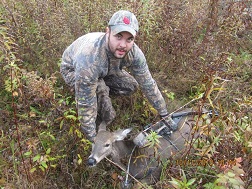
A woman was accidentally shot by an off-duty Massachusetts State Police trooper in a recent hunting accident in Norton, according to Mail Online. The husband of the woman who was shot is now asking deer hunters to pay more attention and know their targets before heading out with deadly weapons into the wilderness.
68436_874394389688_21713811_46766387_3218824_n.jpg
Our Massachusetts premise liability attorneys understand that hunting is intense, and ask hunters to be safe and cautious out there. The 66-year-old woman was shot in the hip while walking her two dogs. The husband of the victim is not only calling for hunters to be safer in the woods, but he’s also calling for a further probe into the investigation of the incident that left his wife as a hunting target.

“My mother was shot. This is not OK,” says the daughter of the victim.

After the accident on New Year’s Eve, the woman was sent to the trauma intensive care unit of Rhode Island Hospital and was last reported to have been recovering from a fractured pelvis.

The hunter says that he accidentally shot the victim after he mistook her two dogs for deer. The accident happened during the evening hours as he was using a black powder rifle to take down deer. After the shot was fired and the target was struck, the off-duty officer ran to her side and started to administer first-aid tactics to help keep her alive as he called 9-1-1.

According to authorities, the off-duty officer is properly licensed and is not currently facing any criminal charges.

Hunting Safety Tips:

-Always treat a firearm as if it’s loaded. Make it a habit!

-Always point the muzzle in a safe direction. About 70 percent of all hunting accidents are self-inflicted injuries. This means that at the time of the accident, the muzzle was pointed at a person. You always want to point it in a direction so that if it fired off, no one would be injured.

-Know your target. You always want to know exactly what you’re shooting at and what’s beyond it. Always positively identify what you’re shooting at before pulling the trigger. Shooting at something you’re unsure of is a gamble. In this Massachusetts hunting accident, the gamble was with a human life. We don’t always hit our target. For this reason, make sure that what is behind and around your target is safe. Never shoot into an area that could harm another person.

-Fingers outside the trigger. Keep your finger outside of the guard until you’re ready to fire. Many accidental shootings happen because trigger guards were not properly used. Always protect yourself and the ones around you. Be responsible.

For more information about deer hunting in Massachusetts, visit the Massachusetts Department of Fish and Game.
Continue reading

As we recently reported on our Boston Personal Injury Attorney Blog, the National Transportation Safety Board (NTSB) is proposing that all states prohibit drivers from using a cell phone of any kind while driving. This ban would cover hands-free devices, hand-held devices, text messaging devices, PDAs, laptops and every other type of portable electronic device unless it’s used to aid safe driving or is being used in the event of an emergency.
mg1UGLo.jpg
Officials aren’t sure that such an elaborate ban is going to go over too well, according to CNN. Laws used to regulate distractions for drivers have been hitting the books since back in 2000. Since then, there have been no laws enacted to stop drivers from using hands-free devices, which the National Safety Council (NSC) says are just as dangerous.

Barbara Harsha with the Governors Highway Safety Association states that opponents to these types of laws see them as government intrusions and a stab against residents’ personal freedom. Our Massachusetts car accident attorneys understand that only school bus drivers and drivers under the age of 18 in our state are prohibited from using a hand-held cell phone at the wheel. All drivers are prohibited from text messaging which driving. Still, hands-free device usage is permitted, which the NSC says is equally as dangerous.

“It’s just one of those things that would be the equivalent of the 18th Amendment today. It’s a Prohibition that would not work,” said David Adkins with The Council of State Governments.

Regardless of what is considered as government intrusion or a violation of privacy, safety should be everyone’s number one priority. That’s why the NSC recently released a study to help illustrate just how dangerous even hands-free devices can be to drivers.

Currently, there are nearly 300 million wireless subscribers in the Unites States. Many of these subscribers admit to using these devices at the wheel. According to the National Highway Traffic Safety Administration (NHTSA), approximately 11 percent of drivers are using a cell phone at the wheel at any given moment. For this reason, about one out of every four car accidents is believed to have been caused by a distracted driver.

In 2010, roughly 3,100 people died and another 2.2 million were injured in car accidents that reported the involvement of a distracted driver. These accidents are completely preventable.

The NSC is hoping that its recent release will reach lawmakers in states across the country and will get them to understand the real dangers of distractions at the wheel, including hands-free devices. Until there is a uniform law enacted to get all drivers to put down the distraction, motorists are asked to voluntarily comply with the recommendation from the NTSB. Responsible driving habits may be our best chance at safer roadways.
Continue reading

Massachusetts Lt. Gov. Tim Murray was recently cited for numerous traffic violations and fined for allegedly falling asleep at the wheel and driving more than 100 mph before veering off the road and crashing a state-issued motor vehicle back in November, according to MSNBC.
mmsIFfo.jpg
According to police reports, the vehicle was traveling at roughly 108 miles per hour as Murray’s state-issued vehicle left Interstate 190 and caused a single-vehicle car accident in Sterling. Murray was not injured in the accident but was issued an approximate $600 fine for speeding, seat belt violation and lane violation.

Our Boson car accident attorneys understand that speed kills. According to recent studies, the faster a vehicle is traveling at the time of impact, the higher the risks are for a fatality. Murray is extremely lucky that he was not seriously injured in this accident. In addition to the speed, we would also like to point out how difficult the fight can be when traffic accidents involve government vehicles, like police cars, fire trucks and ambulances. When accidents like this occur, it is the investigators who are investigating themselves. Oftentimes these agencies can overpower citizens’ claims and reports. For this reason, these types of accidents require experienced legal representation to help you to fight for your rights and for any compensation in which you may be entitled.

According to reports, Murray says the accident happened when he lost control of his vehicle because of black ice on the roadways. Although the vehicle skidded on the roadway and eventually flipped over, Murray was fortunate enough to walk away from the accident. Information collected through the black box that was inside the vehicle led officials to rule that he had fallen asleep at the wheel and that black ice was not in fact the cause of the accident.

“As first responders came to the scene, they commented on the black ice and warned each other of the slippery conditions …so I assumed that’s what caused my accident,” said Murray.

Murray says that he also thinks that he was wearing his seat belt during the accident and that’s why he was able to walk away from the accident.

Law enforcement officers administered a breathalyzer and the test results indicated that there was no alcohol involved in the accident.

Murray says that he is going to reimburse the state for the car that he smashed in the accident. It was a 1997 unmarked Crown Victoria. It was first purchased by the state for nearly $40,000 but was valued at less than $10,000 when the accident occurred.

“I recognize that I should have been more careful,” said Murray.

Murray’s driving record reveals two previous traffic citations for speeding; one in 1992 and another in 2006.
Continue reading

A Worcester pedestrian accident killed a woman who was walking across the street on a marked crosswalk on Chandler Street. According to Worcester police officers, the accident happened just before 7 a.m. and upon arrival, the body of a 63-year-old woman was discovered. The female pedestrian was involved in a single-car accident and sustained severe injuries. She was taken to St. Vincent Hospital where she was later pronounced dead.
224058_172931866094326_100001325410820_378508_873536_n.jpg
According to My Fox Boston, investigations concluded that a 51-year-old driver of a van slammed directly into the pedestrian who was using the crosswalk to get across the street. The driver was the only one in the vehicle at the time of the accident and he remained at the scene of the accident until officials arrived. The speed limit on that street is 30 miles per hour. Officials with the Worcester Police Accident Reconstruction Team are investigating.

Our Massachusetts pedestrian accident lawyers understand that our roadways are congested, especially during and after the holidays. We often hear warnings for drivers urging them to be cautious of one another on the roadways to avoid an accident, but many seem to forget the dangers that pedestrians face as well. Pedestrians face an increased risk for accidents just as motorists do when the roads are crowded. All travelers are urged to be cautious and courteous of one another throughout out the year..

The recent Thanksgiving holiday weekend provided a sneak peek into just how dangerous travel can be during holidays can be. According to the Boston Herald, a 47-year-old female pedestrian was killed while crossing a street in Worcester over the Thanksgiving holiday weekend.

Another Thanksgiving holiday weekend accident turned fatal when a 75-year-old motorist from Somerville was hit by a passing vehicle as he got out of his car to exchange information with another driver that he had been involved in an accident with just seconds prior.

A third Thanksgiving accident injured two people as they were standing in the travel lane on Route 128 in Lynnfield and were hit by a passing motorist.

As we continuously ask drivers to be cautious, alert and courteous at the wheel, we also ask pedestrians to travel safely. Keep an eye on your surroundings to avoid a potentially fatal accident.

Pedestrian Safety Tips:

-Always use a crosswalk when one is available. Most pedestrian accidents happen at non-intersection areas because drivers don’t expect pedestrians to cross.

-If you’ve been involved in a motor-vehicle accident, stay inside your car until police get there, especially if the accident is on a busy roadway.

-Pedestrians should always carry a flashlight and wear bright, reflective clothing when walking during the evening hours.

-Always walk on a sidewalk when there’s one available. When there is no sidewalk, you should walk facing traffic to see oncoming cars.
Continue reading

Can you believe it? It’s 2012! The bad news is that we’re already seeing a plethora of Massachusetts car accidents. According to ABC5, icy Massachusetts highways contributed to numerous rollover accidents, including a 16-vehicle accident. Road conditions can be a top cause in many local car accidents, but these incidents are ultimately preventable with safe, cautious and alert driving practices.
mirw3Di.jpg
Our Boston car accident lawyers understand that 2012 serves as a time for everyone to start over fresh. So say goodbye to 2011 and hello to safer roadways. Let’s all make a New Year’s resolution to practice safer driving habits to help to reduce the number of fatal accidents in our state. The first step to safer roadways starts with you.

The first of the New Year’s traffic accidents happened in Pelham. In this accident, which took place at roughly 12:00 a.m., a 32-year-old driver was thrown from a SUV after losing control of the vehicle on an icy road, causing the vehicle to flip over. This accident happened on Route 202. The driver was taken to the Bay State Medical Center in Springfield where later pronounced dead.

A second rollover accident happened in North Reading just hours later, just after 6:00 a.m. on Route 128. A 23-year-old passenger of the flipped vehicle was taken to a local hospital after this accident. The driver reportedly fled the scene. The accident is being investigated.

Even more accidents happened when near-freezing temperatures and rain gave the roadways an icy sheen. Numerous traffic accidents were reported throughout central Massachusetts during these slick and cold weather conditions. Officers report that there was a solid three hours of back to back accidents during this time.

Law enforcement officers report that the worst of the accidents happened in Templeton just before 8:00 a.m. Reports indicate that a couple in their 30s was trapped inside their vehicle after a rollover accident in Route 2. Both were taken to the hospital.

The madness didn’t stop there. There was also a 16-vehicle accident that happened in Millbury on Route 146. There was yet another accident in Worcester on I-290. The Massachusetts State Police report that there were also a number of accidents in West Boylston on I-190 by the Quinapoxett Bridge.

Officers say that the icy conditions appear to be the cause of the accidents, according to the Worcester Telegram & Gazette.

We ask that everyone be safe on our roadways as we start 2012. Winter weather is sure to plague our roadways, making driving very dangerous. Please, start the New Year off right and make a conscious effort to navigate our roadways safely. Our roadways are still congested with the remainder of the holiday traffic. Be alert and cautious when driving, especially with the snowy and icy weather conditions. Have a safe and Happy 2012 and safe travels!
Continue reading

Three lives a year are saved every year from car accidents in Massachusetts because of the implementation of our graduated driver licensing (GDL) law, according to USA TODAY. It is estimated that 2,000 lives could be saved each year if every state enacted a comprehensive program of phased-in driving privileges for teenage drivers.
748825_crash_car.jpg
It isn’t news that teenage drivers need lots of help behind the wheel. While states are to make sure that drivers are getting the proper training before hitting the road unsupervised, parents should take this responsibility as well. Frequently talk with your teen driver about the importance of safe driving habits. Your conversations may be enough to instill safe driving habits and to potentially save their life.

Our Boston car accident attorneys understand that this report, from the Allstate Foundation, comes as Congress gets ready to look over a multiyear highway and transit-spending bill. Advocates of safe driving habits and of the GDL program, are campaigning for $25 million a year in incentives to get each state to beef up their GDL program.

Traffic accidents continue to be the top killer for teenagers in the country. Drivers age 16- to 19- are four times more likely to get into a serious accident than any other age group of drivers.

Massachusetts GDL Program, Implemented in 1998:

-Stage 1, Learner’s Permit: A driver can get this license at 16-years-old. A driver must hold this license for 6 months before advancing. During this time they’re required to complete 30 hours of classroom instruction, 6 to 8 hours of behind-the-wheel training, 4 to 6 hours as an observer to another student driver and 12 hours of supervised driving.

-Stage 2, Junior Operator’s License: A driver can get this license when they’re 16 and a half and they’ve completed the requirements of the learner’s permit stage. They’re not allowed to drive between midnight and 5:00 a.m. unless they have a parent or a guardian in the vehicle. For the first 6 months, they’re not allowed to drive with any passengers under the age of 18 unless they are supervised by a driver that is 21-years-old or older.

-Stage 3, Full License: After completing the first two stages, a driver can apply for a full, unrestricted license once they’ve turned 18.

The AAA Study points out seven components to an effective GDL system:

-A minimum age 16-years-old to get a learner’s permit.

-A driver must obtain a learner’s permit for six months before having the privilege of driving without any adult supervision.

-Completing a minimum of 30 hours of supervised driving during the learner’s stage.

-A driver should be able to apply for an intermediate license once they turn 16 and a half.

-Drivers in the intermediate driving stage should have a restriction on nighttime driving to where they’re prohibited from driving after 10:00 p.m.

-Drivers with an intermediate license should not be able to have more than one non-family member passenger in the vehicle at a time.

-Drivers shouldn’t be able to apply for a full license until they’ve turned 17-years-old.
Continue reading

Contact Information