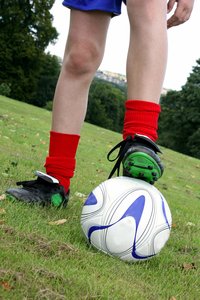
Children under the age of 14-years-old shouldn’t be allowed to play tackle football, lacrosse or ice hockey unless there are special rules in place to reduce their risks of concussions or other sports-related injuries in Massachusetts and elsewhere.

That’s what Dr. Robert Cantu of Boston University is saying. He adds that younger children should also be banned from heading the ball in soccer to reduce these injury risks.
mhAxY6K.jpg
Dr. Kevin Guskiewicz from the University of North Carolina disagrees. He says that children should learn at a young age how to safely handle sports-related contact. He said that this competition, against those of the same size and age, is healthy and beneficial in preventing injury later on in life.

Our Boston personal injury attorneys have young children who play sports, many of them playing on the same fields as your children. We understand that regardless of what sport they’re playing, safety is a top concern. The real question of this matter is whether or not the safety advantage that is gained by learning to perform athletic maneuvers at an early age is offset by the risks of brain trauma that is caused by repeated blows.

According to Guskiewicz, kids are better off learning how to play these games when they’re young instead of waiting to do so when they’re in high school. It’s as if the early athleticism will help to toughen them up.

He says that it’s better to play in these youth leagues because the children are going up against other kids who are about their same size. If you wait until a child is in high school, then you run the chance of a 130-pound player going up against a 300-pound player. Bottom line, Guskiewicz says, is that players should learn how to play at a younger age.

Cantu says that he has seen too many children in the hospital being treated for concussions. He says it’s critical for our young athletes to avoid blows to the head.

“That’s where Kevin and I differ,” said Cantu. “I’m treating these children and I’ve seen them miss school for a week, a month, a semester, even a year because of post-concussion symptoms.”

Cantu says there’s absolutely no reason to subject young children to traumatic head injury. He doesn’t think that children should be left out of these kinds of sports. He says that the rules should be rewritten to accommodate their vulnerable bodies.

Cantu has recently conducted studies on the increasing numbers of athletes 17-, 18- and 21-years-old with early signs of chronic traumatic encephalopathy (CTE) at the time of their death. This condition is a result of repetitive head trauma, like the trauma oftentimes experienced by boxers.

Experts can fight till the death, but the truth of the matter is that it’s up to the parents to either keep their child in or pull them from their sports programs. And it’s up to the coaches and others responsible for their safety on the field to make sure that they’re provided with all of the proper safety equipment they need and take head injuries and pains seriously!
Continue reading


Boston streets are some of the busiest in the country. That’s the reason why risks for pedestrian accidents in Massachusetts are so high. You need to be on the top on your game to avoid one of these accidents along our state’s roadways.
87059_wait_for_it.jpg
An elderly resident was recently killed in a recent pedestrian accident in Worcester. The 69-year-old woman who used a cane to walk was hit by a teenage driver in a pickup truck as she attempted to cross Route 20 at roughly 7:00 p.m., according to the Boston Globe. Witnesses say that the elderly pedestrian flew nearly 30 feet in the air after collision. The Worcester police station reports that no citations have been issued.

Our Boston personal injury attorneys hear the vehicles zipping by nearly every day on our commute to the office. We understand the dangers that are presented on our state’s busy roadways. As we recently reported, Massachusetts’ highway safety division is working on a way to promote safe driving habits in 2012 to help to reduce the risks for our on-foot travelers. The number of pedestrian fatalities in our state is almost double that of the national average. In 2009, pedestrian deaths accounted for nearly 21 percent of all traffic fatalities.

In the state of Massachusetts in 2009, there were nearly 100 pedestrian fatalities as the result of motor vehicle-related accidents. In addition to these fatalities, there were another 235 pedestrians injured in these types of accidents.

According to national statistics, a pedestrian is killed every 2 hours and a pedestrian is injured every 9 minutes. It’s like a war zone out there!

Pedestrian travel is important in the state of Massachusetts and government officials are urged to treat it as such. There are a number of ways that we can help to increase the safety of pedestrians in the area.

Suggestions to Increase Pedestrian Safety from WalkBoston:

-Support legislation to reduce the speed limits in urban areas from 30 miles per hour to 25 miles per hour. The faster a vehicle is traveling when striking a pedestrian the higher the risks are for pedestrian death. At 30 miles per hour a pedestrian has a 40 percent chance of death — at 20 miles per hour the risks are only 5 percent.

-Use pedestrian-friendly design speeds for arterial and collector roadway projects. This means that new roads and the modification of older roadways should keep pedestrian safety as a top concern.

-Projects to create and modify bus, rail and rapid transit should include funding for pedestrian access.

-The quality of pedestrian data should meet that of vehicular data. Sometimes, it’s as if you’re not counted then you don’t count. Right now, the state’s data of bicycle and pedestrian accidents and injuries is up. Still, this data is poorly collected.

-Support legislation requiring local pedestrian advisory committees.
Continue reading

You may not be able to bask in the sun during the winter season, but that doesn’t mean there’s no fun to be had. Many residents turn to snowmobiles and other winter activities to stay active and to have some fun in the frigid winter weather. With these fun activities comes a heap of responsibilities. Snowmobile riders are asked to be cautious and to take the proper safety precautions to avoid a potentially fatal snowmobile accident in Massachusetts, just like the recent snowmobile accident that happened in the White Mountain National Forest.

The recent snowmobile accident in New Hampshire took the life of a 51-year-old Massachusetts man.
596152_snow_mobile_at_sefsen_sweden_1.jpg
The North Billerica resident was involved in a snowmobile accident at roughly 10:00 p.m. when he lost control of the vehicle while making a turn and slammed into a bunch of trees. He was the last rider ion a group of four. The snowmobile riders ahead of him noticed the man’s headlights shining all over the place and the crew stopped to help. Reportedly, the man was pronounced dead at the scene. Officials attempted to resuscitate the man, but his injuries were far too severe, according to the Boston Globe. The accident is still being investigated, but officials report no foul play is suspected.

Our Boston personal injury attorneys enjoy the outdoors, too. But there are a few safety precautions that both you and I should follow to help to prevent winter accidents, including snowmobiling accidents. Nowadays, snowmobiling is a winter sport that is enjoyed by more than 2 million people in the U.S. Still, these vehicles can weigh in excess of 600 pounds and can travel at speeds of up to 90 miles per hour. Every year, roughly 200 people die and another 14,000 people are injured on snowmobiles. Some of the causes of these accidents can include driver inexperience, alcohol and excess speed. Injuries sustained from these types of accidents can be life altering. These injuries are often extremity fractures but can also involve organ systems. Just like car accidents, snowmobile accidents can result in multisystem trauma — head injuries are the leading cause of death.

Snowmobile Safety Tips:

-Complete a snowmobile safety course.

-Always ride with the highest degree of caution, especially when traveling across frozen waterways.

-Limit nighttime travel.

-If you don’t know, don’t go.

-Always ride with a buddy. Never travel alone.

-Never drink and ride. Alcohol hinders your ability to react and your judgment.

-Slow it down. Fast speeds increase stopping distances and leave less room for mistakes. Slower speed equals more control.

-Never exceed 40 miles per hour when traveling at night. Speeds above 40 mph cause operators to override their headlamps.

-When riding in a group, always follow safely. Allow at least 2 or 3 seconds of space between you and another snowmobile.

-Respect private property. Stay on marked trails.
Continue reading

Whether your family is visiting Boston from out-of-town or simply enjoying your home city on a “staycation,” know that hotels and other businesses have a responsibility to protect visitors and customers and prevent child injuries in Boston and beyond.

Our Boston personal injury attorneys have learned that more than 16,300 children under the age of 5 are taken emergency rooms each year with critical injuries because of unstable furniture or electronics that tipped over. Tragically more than 130 children were killed in tip-over accidents between 2000 and 2006, according to the

Football players pride themselves on being tenacious and tough.

The rigors of the game, however, can lead to potentially fatal sports injuries in Boston and beyond.

Our Boston sports injury attorneys have seen cases ranging from concussions and broken bones to permanent brain damage and even death. Often, these situations are entirely preventable. For us, it’s a personal mission. Attorney Glassman’s sister founded the National Youth Sports Safety Foundation after suffering a debilitating back injury that ended her tennis career.

Young drivers are some of the most at-risk for Boston car accidents and for crashes across the country.

In fact, the department of transportation offers the following guidelines for young motorists:

1. Wear your seat belt. It’s your first line of defense against serious injury, and statistics show that of the teens killed in Massachusetts car accidents, about two-thirds weren’t buckled up.

2. Limit how many people you ride with, as your friends may distract you.

3. Avoid distractions. Because crashes can happen in seconds, it’s important for you to focus on the road, rather than the radio, your phone or your friends in the car with you.

4. Turn slowly. This will help decrease your risk of roll over or the possibility of accidentally striking a bicyclist or pedestrian, who you may not see if you’re traveling too fast.

5. Don’t drink or do drugs before you get behind the wheel.

6. Don’t travel at night. Not only can it be dangerous for an inexperienced driver, but in Massachusetts, it’s against the law for anyone under 18 to drive between 12:30 a.m. and 5 a.m. without a parent in the car with you.
Continue reading

Speeding and aggressive driving are often factors in serious Boston car crashes.

We all know how frustrating it can be when we’re running late or when someone cuts you off in traffic.

579286_screaming.jpg

But our Boston car accident attorneys have seen firsthand how dangerous it can be when drivers drop their defenses and act out that frustration on other motorists. It’s often sparked by something trivial, but when that aggression is played out at high speeds, the consequences can be deadly.

As Part 8 of our Boston Road Safety series, we’re exploring how we define road rage, how to curb it and how to protect yourself.

The National Highway Traffic Safety Administration reports that just 12 percent of fatal speeding crashes happened on the highway. The overwhelming majority – 88 percent – happened off the interstate.

If you find that you may have some aggressive driving tendencies, the highway safety administration offers the following advice:

1. Concentrate on the road, rather than your cell phone, eating or any other task aside from driving.

2. Try to relax. Turn on the radio and listen to your favorite songs. This can help calm your nerves and make your time in the car more enjoyable.

3. Obey the speed limit. It will reduce your chances of a crash.

4. If you know traffic is going to be congested, consider mapping a different route before you set out.

5. Consider using public transportation. It’s less stressful, and may save you hundreds of dollars a month in gas.

6. Just be late. It’s better than being seriously injured or worse.

For those of us who sometimes must share the road with aggressive drivers, here are a few other helpful tips:

1. Do your best to get out of their way.

2. Set aside your pride and think about your safety.

3. Avoid making eye contact with the aggressor. That can sometimes just make them angrier.

4. If they make an obscene gesture at you, ignore them, and don’t return it.

5. If the person poses a serious risk to you or other drivers, consider reporting them to police. Make sure you are in a safe location when you do so.
Continue reading

Imagine walking outside your front door to a war zone every day — without a bullet-proof vest.

That’s exactly the kind of risk you’re taking when you get into a vehicle without buckling your seat belt.

If you want to protect yourself from the serious injury or death that could result from a car crash in Boston or elsewhere in Massachusetts, make sure you wear your seat belt – every time, no exceptions.

602535_seatbelt.jpg

Our Boston car accident attorneys understand the accident may not be your fault. And you are entitled to bring a claim regardless of whether you are wearing a seat belt. But belting up is your first line of defense.

We’re touching on this issues because, No. 1, we see far too many lives lost senselessly on our roadways, and No. 2, because the National Highway Traffic Safety Administration offers additional information about seat belt safety in the U.S.

The first is that buckling up is the best way to protect yourself in a crash. Seat belts have saved more than 75,000 lives from 2004 to 2008. To put that in perspective, picture a jam-packed, large sports arena. Wearing a seat belt keeps you inside your vehicle in the event of a crash. If you are ejected from the car, your chances of dying skyrocket.

Secondly, air bags alone aren’t enough to save you because they’re designed to work with the seat belts, not be used in place of them. If you don’t buckle up, the force of being thrown toward the airbag when it’s deploying could kill you.

Thirdly, when you do buckle up, make sure it fits you correctly. Every person is different, but the shoulder belt should come across the middle of your chest and away form your neck. The lap belt should go across your hips, just below your stomach.

Never put the shoulder belt behind your back or under your arm, as this could lead to serious injury in the event of a crash.
Continue reading

Increasingly, a significant percentage of fatalities on our roadways involve pedestrian accidents in Boston and throughout the country.

According to the Safekids USA reports that other than the street, many young children are struck in driveways, parking lots and sidewalks.

The state’s highway safety division partners with WalkBoston to promote pedestrian safety in Boston. The non-profit promotes walking as a commuting option that is better for the environment, healthier for the workers and a cheaper alternative to a car, which can be costly in terms of gas and repairs.

But pedestrian safety must be a top priority.

SafeKids USA recommends the following actions by lawmakers to help make that a reality:

1. Reduce speed limits in residential areas.
2. Make sure pedestrians have adequate walkways.
3. Forbid vehicles from passing school buses while loading and unloading passengers.
4. Making sure there are enough crossing guards and ensuring pedestrians don’t cross the street anywhere other than designated crosswalks.

For parents, walking your child’s route to school with them can be a great way to become familiar with potential dangers they may face on the way to school, and to discuss with them how they can stay safe.
Continue reading

By all accounts, the scene was horrendous – a telephone pole snapped in half by the Ford Explorer that became wrapped around it after a drunk driving accident in Quincy.

Four people were seriously injured in the single-vehicle Boston car accident.
According to the Melanie’s Law , which increases the penalties for drunk driving in Massachusetts.

Some of the greatest changes under the new law include a requirement for an ignition interlock device for someone who wants to get their license back after their second conviction, even if the prior offense was decades ago. Additionally, your license can be suspended for consecutive terms (rather than concurrent, which means they run together) for DUI convictions or if you refuse a breath test when you’re pulled over. There are also harsher license suspensions for under-21 drivers.

Still, some would like to see even greater penalties. Mothers Against Drunk Driving is hoping that future Massachusetts lawmakers will include provisions that Melanie’s Law did not address, including a requirement for alcohol treatment programs for people who chronically drive drunk (especially for those behind bars). They would also like to see more police officers on the streets for deterrence purposes.

If you see a drunk driver on the road, call the police and report it.

Here are some tips from MADD on how to spot a drunk driver:

1. The person quickly accelerates or decelerates.
2. The driver is tailgating, zig-zagging or weaving across the roadway.
3. The driver may almost strike a curb, object or another vehicle 4. A drunk driver may stop without reason or brake erratically 5. A driver who is drunk will drift in and out of lanes.
6. An impaired driver will use improper signals, such as turning a blinker on when they aren’t turning.
7. A drunk driver is likely to swerve.
8. The person has a slower response to traffic signals, either making a delayed start or sudden stop.
9. The driver may forget to use their headlights, even if it’s dark.
10. A drunk driver may be traveling on the wrong side of the road, into oncoming traffic.
Continue reading

Contact Information