Our youngest drivers are at the highest risks for drowsy driving car accidents.

According to a recent study from the AAA Foundation for Traffic Safety, drivers between 16- and 24-years-old are more likely to drive while feeling sleepy than any other age group of drivers. Officials with AAA conducted a survey with these young drivers and found that one out of every seven of them reported that they’ve nodded off behind the wheel at least once in the last year. With drivers in other age groups, only one out of every ten admitted to falling sleep at the wheel.

571215_afternoon_nap.jpgThe new findings come with the most recently drowsy driving statistics from the National Highway Traffic Safety Administration (NHTSA). According to data, these young drivers were more than 75 percent more likely to get into a drowsy driving car accident than older drivers.


As we recently reported on our Boston Personal Injury Attorney Blog, there were more than 4,000 citations issued so far in 2012 for people trying to try to ride without paying the fare.

According to the Massachusetts Bay Transportation Authority (MBTA), that number of fare-hoppers is up nearly 60 percent from the same time from last year — when there were less than 2,300 citations written.
954134_metro_5.jpg
Now, there are new procedures that customers are going to have to go through before getting on the T. It’s all a part of the new, strict front-door-only policy, according to The Daily Free Press. The new procedures might irk paying customers a little, but have been proven to work. By busting fare-hoppers, precious funds can be kept within the T and riding can be made more convenient and safer.

Our Boston MBTA accident attorneys understand how critical it is that the MBTA makes every dime that it deserves. Our safety relies on fares. The MBTA is already dealing with a shrinking budget. With less and less funds, more strain is being placed on the system with each passing year. For this reason, and to help to keep you safe, officials with the MBTA decided that it was time to step up security. This was in reaction to public concerns from the summer. Riders insisted that the increase in fares be coupled with a stricter collection policy. If one had to pay — everyone had to pay.

If you look closely, there are new cameras in several stations. They’re monitored by the MBTA Transit Police. They’re pointing at the automatic fare collection devices. In addition to the cameras, there’s a new front-door exit policy on the Green Line.

“We’ve had a lot of success in arresting individuals who are wanted who are committing fare evasions,” said MBTA Transit Police superintendent-in-chief, Joseph O’Connor.

Another precaution that officers have taken is placing more officials around the station to serve as a deterrent. According to the numbers, this seems to be working — not only with fare-hoppers but with the overall crime.

Public concern was reportedly the main reason for the rear doors shutting now on the green line, according to Joe Pesaturo, spokesman for the MBTA. At first, riders say that this new operation was irritating and inconvenient, but many report that they’re starting to get used to it. Many riders say that if they have to pay the fare then everyone else should have to pay, too.

If you’re busted trying to ride the T without paying the fare, you run the risks of getting slapped with a $50 fine.
Continue reading

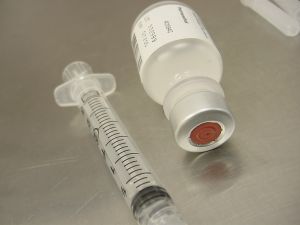
Less than a month after a deadly, national outbreak of fungal meningitis stemming from the New England Compounding Center, it has been revealed that the pharmacy’s sister company, Ameridose LLC, has major issues with sterility as well. syringeandbottle.jpg

Ameridose, also a Massachusetts pharmacy, based in Westborough, is a major supplier of injectable drugs given to pregnant women, children and asthma sufferers. This company was founded by the brother-in-law of the man who founded the New England Compounding Center. We previously reported this relationship in our meningitis coverage shortly after the outbreak began.

Our Boston meningitis lawyers understand that in the wake of the tragedy stemming from contaminated steroid injections from the NECC, federal officials have found that Ameridose facilities, too, weren’t sterile. In fact, there were leaky ceilings, insect issues and a rouge bird flying around the facility.

So far, there have been no illnesses reported as a result of the Ameridose injections, but there have been complaints with its products dating back to at least 2008. The fact that people didn’t know about the extent of the sterility issues at Ameridose or the complaints made by others probably led to fewer reports. The company has manufactured and shipped some 70 million units of product since 2008.

Specifically, the drugs the company is known for making include fentanyl, oxytocin, heparin and medications used to deliver epidurals.

The U.S. Food and Drug Administration, in a 20-page report, indicated the top complaint made by doctors to the company had been a lack of effectiveness or ineffectiveness. In some cases, children were given medication before surgery to calm them. However, the drug did not work, despite the children being given the maximum dose.

There were also pregnant women given Ameridose-produced oxytocin to bring on labor, and ended up reporting fetal distress, severe post-birth bleeding and shortness of breath.

Additionally, one complaint indicated a patient was given a heparin, a blood-thinner, and ended up having a life-threatening reaction.

And when two cancer patients were given a pain drug called fentanyl, both reported having gone into respiratory distress.

Perhaps more troubling is that when doctors reported these incidents to Ameridose, they were not recorded as “adverse” events.

Additionally, the FDA discovered at least 58 occasions when Ameridose staffers found evidence of contamination with fungi or bacteria in liquids that were supposed to be sterile – liquids that would go on to be used for anesthetic and pain relief injections. And yet, it did not investigate. When testing indicated that the end products weren’t sterile, the company reportedly took no steps to find out what caused the contamination or to correct it.

In another 45 instances when lab staff found mold or bacteria in the manufacturing areas, Ameridose didn’t bother to investigate, the FDA reported.

When reports of the fungal meningitis outbreak first emerged, Ameridose attempted to distance itself from NECC, with NECC’s top pharmacist, who also worked for Ameridose, issuing his resignation.

On Oct. 31, Ameridose recalled all of its unexpired products after FDA inspectors indicated the facility could not consistently assure that its products were safe.

The fungal meningitis outbreak has so far resulted in 32 deaths and caused another 438 people to fall severely ill.
Continue reading

There’s a new telephone number that’s going to help drivers to get the transportation information they need. It’s all a part of the Massachusetts Department of Transportation‘s (MassDOT) internal OneVoice transition.
mBuRB5q.jpg
“It’s a voice that is focused on the customer. Maybe you don’t know your highway district, nearest airport, bus route or what time the local RMV opens. Today, we are telling our customers all that information is just one call away, 857-DOT-INFO,” says Richard A. Davey, the MassDOT Secretary.

Our Boston personal injury attorneys understand that the Transportation Reform, launched in 2009, brought together agencies, like MassHighway and the Turnpike Authority. While that was a giant step at the time, we’ve come leaps and bounds since then. Today, there are four divisions within MassDOT. These divisions include the Aeronautics Division, the Rail and Transit Division, the Registry of Motor Vehicles Division and the Highway Division.

This union has allowed officials with MassDOT to consolidate functions and to save some money. One of the few things that hadn’t been consolidated, until recently, was the phone system. This system, the OneVoice phone transition, will result in $420,000 in maintenance savings each year.

The existing customer service line, 617-222-3200, is still working.

We understand how vital it is to make sure you know where you’re going, how to get there and how the traffic and weather are looking. The OneVoice hotline is going to help you to get all of this information.

While useful, we’re asking drivers not to take advantage of the new technology while they’re behind the wheel. There should never be a time when you have to use the phone while driving. If there is something you need to know and you can get it from OneVoice, we are asking you to hand the phone off to a passenger and let them handle it. Keep your attention on the task at hand. If you’re driving alone, we’re asking you to pull over to a safe area, stop the vehicle and then continue to make the call.

Every year, there are thousands who are killed in distracted driving car accidents. The main cause of these kinds of accidents is cell phone use. As a matter of fact, about 20 percent of all of the people who are killed in traffic accidents are killed in a car crash that involved a distracted driver. In 2010, there were more than 3,090 people killed in these crashes. Another 420,000 were injured in these same types of accidents.

As a matter of fact, you’re 4 times more likely to get into a car accident while using a hand-held cell phone. According to a recent Distraction.gov survey, roughly 40 percent of American teens say they have been in a car when the driver used a cell phone in a way that put people in danger.
Continue reading

A school bus driver is facing serious charges — including drunk driving and kidnapping.

According to The Boston Channel, the driver has officially been charged with reckless endangerment of a child, kidnapping and operating under the influence. He is accused of picking up a student at the Perkins School for the Blind just before 5:00 p.m. but not taking him home. The boy wasn’t home by 8:00 p.m. and both parents and officials started to worry. His parents called the police. Officers tried to get a hold of the man on his cell phone, but no one picked up. Eventually, long after he was scheduled to, he arrived at the boys home. It was then that officers placed the driver under arrest. Thankfully, the boy was not injured.
910927_school_bus.jpg
The Massachusetts Department of Transportation (MassDOT) reports that the type of school bus that the man was driving required a 7D driver’s license. He didn’t have that license and his application was denied because of the results of Criminal Offender Record Information (CORI). He is currently being held on $50,000 bail.

Our Boston child injury lawyers understand that we send our kids off to school every day trusting that they will get to and from school safely. We don’t oftentimes think that the school board would hire an under-qualified driver. The truth of the matter is that, unfortunately, not all drivers have your child’s safety in mind.

To operate a school bus in the state of Massachusetts, drivers are required to have a Commercial Driver’s License (CDL). This license is required to have a School Bus (S) Endorsement and a Passenger (P) Endorsement.

A School Bus Driver Certificate is valid for one year. It expires every year on your birthday. To get an initial license, or to renew your current license, you’re required to complete a new CORI check, a new SORI check and a new driving record check.

If you’re a bus driver who is over the age of 69, then you’re going to be required to renew your driver’s license every six months.

What You Need to be a School Bus Driver:

-You must pass a DPU road test.

-You have to pass the RMV written exams.

-You must have a clean driving record.

-You must pass a physical exam with the Department of Transportation.

-Must Pass a Sec Offender Registry Information (SORI) check.

-Must have three continuous years of driving experience.

Each day, there are more than 20 million students across the nation who rely on the big, yellow bus to get them to and from school. It’s important that we ensure that they’re riding in safe vehicles with safe drivers!
Continue reading

Our Boston personal injury attorneys have been closely following the aftermath of the discovery of a deadly strain of fungal meningitis at a pharmaceutical compounding center in Framingham. ecoli.jpg

Now, new reports indicate that even more people have been sickened or died as a result of exposure to this deadly strain. This was a company that was making and distributing drugs in massive quantities across the country, even though it reportedly had no license to do so. What’s more, the state’s pharmacy board director has been fired, while the board’s attorney has been placed on leave, for not alerting state officials to the issue when they first learned of it.

Federal health officials, who have been monitoring the situation, says that the deadly strains of meningitis is the confirmed culprit for 31 deaths (as of Nov. 7) and 424 severe illnesses. This is throughout 19 states. Additionally, there are 10 more who haven’t tested positive for the meningitis, but did receive the steroid injections believed responsible, and have reported infections in joints, such as their shoulders and ankles.

The situation has gotten so bad that two separate congressional committees are expected to soon hold hearings on the outbreak, forcing the facility’s chief pharmacist to testify. (Ironically, it is in part the inaction of Congress that has allowed these pharmaceutical mixing facilities to continue to operate virtually unsupervised — a fact the late Senator Ted Kennedy tried to prevent with legislation before his death).

However, we should at last begin to get some valuable insight into how these events unfolded. We do know that in Tennessee, where the outbreak was first discovered, a rigorous investigation is also well under way.

Meanwhile, Massachusetts State Pharmacy Board Director James Coffey was fired, according to sources cited by The Boston Globe. The Tennessee investigation indicated that the Colorado Board of Pharmacy told both the Massachusetts Pharmacy Board and the Food and Drug Administration that the New England Compounding Center was responsible for handing out drugs in bulk. This was before they knew any of the drugs were problematic. But the issue was that compounding centers such as this are intended only to mix certain drugs for specific prescriptions – not be mass producers.

But officials with the Massachusetts pharmacy board and the FDA are trying to pass the buck, each saying they did not hold the authority to shut the center down. The FDA said that while it can conduct inspections on the facilities for cleanliness, it can’t close them down. It cited legislation 10 years ago that would have given the agency more authority, however the U.S. Supreme Court struck the measure down after finding it partially unconstitutional.

Since the meningitis outbreak was discovered and traced, the Framingham facility has shut down on its own, and all of its drugs have been recalled.

The hearings scheduled by Congress should happen soon – with one held by the Senate and another by the House. The head of the Framingham pharmacy had told a committee representative he would not testify voluntarily. As such, both entities have issued subpoenas to force him to testify.

In addition to his account, the legislators want to review FDA documents from previous inspections of this and other compounding pharmacies. Specifically, the committees are seeking information as to whether the FDA notified the states in which issues were discovered, and whether, in those instances, there was any follow-up action or sanctions.

New information from the Centers for Disease Control indicates that the outbreak can be directly traced to three batches of a steroid that were contaminated at the Framingham compounding facility. One of those batches was more contaminated than the others.

Subsequent inspections of the facility have indicated other drugs made there were also contaminated, but so far no illnesses have been reported as a result.
Continue reading

A 20-year-old man was hit by an oncoming Orange Line train, according to the Massachusetts Bay Transportation Authority (MBTA).

The Boston Herald reports that the man was walking along an area that was fenced off to the public. The accident happened as the train was heading into the Malden Center station. Thankfully, the man is expected to survive, but suffered some serious injuries to his extremities. He was being treated at the Massachusetts General Hospital. The accident happened just before 9:00 p.m. Officials with the Transit Police report that the visibility was poor because of the rain in the area.
mqpSSTQ.jpg
“Service was suspended in both directions and bus diversion was established. While (investigators) are down on the tracks they hold the trains and use the buses,” said Lt. John Landers with the Transit Police.

Our MBTA accident lawyers understand that while trains are awfully convenient for residents and visitors to the area, they can also be extremely dangerous. While officials claim that the MBTA has been getting safer in recent years, the truth of the matter is that there are still far too many accidents occurring. According to the most recent statistics, there are close to 1.5 accidents that happen for everyone 100,000 miles traveled. This might not seem like a lot to you, but when you figure how many millions of miles are traveled by the fleet every year, you’d think twice.

Many of the accidents that occur with the MBTA are in fact preventable. Officials estimate that close to 85 percent of accidents that happened in 2009 that involved only MBTA buses could have been avoided had drivers been more cautious. The case isn’t always the same when we’re talking about MBTA’s trains and subways. In these cases, it should be common knowledge that these vehicles are not able to stop to avoid an accident. Residents have to rely on the warnings of gates and flashing lights to alert them about upcoming trains and subways. It’s when these systems don’t work that accidents result. That’s why we’re asking customers to be their own warning system and to be aware of their surroundings at all times. Awareness is one of the best ways to cut out your risks for an accident.

Safety Tips from the MBTA:

-While waiting for a train or subway, make sure you wait in a central location. Stay in areas that are well lit and stay away from tracks.

-Keep an eye on where the closest Police Call Box is should you encounter an emergency.

-When riding on a train, remember that the operators can be reached by using the intercom that is located at the end of every train.

-When riding during off-peak hours, make sure you ride as close to the train operator as possible.

-Should you be attacked, be sure to scream or blow a whistle in order to bring attention to your situation.

-Keep children close by and supervised at all times. Hold the hands’ of young children.
Continue reading

Officials in Boston and in Springfield are looking to make the area greener.

According to the Massachusetts Department of Transportation (MassDOT), they’re working to triple the share of travel in the state by transit, walking and biking. This is an established vision that’s going to sweep the state. Not only is it going to help to whip residents and visitors into shape, but it’s going to help to save money and to make the roadways a little less congested. It’s a win-win for everyone.
941665_bicycles.jpg
Our Boston personal injury attorneys understand that an increase in this kind of vulnerable traffic is going to bring about an increase in the risks for accidents, injuries and fatalities. We’re asking all of those who continue to commute by vehicle, to be cautious of travelers of all kinds. Bicyclists and pedestrians are entitled to our roadways too and they follow laws of their own to help to reduce the risks of accidents. Safe travel is a team effort.

What officials are trying to do is to allow other forms of transportation to absorb the travel demand that continues to contribute to highway congestion. This is an obstacle that’s slowing down our potential for economic growth. By getting more people out on their feet and out on their bicycles, we will all be able to offer a helping hand in the fight against obesity. Currently, we’re seeing some record rates of obesity across the country.

MassDOT may be dealing with a tight budget and limited resources, but officials say they’re ready to tackle the challenge and provide healthy and sustainable transportation options for all customers.

“We all have a stake in achieving a statewide mode shift goal and establishing a sustainable transportation system that meets all our customers’ needs and that we can afford to maintain.” said Richard A. Davey, Secretary for MassDOT.

One of the main goals of this project is to also help to reduce greenhouse gas (GHG) emission. Officials with MassDOT are looking to reduce the level of GHG emission by at least 25 percent by 2020.

Pedestrians and bicyclists are more likely to be injured or killed in an accident with an automobile than the occupants of the vehicle.

Safety Tips:

-Make sure you use sidewalks and bike lanes. Stay away from vehicular traffic.

-Wear bright colors to be easily seen by motorists. If you’re walking near dawn or dusk, you should also make sure you’re equipped with a flashlight and reflectors.

-Only cross at crosswalks or at street corners. You’re more likely to get into an accident when jaywalking (or biking) because motorists don’t expect you in these areas.

-Avoid traveling at night. Drivers are less likely to see you in the dark.
Continue reading

Our Boston defective drug attorneys were dismayed to learn that the same pharmacy believed responsible for manufacturing the medicines connected with a national deadly meningitis outbreak may have more dangerous drugs on the market. bacteria2.jpg

NBC News is reporting that at least 10 different kinds of bacteria were detected in a number of drugs produced by the firm, including eight separate lots of a drug used to treat serious itching and and at least two lots of a medication used to slow or stop the heart during surgical procedures.

That doesn’t include the five different kinds of fungi that have been linked to the Framingham pharmacy, which the U.S. Food and Drug Administration has dubbed responsible for the meningitis outbreak. As of Nov. 1, there had been at least 377 identified cases of meningitis stemming from drugs distributed by this facility. Others who had been infected suffered strokes and joint infections, as well. At this point, we understand that 28 people have died.

The FDA has also announced tests are underway on two other drugs produced by the facility, though those results aren’t yet in.

As of now, we aren’t aware of any additional infections as a result of the bacteria newly discovered in these other drugs, but that could because it’s not yet been widely reported or diagnosed.

The facility has been forced to halt operations while the FDA and the Centers for Disease Control continue testing and new cases continue to emerge. However, our understanding is that the fungus and bacteria has been located in unopened bottles, which were still on the shelves as of Nov. 1. That means we’re likely to see even more infections.

What’s especially troubling is that those individuals infected with the fungal meningitis may not immediately test positive, as the lab tests used to detect it are not highly sensitive.

Both Massachusetts and federal inspectors have been conducting simultaneous and ongoing investigations at the site, where they reportedly discovered bacteria and mold throughout its “clean rooms” during the past nine months.

The company’s license to operate has been revoked permanently, and all products and drugs produced by the company have been recalled. Unexpired drugs used by its sister company were also recently recalled, after evidence was discovered indicating sanitation concerns.

In all, the FDA has indicated there are an estimated 14,000 people in nearly two dozen states that received the tainted steroid injections that led to the meningitis infections. Typically, stroke, severe illness or death occurs within the first five to six weeks after injections were received. FDA officials say this means that the danger should mostly have subsided by next week, but those who received the injections should still be on high alert and under close medical supervision.
Continue reading

Officers throughout the state recently participated on “Operation Yellow Blitz.” It was a statewide effort to try to get drivers to be more aware of the rules of the road and to be more cautious when traveling near school buses. This is an enforcement effort that’s put on by the Massachusetts Registry of Motor Vehicles and law enforcement agencies across the state, according to Wicked Local Bedford.
1141363_school_rules.jpg
Our Bedford injury attorneys understand that these buses carry our children and they need all of the protection they can get. What might be more dangerous than actually riding the bus is getting on and off of it each day. When nearby drivers are not cautious at bus stops and other areas where passengers are boarding or deboarding, innocent children are injured.

According to the Bedford Police Department, there were five officers in the city whose sole duty was to hunt down drivers who didn’t stop for school buses when they had their stop signs extended and their red lights flashing. If drivers were busted, they were handed a $250 fine for their first time offense. Second offenses were even more costly.

In an effort to continue this campaign, drivers are asked to stop for school buses that are displaying stop signs and flashing red lights. Stopping could help to save a child’ life. Sometimes, officers will even follow these buses to and from school just to make sure that motorists are following the rules.

According to the Massachusetts Department of Transportation (MassDOT), dozens of law enforcement agencies across the state participated in this operation. It was conveniently scheduled during National School Bus Safety Week.

Reports indicate that there were more than 30 motorists who were busted passing school buses illegally during this time.

In every state in the country it is illegal for a driver to pass a school bus that is stopped to pick up or drop off kids. According to the National Safety Council (NSC), drivers need to continue to use caution. Make sure you slow it down when you’re driving through residential areas and through school zones. You also never pass a school bus on the right. Not only is it dangerous, but it’s illegal. You should also stay out of the area around the school bus. A good rule of thumb is to stay at least 10 feet away from all buses. Remember that traffic must stop in both directions of an undivided roadway as well. Keep a close eye out for children in these areas too, as they don’t understand the workings of traffic like you and I and are more likely to put themselves in harm’s way.

You should also talk with your kids about pedestrian and school bus safety to make sure they do their part to stay safe out there, too!
Continue reading

Contact Information