The highest possible level of recall – Class 1 – has been issued for a surgical device used in knee replacement operations.
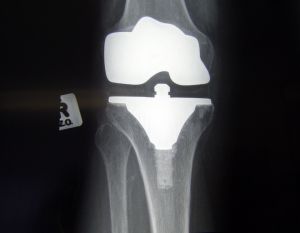
kneereplacementfrontview.jpg
Our Boston defective medical product attorneys want to make sure we get the word out. Just because while the device hasn’t been available on the market since last fall, doesn’t mean there isn’t ongoing potential for patients to experience problems with the implanted devices. There is a high probability that a lot of people who have had knee surgery over the last couple of years may be suffering the negative affects of their surgeon using this device during the procedure.

The ShapeMatch Cutting Guide is produced by a company called Stryker Corp., which manufactures a host of medical device and equipment. The product in question is a single use cutting guide that surgeons purchase in order to help position the components of a knee replacement operation, formally known as an arthoplasty. It would allow the doctor to guide in the marking of the bone before anything is actually cut.

Sometime last fall, the company became aware of a digital defect in the computer software used to make the devices. The firm now says that defect resulted in the displayed depth parameters of cut, angle and resection to be unmatched to the cutting guides that were provided.

What that basically means is that a surgeon’s cut would not be as precise as he or she believed. In the end, that has the potential to result in a number of very serious complications. Those would include fractures, joint instability, limitations in mobility, chronic pain, the possible need for revision surgery or all of the above.

So in November, the company issued a warning letter to field locations, surgeons who were registered and also imaging centers, advising them to immediately stop using this device in the course of surgery.

Then in January, the company issued another letter to these same entities, as well as hospitals, warning them of the problem and ways to potentially mitigate the risks for current patients.

However, it wasn’t until April 10 that the company finally issued an Urgent Medical Device Recall. The FDA terms this a Class 1. This designation is reserved for products that are either defective or dangerous that could predictably cause serious health problems or death. It is the highest level of recall. Class 2 and Class 3 recalls are considered less serious.

As of this month, the U.S. Food & Drug Administration reports that it has received nearly 45 reports of adverse events, which include at least three injuries and 41 malfunctions.

Patients may not even know whether the device was used during the course of their knee surgery, so we would recommend asking your physician. If so, consider contacting our Boston law offices to learn more about your potential rights of recovery.
Continue reading


A massive recall by some of the largest name brand auto manufacturers in the world is due to faulty airbag inflators.
srsairbag.jpg
Our Boston defective product attorneys understand that the issue is specifically with the front passenger airbags, where the bag has the potential to deploy with too much pressure. If that happens, the inflator casing could burst, which could result in debris being spewed at the passenger and subsequently result in a serious injury.

Among the vehicle makers affected:

  • Toyota: 1.7 million vehicles (including the Tundra, Matrix and Corolla models);
  • Honda: 1.1 million vehicles;
  • Nissan: 480,000 vehicles;
  • Mazda: 45,000 vehicles.

Additionally, both BMW and General Motors are planning to issue similar recalls in the near future.

The majority of the vehicles being recalled are from model years 2001 through 2003.

Although none of the automakers have reported any serious injuries or deaths resulting from this defect, that doesn’t mean they didn’t happen – or won’t in the future. The fact is, accidents happen at lightning speed. If a person is injured in a wreck, their first thought may not be to question the high pressure deployment of the airbag.

Honda did report that it was aware of one incident in which the casing of an airbag exploded after it had been activated under high pressure. However, that incident did not result in a serious injury.

This very same problem was responsible for a series of previous Honda recalls that started back in 2008, though those involved problems with the driver’s side airbags.

Meanwhile, Toyota – king of recalls in recent years, with 5.3 million vehicles recalled last year in the U.S. alone – said it has noted five reports of malfunctioning airbags in recent years. However, there have been no major injuries reported as a result, at least according to the company.

Earlier this year, Toyota had issued another airbag recall due to inadvertent deployment, which could cause serious injury in the event of a crash.

Although this latest recall is sizable, it’s not the biggest in the auto industry. Just last October, Toyota recalled nearly 7.5 million vehicle worldwide because of a power window issue that had the potential to result in a fire.

And in 2009-2010, the company recalled some 8 million vehicles across the globe due to a problem with accelerator pedals that stuck.

For this recall, the automakers say they will be contacting owners if their vehicle is affected. However, you can’t always rely on it. If you want to check whether your vehicle is on the recall list, you can visit Safecar.gov.

The airbag manufacturer believed to be responsible for the defect is a Japanese supplier called Takata Corp.
Continue reading

A recent report by the inspector general of the Department of Health and Human Services indicates that Medicare has been paying billions of dollars in taxpayer money to nursing homes in Massachusetts and across the country that aren’t even meeting basic needs requirements.
generationsapart2.jpg
Our Boston nursing home negligence attorneys know that while many elder care facilities lament the fact that they often don’t have the money to provide for the intense demand, this report reveals that in 2009, $5.1 billion worth of Medicare funds went to nursing homes that did not meet federal quality of care rules. In a number of these cases, those failures exhibited neglectful and dangerous conditions, sometimes resulting in serious injury and even death.

To give you an idea of how common this problem is, investigators were able to break it down like this: Every third patient who landed in a nursing home that year was placed in a facility where basic standards of care were not met.

We’re not talking about luxuries here. We’re talking about the bare minimum.

By law, facilities that are reimbursed by the government for the care they provide to patients are required to formulate – in writing – a specialized care plan for every single patient. The goal is for all the doctors, therapists, nurses, aides and other caregivers to be on the same page about what that patient needs so that the person can receive the best care possible.

In too many cases, these plans aren’t being followed or sometimes not even properly developed.

For example, one-fifth of all care plans don’t address the patient’s specific health problems. In one example cited, an elderly patient was being given one medication for depression and two for psychosis. These are drugs that could have serious side effects, especially when used in combination and especially with an elderly person. And yet, the facility had made no plan to monitor the patient’s use of these drugs.

In other situations noted, patients were receiving therapy and treatments they didn’t actually need. These facilities apparently did not care that such action could in fact be harmful to patients or that it was a waste of money. It seems all they cared about were profits.

Ultimately, what this comes down to is that we as taxpayers are spending our hard-earned dollars to subsidize operations that are potentially putting our most vulnerable citizens at risk.

Still, this report should be just the beginning. While the inspector general did advise Medicare to improve regulations and oversight, it didn’t name any individual homes or estimate the number of patients believed to have suffered mistreatment.

Medicare officials responded that legislators should consider aligning federal reimbursements to nursing homes, based on their record for good care.
Continue reading

On the heels of a report from the U.S. Food & Drug Administration regarding the increasing list of safety standard failures at a Massachusetts compounding pharmacy blamed for a deadly national meningitis outbreak, a scathing report from Congress slams the FDA for its inaction.
pills2.jpg
Our Boston medical malpractice lawyers understand that the report, issued by House of Representative Republicans, claims the federal regulator should have acted years ago to shutter the New England Compounding Center. You may recall from earlier blog entries that contaminated pain injections produced by the company last year reportedly resulted in 53 deaths and more than 700 illnesses throughout the country. It was one of the worst outbreaks of medication-related illness in our national history.

The company was forced to close in October, and as of right now, faces more than 100 lawsuits.

Six months after the NECC was forced to close, an ongoing debate rages about whether this awful tragedy might have been preventable. The resounding answer appears to be: Yes.

A House subcommittee has been investigating the issue since last fall. What they have so far concluded is that the center should have been boarded up years ago. The House leaders pinned responsibility for the fact that it wasn’t squarely on the FDA.

The first time the federal agency inspected the facility was 13 years ago. Four years later, in 2005, the regulator submitted a warning to the firm, noting the illegal practice of mass-producing replicas of drugs that were already being manufactured.

Compounding pharmacies are tapped as sources of customized drug mixes based on individual doctor prescriptions. Mass production of other types of standard drugs by these firms is illegal.

Over the course of the next five years, the FDA was flooded with complaints about the NECC. Some were from anonymous informants. Others were from state pharmacy regulators, doctors, hospitals, drug distributors and patients. This was all backed in documents the FDA handed over to the House Energy and Commerce Subcommittee on Oversight and Investigations for its research. The fact that the FDA essentially did nothing to halt this clearly troubled operation speaks volumes about what we can expect – or can’t expect – when we receive medicine.

As Rep. Tim Murphy (R-PA) noted, the FDA had a decade of flashing red lights, warning signs and alarm bells. Yet, all of that was either blatantly ignored or resulted in a minor slap on the wrist – even though these violations could – and later did – result in serious injury or death.

The FDA’s commissioner, Margaret Hamburg, testified before the subcommittee and appealed for a greater amount of oversight when it comes to the compounding industry, which in the last 25 years has been aggressive in court challenges of federal regulatory authority. She said her agency is trying to become more active on this front, but the laws and court decisions regarding the FDA’s legal boundaries are spotty and conflicting.

House Democrats on the committee, while also critical of the FDA’s response, did concede that the agency needs clearer authority to be able to act more decisively in the future.

The late Ted Kennedy, D-Massachusetts, introduced such a bill but it was not passed by fellow members of Congress.
Continue reading

The Massachusetts Board of Registration in Medicine has been alerted to an increasing number of injuries tied to robotic surgery, prompting health officials to demand more training, a higher level of oversight and clear disclosure to patients about the risks they may face when undergoing such a procedure.
hospitalroom1.jpg
Our Boston medical malpractice attorneys know that while state officials haven’t listed the exact number of robot-assisted surgery injuries in the state, they did cite three examples with devastating consequences.

One of those involved a patient whose rectal tissue was mistakenly left inside the abdomen following a surgery to correct ulcerative colitis.

Another patient who had undergone robotic surgery for ovary removal and hysterectomy suffered major damage to one of her ureters and the bowel, which mandated she undergo a number of painful corrective surgeries to fix.

The state board issued an advisory to the public, warning that surgery with the assistance of robots, like any other surgery, can have serious complications and outcomes that are poor. The state cautioned too that surgeons should be rated by patients not on the basis of how many surgeries they have completed, but rather the surgeon’s proven proficiency and competency.

State officials never specifically called out any one company in their warning. However, Intuitive Surgical Inc., which is based out of California, is the only firm with a robot system that has been approved by the U.S. Food & Drug Administration for soft tissue surgeries in America.

Those familiar with robotic surgery know that it essentially works like this: A surgeon will sit at a console in front of a high-definition screen. Similar to a video game, the surgeon will be able to manipulate hand and food controls to position the mechanical arms of the device, which are affixed with various surgical tools. On the screen, the doctor views a 3-D image of the work as it is being done.

The idea is to improve precision. In theory, it’s great. However, the actual outcomes have in some cases been less-than-stellar. That’s not to say that surgeons don’t make mistakes when they are performing such operations by hand. However, a strong argument has been made that these machines aren’t any better or more effective than regular surgery and that the rate of error fails to justify the enormous cost associated with these machines.

Patients are often not informed of this, however, because hospitals tend to exaggerate the effectiveness of these devices. Researchers with Johns Hopkins University School of Medicine conducted a study in 2011 that found nearly 9 out of 10 hospital websites that made mention of robotic surgery asserted that such procedures were superior to regular surgery, though none of those websites detailed any of the risks.

In the last year, nearly a dozen lawsuits have been filed alleging major injuries from robotic surgery, and nearly all of those make mention of the fact that surgeons aren’t being adequately trained on the devices.

Federal regulators right now are working to compile information regarding this recent increase in adverse reports, which include at least 70 deaths in the last four years.
Continue reading

Our Boston injury attorneys know that dialysis patients are dependent upon receiving regular medical care multiple times per week. Because the kidneys of a dialysis patient no longer work properly, the patient must regularly visit a designated dialysis clinic for hours at a time multiple times weekly in order for a dialysis machine to clean the blood. 1295739_virus.jpg

At a dialysis clinic, the idea is that the patient will sit in a chair while the dialysis machine works to clean the blood. The patient will be given appropriate medication and supplements to help improve health and to ensure that the dialysis process doesn’t do any damage to the body. Unfortunately, things don’t always work that way and dialysis patients can experience many complications. Five patients in Boston recently found that out when they were informed that they had been exposed to a virus.

Dialysis Patients Exposed to Hepatitis B
According to the Nephrology News and Issues, five patients who had undergone dialysis at the Boston Medical Center (BMC) received a telephone call after they underwent their dialysis procedure.

According to one of the patients who received the phone call, the contact came only a few hours after the dialysis treatment had finished for the day. The caller was an administrator from BMC who had bad news.

The BMC administrator indicated that the medical center had become aware that some of the dialysis machines had not been properly cleaned. As a result of the dirty and contaminated machines, some of the patients undergoing dialysis at the treatment center ended up being exposed to the Hepatitis B virus. In total, there were five patients who were potentially at risk of becoming ill as a result of the exposure to the virus from the dirty machines.

Because of the exposure, the patients who were affected and potentially at risk were informed that they would need an injection of gamma globulin. Gamma globulin is a substance that is made up of antibodies that help the body to fight the Hepatitis B virus. Boston Medical Center sent someone to the home of at least one of the affected patients to administer the shot.

Unfortunately, when anyone is exposed to any type of virus, there can be devastating consequences to that person’s health. For patients undergoing kidney dialysis who are already struggling with medical issues and whose bodies cannot effectively remove waste products, the effects of this type of exposure could be even worse. A virus could undermine the health of the dialysis patient, making the patient sicker. This can be a major problem, especially if the patient is undergoing dialysis while awaiting a kidney transplant, since a patient can no longer have such a transplant once he or she becomes too sick.

Tragically, exposure to a dirty machine is not the only time dialysis patients have been put at risk. A number of other medical malpractice issues and dangerous drug issues can also endanger dialysis patients. For example, many dialysis patients are given the wrong antibiotic medication according to studies published in Nephrology News. In other cases dialysis patients may be given a medication intended for their care such as GranuFlo or NaturaLyte but the drugs themselves will turn out to be dangerous and to increase the chances of a heart attack.

These mistakes and the harm that come to dialysis patients are simply inexcusable. Drug manufacturers, clinic operators and healthcare providers all need to do better to ensure that the dialysis experience is one that promotes and maintains health rather than an experience that compromises health and makes things worse.
Continue reading

On April 15, Patriots Day, two bombs exploded at the finish line of the Boston Marathon. According to the most recent updates on CNN, there were three fatalities and more than 150 injuries as a result of the explosions. Numerous amputation patients were reported among the injured. 1342516_flag.jpg

Our Boston injury attorneys understand that there is no current information on who was responsible for setting the bombs. Additional news is still forthcoming and full details on the number of victims and the extent of injuries has not yet been released. No matter who was to blame, the event was a tragic and terrible act of terror.

Boston Marathon Bombing Information

As CNN reported, the two explosions occurred at approximately 2:50 p.m. This was more than two hours after the first of the runners in the race had crossed the finished line. At 7:49 p.m. it was reported that ball bearings were being removed from victims in the emergency room, which indicate that the bombs were potentially designed in order to propel shrapnel. Additional unexploded devices were found at locations throughout Boston, with some indications that the bombs were crudely made. However, a representative from the House Homeland Security Committee indicated that the incidents suggest a sophisticated, coordinated planned attack.

In total, there were an estimated 27,000 runners from all over the world at the marathon today. According to the most recent news reports, the two deaths included one eight-year-old boy. The identities of the victims killed in the bombing have not yet been released. Boston area hospitals are also reporting that many of those who were injured were missing limbs after the explosion. The final count of the number injured is not currently known but some of the injuries have been described as critical.

Following the explosions, rumors began circulating that a suspect was in custody and that cellular telephone service has been shut down. However, there is no confirmation regarding these rumors. In fact, CNN reports that the cellular phone service was simply overloaded and Verizon had indicated that they had not been asked to turn down its wireless service by any government agency. As news unfolds on this tragedy, more information will become available.

President Obama spoke at a press conference at shortly after 6:00 P.M. Monday in response to the tragic events. The President indicated that any responsible groups or individuals will feel the full weight of justice. The House also observed a moment of silence.

As the events of the day unfold, our thoughts and prayers are with the victims of this tragedy. The news reported shortly after the event that the American flag was still flying high over the area of the debris and that runners who had completed the race had run immediately to the hospital in order to give blood in support of the victims. Within hours of the race, so many had given blood that the Red Cross indicated that there was no more need for blood donations.

Those who provided help to the victims and the response from people in Boston and throughout the United States show the strength of the American spirit that no bombing or terrorism can vanquish.
Continue reading

Transvaginal mesh (TVM) products are currently the subject of thousands of lawsuits brought by patients who had the surgical mesh implanted to treat pelvic organ prolapse or stress urinary incontinence.

The thousands of victims suffering from the dangerous side effects of TVM have to live with their story every day and have to cope with the ongoing pain and problems. Many people, however, may be unaware of TVM, of its dangers to patients or of the broader risk illustrated by this defective medical device. 167744_black_5.jpg

Recently, PBS aimed to draw more attention to the issue of transvaginal mesh products in the documentary entitled Need to Know. The documentary aired for the first time on March 22, 2013. Our Boston transvaginal mesh attorneys know that every patient who experienced transvaginal mesh complications deserves some type of compensation but that many people aren’t aware of their rights. Programs such as the Need to Know segment of PBS can help to educate patients and the public about what went wrong with TVM products.

The Problem with Transvaginal Mesh Products

Transvaginal mesh products can cause a number of serious health problems once implanted. Some of the potential complications include:

  • Erosion of the mesh.
  • Pain, especially during sexual intercourse.
  • A relapse of the pelvic organ prolapse.
  • Puncture/perforation of the bowels, intestines, bladder or blood vessels near to where the mesh was in the vaginal wall.
  • Urinary/incontinence problems.
  • Vaginal bleeding, chronic discharge or drainage.
  • Vaginal infection.
  • Scarring of the vagina.
  • Shortening of the vagina

.

These side effects occur far too often and leave many patients struggling to get medical treatment to try to resolve the complications. Often, multiple complex and expensive surgeries are required, putting patients through a terrible ordeal.

All of these serious side effects raise the question: how did this product ever get on the market? PBS largely focuses on this issue in its Need to Know Documentary because it is an issue that led not just to dangerous TVM products but also to many other dangerous medical devices as well.

The problem is that the medical device came to market under special 510(K) rules. These rules allow for a device to be fast-tracked as long as there is already a substantially similar product on the market that has never been subject to a formal recall.

TVM was thus pushed through because it was substantially similar to a previous existing product. There was little testing or oversight of the new TVM products nor was their verification that the device they were based on was still considered safe. Instead, the medical device came to the market and caused thousands of patients to get hurt because of the lack of proper testing and oversight.

The PBS segment raised attention to this very important issue and it is one every American should be very concerned about as more dangerous devices like TVM could find their way into doctor’s offices and hospitals nationwide.
Continue reading

The New England Compounding Center is allegedly responsible for one of the greatest drug disasters in modern history, causing 53 deaths and making at least 680 other people sick after sending out drugs tainted with fungus, which caused hundreds of cases of meningitis.

The conditions found at the New England Compounding Center were in clear violation of safety standards and the tragic outcome that resulted was enough to send fear through the hearts of every patient depending upon a drug produced at a compounding pharmacy. 635810_softgel_capsule.jpg

Unfortunately, the news for patients is not good. According to a recent Washington Post article, the bad conditions and breached safety standards don’t just exist at the New England Compounding Center. In fact, the article indicated that there were “widespread” safety issues including “dozens of potentially dangerous safety problems.” Our Boston drug injury attorneys know that even one bad compounding pharmacy can cause hundreds of illnesses and deaths. With a widespread problem throughout the industry, the potential implications could be terrible for public health, not to mention patients who are victimized.

FDA Finds Widespread Safety Problems

Although New England Compounding Center was reportedly the compounding pharmacy responsible for making everyone sick, this pharmacy is far from the only one to put patients in danger as a result of failure to fulfill safety obligations. In fact, the FDA’s recent inspections conducted between February and April revealed that there were serious problems at an estimated 30 specialized compounding pharmacies.

The FDA’s investigation of Compounding Pharmacies was prompted by the disaster at the New England Compounding Center and it was the first time that the Food and Drug Administration specifically targeted these special compounding pharmacies. The inspections were considered to be “priority inspections” and the FDA specifically focused on compounding pharmacies that create high-risk sterile products (like those produced at the New England Compounding Center).

These specialty pharmacies are a key part of the multi-billion dollar compounding industry, which has not been very well regulated by the FDA prior to this terrible outbreak. The compounding facilities are not subject to the same standards as drug manufacturers although many of these compounders are masss-producing drugs.

Unfortunately, the lack of regulations and overweight led to deplorable conditions. The FDA investigation, for example, found:

  • Mold in “clean” rooms (rooms that were supposedly sterile).
  • Rust in clean rooms.
  • Tears in gloves that technicians were wearing as they worked in the compounding process.
  • Black particles of mysterious or unknown origin inside of seven different vials of an injectable medicine.

These were just some of the many safety problems found at the 30 specialized pharmacies investigated. There may be more problems but unfortunately the FDA is going to have an uphill battle to find these issues before they lead to another terrible outbreak.

The FDA has only limited authority to handle investigations of compounding agencies, with five of the pharmacies initially denying the FDA investigators access to records and facilities during the priority investigations. The FDA did prevail after getting a court ordered inspection warrant. But the agency wants Congress to give it more authority to investigate compounders of high-risk sterile products. Hopefully Congress will act and the FDA will be able to step up enforcement to prevent another disaster like the one caused by the New England Compounding Center.
Continue reading

Each year, the Boston Marathon is held on Patriot’s Day in Boston. Also called Marathon Monday, thousands of runners from throughout the world will come to the city to complete the 26.2 mile journal that begins in Hopkinton and ends in Boston.

The Marathon is the world’s oldest and this year in 2013 there are expected to be around 27,000 runners. marathon.jpg

Our Boston injury attorneys wish all the runners good luck in completing the marathon and we hope that the spectators have a good time at the event. We also urge everyone to remember that there are safety issues for runners and pedestrians and that it is important for those in charge of the event to do everything possible to ensure it runs smoothly.

Boston Marathon Safety Issues
The marathon runners who will be partaking in the famous race have trained long and hard for the event and hopefully will be able to cross to the finish line with no health issues. There will be first responders and emergency personnel present in case anyone involved in the race is hurt in order to provide assistance to the runners.

Those attending the race, however, are also at risk of being injured by the large crowds, by unsafe areas for patrons to watch the race, or in other situations where property owners or organizers may fail to ensure safety. For example, some of the potential injuries that spectators may face include:

  • Injuries due to lack of crowd control.
  • Injuries if benches or scaffolding are not able to support sufficient weight.
  • Injuries due to unsafe buildings along the path of the race. One incident reported by WHDH that occurred in 2011 involved a Babson College student falling five stories through a skylight while watching the Marathon on the roof.
  • Injuries if debris is left on the ground in an area where people may be walking.
  • Injuries due to negligent police or volunteers on vehicles in the race area. In 2011, for example, the Patriot Ledger reported that a woman was hit by a state police officer on a motorcycle while standing on the sidelines.

These are just a few examples of situations where a person could be injured at the Boston Marathon. If you or a loved one is hurt as a result of someone’s dangerous property or someone’s carelessness while watching the Boston marathon, you may be able to file a claim for damages.

Tips for Staying Safe
While attending the marathon, you should keep some basic safety tips in mind to avoid getting hurt. For example, you should:

  • Pay attention to the surface of the ground below you and try to avoid surfaces like areas with loose gravel that could be dangerous.
  • Take note of the exits closest to you in case the crowd gets out of control.
  • Be careful in choosing where to watch the race from.
  • Remain calm if you are in a crowd that becomes out of control.

By following these tips, hopefully you can stay safe and enjoy your time at the marathon this year.
Continue reading

Contact Information