Articles Posted in Car Accidents

According to the Boston Transportation Department, the city is now done with its Scooter and Motorcycle Parking Program in a number of areas in the Financial District.

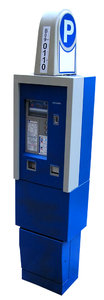
Officials say there are going to be close to 20 parking spots that will soon be established to help to provide those who ride motorcycles and scooters in the area with a place to park with a meter. These spots will mimic the close to 40 slots that were installed on Boylston and Newbury Streets in the Back Bay back in 2010.
mhiDEHc.jpg
“The Back Bay parking slots are popular, there is demand to create more of them, and the Financial District is another busy area of the City where we expect that parking slots will be utilized regularly,” said Thomas J. Tinlin, the Transportation Commissioner.

Our Boston personal injury attorneys understand that scooters and motorcycles are a popular form of transportation in the area, especially during the warmer months. These vehicles offer drivers a quick, convenient and inexpensive way to get around the city.

New Parking Slots Will be Located:

-Four spaces between Wendell and Franklin Streets on Batterymarch Street.

-Four spaces at India Street on Milk Street.

-Four spaces at Oliver Street on High Street.

-Three spaces between High Street and Purchase Street on Pearl Street.

These spaces are all a part of the Complete Streets program. This is an approach to transportation creation, planning and projects that the city started a few years ago to help to make sure that our streets are not only environmentally friendly, but that they’re accommodating to everyone.

To make room for the new spots, officials will be taking out three metered spots in each area, in addition to curb space that is unregulated. Typically, normal parking spots are about 20-feet long. Since the new spots are only 5-feet long, we can park four motorcycles and/or scooters in the same space.

To park in these new spots, it’s only a quarter an hour. Regular sports are $1.25 an hour. There’s also no time limit at these spots. Most normal spots for passenger vehicles have a 2-hour time limit.

With this program growing each passing day, the government is starting to grab on to the benefits of these kinds of alternative transportation methods in the big-city environment. These smaller vehicles produce less pollution, they help to alleviate congestion, they help to sustain the environment and they take up less space when parking.

Regardless of where they park, travelers need to be cautious when traveling with these smaller vehicles. Scooter riders and motorcyclists are more vulnerable to injury and death in the event of a traffic accident. Remember that they have rights to our roadways too, and they need to be treated with the same respect as any other driver. Help to keep them safe out there and travel courteously.
Continue reading

Massachusetts State Police were forced to close down Route 3 in Plymouth between Exits 5 and 6 because of a rollover car accident.

According to Wicked Local, drivers were backed up way past Exit 5 and were forced to sit in near stand-still traffic on Route 3A as the detour was also backed up.
566449_stop_light.jpg
The car crash happened at a portion of the road identified as part of a repaving project in the area. According to Capt. John Rogers with Plymouth Police, only one vehicle was involved in this accident. The female driver was taken to Jordan Hospital and then was taken via Medflighted to Boston.

Our Plymouth car accident lawyers understand that some vehicles are more prone to rollover accidents than others. Still, everyone’s at risk. According to the National Highway Traffic Safety Administration (NHTSA), there are close to 300,000 rollover accidents that claim about 10,000 lives each and every year. In 2003 in particular, more than 35 percent of deadly SUV accidents were the rollover accidents. Sport utility vehicles (SUV) have the highest rates for rollover accidents than any other kind of vehicle. Most commonly, the cause of these accidents is the fact that SUVs are more likely to carry heavy leads. This means that they’re more likely to topple over.

Most of these accidents are directly related not only to the load carried on a vehicle, but the vehicle’s stability when it turns. This is related to the vehicle’s center of gravity and the track width, meaning the distance between the wheels from left to right (not front and back). When a vehicle has a high center of gravity and it has a narrow track, taking fast turns greatly increases the risks for a rollover. This problem is most common on vehicles that are 4-wheel-drive. These cars have a higher ground clearance for off-road driving.

There are ways that you can reduce your risks for a rollover accident though. According to the NHTSA, these are 5 tips (listed below) that all drivers should follow.

Rollover Safety Tips:

-Avoid conditions that increase your risks for a rollover accident, including driving under the influence, speeding, driving while drowsy, driving through inclement weather and driving erratically.

-Be cautious when driving along rural roads.

-Avoid erratic steering. If you lose control of your vehicle and slide off of the road, you want to calmly steer back onto the street. Jerking the wheel into one direction only increases your risks for a rollover.

-Make sure that your tires are always in good working condition. Make sure they’re never too worn and that the tire pressure is always accurate. When your tires are worn, they’re more likely to lose traction with the pavement and cause a rollover accident.

-Make sure you’re not overloading your car. Your vehicle’s manual should have a weight limit listed inside. When loading your vehicle with additional weight, make sure that you’re driving slower and more cautiously.
Continue reading

As we recently discussed on our Boston Car Accident Lawyer Blog, road rage and aggressive driving puts drivers at increased risk for traffic accidents.

Roughly 90 percent of drivers say that they’ve either witnessed an act of road rage or they’ve been the victim in one of these incidents. Massachusetts is certainly not immune. After all, Boston drivers are legendary.
mq2z2LU.jpg
According to the Boston Globe, a 27-year-old driver from Weymouth was threatened with a knife by another driver. Police say that the man was heading down Peal Street when he let a motorist get in front of him. That’s when a second driver pulled up next to him and started yelling. Reports indicate that the men exchanged a few choice words before the enraged driver reportedly wielded a knife and pointed it at the other driver. The victim in the incident drove toward the MBTA station for safety. Unfortunately, officers were not able to track down the enraged driver, but they are still investigating.

Our Braintree personal injury attorneys understand how frustrating our state’s roadways can be. They’re awfully congested at times and are only going to get worse with the upcoming travel season. Drivers are asked to remain calm and to take the necessary safety precautions to help to eliminate the risks of any kind of road rage incident.

According to RoadRagers.com, road rage, which is also known as road violence, occurs when drivers partake in deliberately dangerous and/or violent behavior after getting emotional, angry or frustrated behind the wheel. It’s when these emotions get out of hand that bad things happen and drivers make irrational judgments.

Acts of Road Rage:

-Hitting another traveler, object or vehicle with your vehicle.

-Firing a weapon from your car.

-Hitting another person who may not be in their vehicle.

-Physically harming any other traveler.

-Getting out of your car and approaching another traveler in a hostile manner.

-Yelling insults at another person.

Top Contributors to Road Rage:

-Traffic backups.

-Other’s dangerous driving habits.

-Bad weather conditions.

-Loud noises.

-Running late.

There are simple ways that you can avoid road rage. If you run across an enraged driver, you want to steer clear of them. Never antagonize a driver. Avoid making eye contact and don’t return their gestures. You want to drive to a safe place if you feel threatened and contact authorities.

You want to make sure that you have plenty of time to get to your destination. Rushing increases irritability and the risks for rage behind the wheel. Avoid traveling during congested rush hours and stay away from busy roads.

It’s important to remain calm behind the wheel. We’ve all got to get through the same traffic on the same roadways. Let’s all work together to help to keep everyone safe!
Continue reading

According to Massachusetts State Police (MSP), a motorist was killed and another was injured in a recent accident on I-93 in Boston. The accident happened near the entrance to the Tip O’Neill Tunnel.

The Boston Globe reports that a 53-year-old driver was killed in the accident. He was driving his pickup the wrong way on the highway as he entered onto Fontage Road. He crashed his pickup into an SUV. Accident reports indicate that the driver was thrown from his car in the crash. He was taken to Tufts Medical Center where he was pronounced dead. The other driver was not injured.
122642_fast_car.jpg
The car accident went down just before 6:00 a.m. Officers were forced to close the northbound lanes for a short while. They were reopened just after 8:00 a.m.

Our Boston accident lawyers understand how dangerous our roadways can be. They’re congested, they’ve got small lanes and often seem as though they are packed with irresponsible drivers. It gets even worse when you throw tunnels into the mix. We’re here to offer you some safe driving tips to help you to get safely to where you need to be, even when traveling through a tunnel is involved.

Tunnel Safety Tips:

-When you come close to a tunnel, pay close attention to your vehicle, other vehicles and traffic signs.

-Keep an eye on any height restrictions for the tunnel if you’re traveling in a large vehicle.

-Lookout for lane closures.

-Never engage in distractions while driving through a tunnel. The road always needs your full attention, but especially when driving through a tunnel.

-Make sure that your headlights are on so that you can see and so that other motorists can see you.

-Never tailgate!

-Be on the lookout for changing traffic patters and for changes in traffic speeds.

-Make sure you’re aware of the minimum speed limits, too!

-In tunnels that have two-way traffic, you should try to stay away from on-coming traffic, if you can.

-Never cross the center line.

-Never reverse or make a U-turn in a tunnel.

-Never stop unless it’s an emergency.

-If traffic starts to slow down, switch on your hazard warning lights.

-Never leave your vehicle, not even if the traffic has come to a complete stop.

-If you breakdown in a tunnel, turn on your hazard lights, pull over to the side of the road into the emergency lane and turn off your car. Get in touch with the rescue services.

It’s important to adjust your driving to accommodate the traffic conditions and the weather conditions. Driving through a tunnel is much different than driving on the regular roadway. Your vision is hindered because of the darkness and you feel like you’re in tighter quarters with other vehicles. Make sure you’re on your best driving behavior so that you can enter and exit our state’s tunnels safely!
Continue reading

Safe Kids recently teamed up with officials from the U.S. Department of Transportation (USDOT) and with the National Highway Traffic Safety Administration (NHTSA) to push this year’s Child Passenger Safety Week.

The goal of this year’s campaign is to make sure that parents and guardians are not only buckling in their kids during every car ride, but that they’re doing so properly. According to a recently-released survey from the NHTSA, about 20 percent of parents are using these devices incorrectly.
untitled.png
“The key to keeping kids safe is to make sure your child is in the right seat for their age and size – and to make sure that the seat is correctly installed in your vehicle,” said USDOT Secretary Ray LaHood.

Our Braintree injury lawyers understand the risks that children face when involved in car accidents. The risks they face increase significantly when parents neglect to buckle them in properly. You are the saving grace for these young passengers. Make sure you understand how your child car seat works, how to properly buckle your child.

The study revealed five common mistakes that parents and guardians are making when installing car seats and buckling in kids. These mistakes could wind up costing your child their life in the event of an accident.

Common Child Car Seat Mistakes:

-Oftentimes parents use the wrong harness slot. Parents are positioning these straps either too low or too high on the seat.

-Parents weren’t placing the chest clip in the right spot. It should fall across the abdomen and not the chest.

-When buckling in a child, they need to be secure. Too many parents are leaving too much slack between the harness strap and the child. There shouldn’t be any slack.

-Parents weren’t buckling in the seat tightly. There should never be more than an inch of slack when buckled in properly.

-Seat belts for kids need to fit properly. Too many parents were leaving the seat belt near the child’s neck or face.

During Child Passenger Safety Week, events will be held throughout the country to make sure that parents have the resources available to them to properly buckled in kids. Make sure you listen up and take advantage of the resources available to make sure your kid is safe during each car ride. These young passengers rely on you!

If parents were to properly learn how to use these devices, hundreds of young passenger lives could be saved. In the meantime, parents are asked to stop in at one of Massachusetts’ Child Car Seat Inspection locations to have a trained professional double check the use of your car seat and properly install it for you if necessary.
Continue reading

There’s a lot of road work going on right now. We’ve got some beautiful weather for travelers and crews working to get jobs done before the onset of winter.

If you’ve hit the road in New England this summer, chances are you’ve seen work zones, you’ve seen the orange barrels and you’ve seen the roadside workers. They’re out there working to mow the grass on the side of the road, to fix pot holes and to build new bridges and new roads. They are working to make our Massachusetts family safer during their travels.
1003305_warning_cone.jpg
According to the Massachusetts Department of Transportation (MassDOT), driving dangerously through our state’s work zones not only jeopardizes the safety of roadside workers, but it also jeopardizes the safety of motorists. As a matter of fact, four out of every five people who are killed in work zone accidents are either the driver or the passenger of a passing vehicle. Some of the most common causes of these accidents is improper lane changes, driver fatigue and following too closely.

Our Massachusetts car accident lawyers are asking you to drive during off-peak hours whenever you can. This is not only to help keep you safe, but to help to keep roadside workers safe and to help to minimize traffic congestion. State workers often install concrete barrier walls during these kinds of projects to help to separate road traffic from construction crews. It’s also wise to make sure that all road work information is communicated to travelers. Roadside message boards should be used and workers should also wear highly-visible protective equipment. These areas should be policed with extra patrols and work areas should be cleaned up promptly.

When you’re driving through a work zone, it’s important to:

-Stay alert!

-Pay attention to speed limits.

-Beware of narrowing lanes.

-Be on the lookout for workers.

-Avoid tailgating other vehicles.

-Keep distractions out of the driver’s seat.

-Be ready for delays.

-Allow yourself with plenty of time to get through these areas.

-Select an alternate route whenever possible.

Keeping our work zones safe is a responsibility of everyone involved. We’re asking everyone in these areas to be safe and to use common sense when traveling through the busy fall months.

Those working in work zones are to make sure that the area has plenty of signage to alert passing motorists of the work that’s taking place and of the dangers present. There should also be barriers in these areas to help to keep workers away from passing traffic, according to MassDOT Work Zone Safety. It’s also a good idea to make sure that police are on site. This will help to address motorists who aren’t following the rules and to act as a deterrent to those who are thinking about breaking them.
Continue reading

There’s a lot of money up for grabs and there’s only one simple thing each state has to do to get it. The National Highway Traffic Safety Administration (NHTSA) is giving out more than $17 million to states that have comprehensive, primary laws against distracted driving during the 2013 fiscal year, according to TruckingInfo.com.
misbgGc.jpg
According to the most recent statistics, there were close to 3,100 people who died in distracted driving car accidents. Another 420,000 people were injured in these same incidents.

Our Boston personal injury attorneys understand that distracted driving, cell phone use and text messaging behind the wheel in particular, is a growing epidemic throughout the country. Slowly, state by state has enacted laws against this dangerous driving behavior but motorists aren’t always obeying. In the state of Massachusetts, it is illegal for a driver under the age of 18-years-old to talk on a hand-held cell phone while driving. It is also illegal for all drivers to text message behind the wheel, according to the Insurance Institute for Highway Safety (IIHS).

“This new grant program will provide states that have distracted driving laws with important resources to help save lives and prevent injuries,” said USDOT Secretary Ray LaHood.

The funds have been set aside under the Moving Ahead for Progress in the 21st Century Act, which was recently passed by Congress.

For a state to qualify to get some of this money, it has to make sure that it has one of these laws in the 2013 fiscal year. It’s important that these laws are primary and not secondary, which means that an officer can pull over and cite a driver solely for disobeying this law. States that only have secondary distracted driving laws are not eligible.

In addition, congress has also freed up another $5 million for officials with the NHTSA to use to create advertising tools to support the enforcement and awareness efforts of these laws.

Enforcement and awareness efforts, whether for distracted driving, drunk driving or seat belt use, have been proven to be effective in getting drivers to listed and to help to reduce the risks of car accidents on roadways nationwide.

Each state has 45 days upon publication in the Federal Register to apply for these funds.

Regardless of what our laws might be, all drivers are urged to remain safe and focused behind the wheel. There should never be a time when you take your hands off of the wheel or your eyes off of the road, especially when it’s only for a phone call or for a text message. This is a move that could potentially wind up ending your life or taking the life of someone else. Keep your phone in the glove compartment or in the back seat to avoid the temptation. You can help to make our roadways safer, and it starts by keeping your attention on the road!
Continue reading

Crash ratings should be one of the key points you consider when purchasing a new car. Unfortunately, many of the midsize luxury cars, including the Mercedes-Benz C-Class, didn’t do so well in the new frontal crash test that was developed by the Insurance Institute for Highway Safety (IIHS).

According to the Richmond Times-Dispatch, the crash test has been developed to see what happens when a car hits another car or a fixed object. The test hits about a quarter of the vehicle’s front end by running it into a 5-foot rigid barrier at 40 miles per hour.

The results do not bode well for non-luxury models either. They’re up next for the new test.
2dQNpem.jpg
These kind of tests and the results that they produce are highly beneficial to car manufacturers as they’re oftentimes used to make changes in vehicles’ designs and their safety features. And of course to advertise their safety and success.

Our Boston car accident lawyers understand how crucial these test results are for those who are looking into buying a new car. The result of this test and various other tests can be found on the Insurance Institute for Highway Safety‘s website.

Before setting out to get a new car, you’re going to want to know about its crashworthiness, meaning you want to know how well it’s going to be able to protect you in the event of an accident. Officials with the IIHS rate these cars with the various ratings, including good, acceptable, marginal or poor. They test how vehicles handle in a rollover test, high-speed front and side crash tests as well as evaluations of seat/head restraints for protection against neck injuries in rear impacts. Manufacturers will have to return to the drawing board to find ways to correct the flaws and make the cars safer and more appealing to consumers.

In the most recent test, officials looked at 11 cars. Of these cars, only the Infiniti G, the Volvo S60 and the Acura were marked with good or acceptable ratings.

Many other vehicles, including the Volkswagen CC, the Lincoln MKZ, the BWM 3 Series and the Acura TSX came through with only marginal ratings.

Among the vehicles with poor ratings were the Lexus ES 350, the Audi A4, the Lexus IS 250 and the Mercedes C-Class.

Officials say that the results of this new test show that these vehicles’ side airbags are OK for T-bone accidents, but not for off-center ones. They say there’s a chance the bag won’t go off until it’s too late.

In three of the cars, including the Volkswagen, the Mercedes and the BMW, the seat belts spooled out too much slack after an accident. The dummies in the vehicle were tossed around the cars because of it.

The door of the Volkswagen was sheared off during the test.

“With this new test, the institute has raised the bar again and we will respond to this challenge as we design new vehicles,” said officials with Toyota.
Continue reading

A single-car accident on Interstate 195 sent a man to the hospital over the weekend. According to Massachusetts State Police (MSP), the accident happened just before 7:00 p.m. in Swansea near Exit 2. The driver of the SUV drove into the median and flipped his vehicle. Officials don’t know what exactly caused the accident yet, according to Wicked Local.
755533_suv.jpg
Our Swansea car accident lawyers understand that the vehicle involved in the accident was an SUV. These larger vehicles are supposed to provide drivers with more power and more protection. Unfortunately, they’re much more likely to be involved in rollover accidents, which oftentimes produce serious or fatal injuries.

About 40 percent of Americans think they’re actually safer in an SUV than in a passenger car. That’s just not true!

SUVs rollover more than any other kind of car on the market. As a matter of fact, rollover accidents account for nearly 40 percent of all fatal accidents involving an SUV. That’s high in comparison to the 15 percent rollover rate for passenger cars.

In 2006 SUVs had the highest occupant fatality rate of any kind of vehicle in rollover accidents at more than 7.75 per 100,000 registered vehicles. This is in comparison to the with 3.10 for vans, 6.98 for pickup trucks and 3.18 for passenger cars.

You’d be surprised by how many of these accidents are single-vehicle accidents, too. In 2006, more than 45 percent of single-vehicle rollover accidents involved an SUV. Less than 40 percent involved pickups and about 21 percent in passenger cars.

In 2006, there were nearly 8,100 SUV occupants killed in traffic accidents.

According to the National Highway Traffic Safety Administration, the following can increase your chances of being involved in a rollover accident:

-Riding in an SUV because they’re narrow vehicles with higher centers of gravity, making them more susceptible.

-Speeding. Exceeding the speed limit or driving too fast for the current weather conditions contributes to about 40 percent of rollover accidents.

-Alcohol. About half of all fatal rollover accidents involved a driver who was under the influence of alcohol.

Don’t forget to buckle up either! More than 70 percent of people who are killed in rollover accidents were not wearing a seat belt when the accident happened. Be careful in rural areas as well, as about three-fourths of these accidents happen in these areas.

Tips to Avoid a Rollover Accident:

-Do your homework. If you’re looking into purchasing an SUV, look at the accident stats and look for a wider vehicle that comes equipped with electronic stability control (ESC).

-Be careful behind the wheel. Avoid sudden sharp turns.

-Slow it down. Excessive speeds only increase your risks for a rollover.

-Keep an eye on your tires. Many sure they’re properly inflated and that they’re not overly worn.

-Never drive under the influence of alcohol or drugs.

-Adjust your driving to accommodate road conditions.
Continue reading

Remember that busing accident that happened last year in Caroline County on Interstate 95? It was the accident that killed 4 bus passengers and injured another 50. Well, officials think that they’ve finally determined the cause — a drowsy bus driver.

It happened when the Sky Express was heading to New York City when it went off the road just before 5:00 a.m., according to the Richmond Times-Patch.
375_arrow_at_a_bus_door.jpg
Federal officials conducted an investigation into the accident and say the company was at fault. The driver was only allowed 6 and a half hours to sleep before he was sent out on that trip, a trip that was scheduled for the time of day in which drowsy driving is most common. Drivers are to be scheduled with enough time to get rest between shifts. There are also hours of operation rules that prohibit a driver from spending too much time behind the wheel. Drivers need sleep and the safety of everyone involved relies on it.

Our Boston bus accident attorneys understand that commercial busing companies must allow their drivers enough rest before each trip. Allowing employees with this time is in fact a federal requirement that is used to help to reduce the risks of these kinds of accidents . The company reprimanded for not allowing the driver adequate rest time. Federal regulators were also reprimanded for allowing this company to continue to do business after it had received a number of safety violations prior to the accident.

“On the morning of May 31, it wasn’t just the bus driver asleep at the wheel,” said Deborah A.P. Hersman, NTSB Chairwoman. The company is also in big trouble for not complying with federal safety procedures.

The bus driver is now facing four counts of involuntary manslaughter. He will be in court on these charges later this year. The company had received more than 200 violations through nearly 95 roadside inspections in 2010.

The federal investigation determined that the company was at-fault for not meeting vehicle safety standards. Passengers were unrestrained, were thrown from their seats and were crushed underneath the vehicle’s collapsed roof.

Two of the bus’ passengers died from asphyxiation when they were crushed between the roof and seats. The other two died from blunt-force trauma. They were thrown through the windows on the bus and were stuck between the vehicle and the pavement.

A federal law, which went into effect last month, is working to tighten the safest standards for these kinds of buses. Officials are looking to enact even more, like ones to require seat belt usage and stronger roofs.

What’s most alarming to safety advocates is that this accident, and many others just like it, are completely preventable. Still, we continue to lose lives. In this accident, three stages of safety failed: the driver, the operator and the regulator.
Continue reading

Contact Information