Recently, officials with the City of Boston and City Mayor Thomas M. Menino announced that business and homeowners in the area who were affected by Hurricane Sandy can turn to them for assistance. City officials are working to reopen business in the area and to get residents back to work. It’s not actually during the hurricane that is most dangerous, but before and after. Beforehand, you’ve got to prep your house for the worst. After, you have to clean the mess behind. Both come with some serious risks for accidents, injuries and fatalities.
nIvdWps.jpg

Our Boston personal injury lawyers understand that it is critical that homeowners and business owners do what is necessary to reverse the damage caused by water and wind before the winter seasons moves in. You want to make sure that all windows are properly covered. If you’re not planning on staying at the property in question, then you should make sure that all outside items are moved inside and that all electrical equipment is unplugged and moved away from windows. If you’re leaving your business or home, make sure that you have all of the things you need, including important documents, medications, nonperishable food items, extra clothing, cash and even a first-aid kit.

Our area got winds between 40 and 50 miles per hour. That was enough to do some serious damage. Wind gusts reached 80 miles per hour. It was so bad that Mayor Menino asked local employers to let their workers stay home. We had coastal flood warnings as well as and high wind warnings for the area. Both of these warnings went through Monday morning.

“I urge Boston employers to assist the city in keeping residents safe, and allow employees to work from home,” said Menino.

Helpful Phone Numbers:

-Office of Business Development: 617-635-0355.

-Boston Home Center: 617.635.HOME
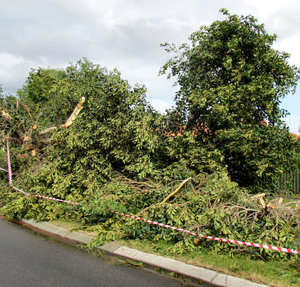
Trees were a big problem in the area. Officials with the Boston Parks and Recreation Department report that there are fallen branches and trees all over! Crews are trying to figure out which areas are most important and are tackling cleanup there. They’re starting with public sidewalks and streets. As of Tuesday morning, there were over 600 reports of tree-related emergencies through the Mayor’s 24 Hour Service.

When cleaning up your property, whether your business or your home, be cautious of hanging or downed power lines. This is where the risks for electrocution comes in. Even if you think a line is dead, never go near it. Call the local power company and have them deal with it.

So what can you do in the future to stay safe? You can start by registering for emergency notifications with the City of Boston. You’re also urged to call the Mayor’s 24-hour hotline (617-635-4500) with any storm-related issues or concerns. Education and awareness are two of your best keys for safety in these kinds of disasters.
Continue reading

Halloween is right around the corner. But did you know that it’s the most dangerous day out of the entire year for your child? That’s right. They’re more likely to be involved in a pedestrian accident during All Hallow’s Eve than during any other night of the entire year.
1306743_halloween_night.jpg
For this reason, officials with the City of Boston and our Boston personal injury lawyers are here to offer you some important and effective safety tips to make sure that everyone stays safe during this year’s Halloween activities.

Trick-or-Treating Safety Tips:

-Never allow young children to go out on their own.

-Take little ones trick-or-treating earlier in the evening.

-Make sure that you’re familiar with the neighborhoods you’re in.

-Pick neighborhoods that have sidewalks and less traffic.

-Make sure children know to stay in a group.

-Make sure that everyone has a curfew.

-Make sure you keep a cell phone with you.

-Only approach houses that are well lit.

-Consider keeping personal information, like name, phone number and address, inside of your child’s costume.

-Make sure that everyone knows not to go into someone’s home that they do not know.

-Make sure that we use sidewalks and driveways. Never cut across anyone’s front yard.

-Never go into the home of someone who you don’t know.

-Be cautious of other people’s dogs. Never approach one that you do not know.

-Make sure that you plan out your trip before you go.

-Only cross the work by using crosswalks or by crossing at a street corner.

Costume Safety Tips:

-Make sure that all children carry a flashlight with them.

-Make sure that all costumes are brightly colored to make sure that they’re easily seen by motorists.

-Make sure that point objects, like the ones on swords and devil’s forks, are made of soft materials.

-Make sure that everyone is wearing comfortable shoes for walking.

-Consider trying out face paint instead of a mask. Masks only block a child’s view. You want to make sure that they can see everything around them at all times.

-Make sure their costumes are flame resistant.

-Don’t allow costumes to be too long and serve as trip and fall hazards.

Safety Tips for Your Treats:

-Never consume any candy before having an adult look at it first.

-Toss our candy that is not in its original container, that looks like it has been tampered with or is homemade.

If you’re staying home this year, you’re asked to use artificial light in your jack-o-lanterns. You never want to leave candles unattended when you do use them. You should always make sure that your home is well lit and that your walkways are unobstructed. Lastly, you should make sure that your pets are secure. You don’t want to run the risk of one getting loose and really scaring a trick-or-treater.
Continue reading

Would your airbags protect you and your family if you were involved in a car accident?

Officials with the National Highway Traffic Safety Administration (NHTSA) are saying that they might not if you’ve had them replaced within the last 3 years.
208305_airbag.jpg
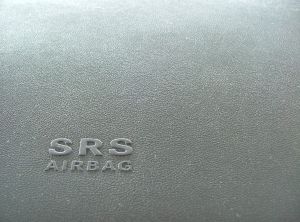
Recently, safety officials announced a safety advisory alert for counterfeit airbags. There have been some problems with organized criminals selling fake airbags to various mechanics in the state. These airbags were most commonly purchased online.

Our Boston personal injury attorneys understand that the untrained eye may never be able to identify one of these airbags. They have the same insignia and the markings of major automakers. They’ve been created to mimic original, certified airbags. The NHTSA has already completed a test that has determined that these airbags run the chance of not deploying at all when needed, and some even caused explosions and shrapnel deployment.

Officials have also not been able to pinpoint which cars they can be found on. This is not a risk you should consider taking. If you’ve had your airbags replaced in the last 3 years by a shop not affiliated with a new-car dealership, you should consider getting them checked out by a professional. That’s the only way that you’re going to be able to tell if you have one of these counterfeit airbags.

If this pertains to you, then you should get in touch with the call center that has been created by each auto manufacturer to schedule an inspection of your vehicle. You can get more information about these call centers and more information on the counterfeit airbags on the SafeCar website.

“Anytime equipment that is critical to protecting drivers and passengers fails to operate properly, it is a serious safety concern,” said Ray LaHood, Transportation Secretary.

It’s important that all vehicle owners are alerted about this situation. Share this information with your friends, your family and your loved ones. It could help to save lives. It’s also important that you keep up with the latest vehicle safety recalls. Many times, vehicle owners are never informed about their vehicles and the dangers that accompany them, including problems with the tires, the internal and external devices and even the airbags.

Airbags are one of the most important lines of defense in the event of a car accident. It’s critical to make sure that these devices are working correctly — at all times.

To help to stop these airbags from being installed in our vehicles, the NHTSA is working alongside the U.S. Department of Justice, the U.S. Customs and Border Protection and the U.S. Immigration and Customs Enforcement to make sure that none of these airbags are making their way into the country. Organized criminals are developing and selling these kinds of dangerous products. It’s clear that they have little to no regard for U.S. safety. Have your airbags checked today!
Continue reading

A 66-year-old pedestrian from Sadbury has been seriously injured in an accident. She was struck by a car on Fairbank Road. According to The Metro West Daily News, the accident happened at about 6:00 p.m. Officers say that the woman has sustained “potentially life-threatening injuries.”
736458_headed_home.jpg
The driver involved in the accident remained at the scene and cooperated with officials, according to Lt. Scott Nix, spokesman for the police. No one has been cited or has been charged in the accident, but it is still being investigated by the Massachusetts State Police and the Sadbury Police. Officers closed down the road for nearly 4 hours following the accident.

Our Sadbury pedestrian accident lawyers understand the risks. Residents and visitors to the area can simply walk to and from their destinations, or take longer journeys on buses, trains and subways. It’s a way of life here in Massachusetts. Unfortunately, inattentive or negligent motorists increase the risks for everyone. These on-foot travelers are involved in auto accidents all too often and one of the top causes of these accidents is driver inattention.

Recent reports conclude that more than 107 million Americans walk each and every day as a regular mode of transportation. The New England area accounts for more than 10 million of these walkers. That’s partially the reason why pedestrian accidents are so common in our state. Another reason why these kinds of accidents happen all of the time is because drivers just don’t recognize these travelers as legitimate traveler. They think that just because they don’t have a vehicle that they don’t matter along our roadways. Oftentimes they’re just overlooked and disregarded.

There are a number of reasons that people walk, including travel to and from school or work, recreation, personal errands, health benefits and even walking the family pet. No one walks around town searching for irresponsible drivers. Still the match is oftentimes made and serious accidents result.

Pedestrians are must less likely to survive an auto accident than the occupants of a vehicle.

Pedestrian accidents can be completely random and can affect some of the most responsible of walkers, but the href=”http://www.iihs.org/”target=”_blank:>Insurance Institute for Highway Safety (IIHS) follows these accidents and can point out some pretty significant trends.

Pedestrian Accident Statistics:

-Pedestrians over the age of 70 have the highest death rate among and age group involved in pedestrian-auto accidents.

-About 70 percent of the pedestrians who were killed in traffic accidents in 2007 were male.

-If the victim is over 60-years-old, it’s likely that the accident happened in an intersection.

-Vehicles involved in pedestrian accidents are oftentimes speeding when the crash occurs.

-Pedestrian accidents are likely to occur over the weekend periods.

-Most pedestrian accidents happen in urban areas.

-More than 70 percent occur on major roadways.

To help to reduce these accidents, pedestrians are asked to use sidewalks whenever possible. You should only cross the road by using an intersection or by using a street corner. You have to stay one step ahead of the traffic around you. Make sure that you look drivers in the eyes before crossing in front of them. Smart travel and defensive travel is safe travel.
Continue reading

Officials with the National Highway Traffic Safety Administration (NHTSA) recently announced that they would be offering close to $600,000 to both Massachusetts and Connecticut to help them to create, plan and conduct campaigns and high-visibility enforcement efforts to get drivers to stop text messaging behind the wheel.

Each state is going to receive about $300,000 to train its officers on more effective ways to hunt down and spot drivers who are text messaging behind the wheel. The money will also help to fund more campaign messages and media spots to help to spread the word about the dangers of texting and driving.
mfXibUs.jpg
“We have come a long way in our fight against distracted driving, but there is still much work to be done,” said Ray LaHood, U.S. Transportation Secretary.

Our Quincy accident lawyers understand that the State of Massachusetts already bans all drivers from text messaging behind the wheel, according to the Insurance Institute for Highway Safety (IIHS). The problem is that drivers aren’t listening. One of the most effective ways to get drivers to follow road laws and to help to increase safety on our state’s streets is to up the ante. This is done by more campaigns, more awareness programs and more police enforcement. And that’s where the NHTSA is coming in.

Currently, there are only 39 states that have laws that place bans on drivers text messaging. Only 10 states have laws that are designed to stop all drivers from using a hand-held cell phone at the wheel. Even though these laws are spread out across the nation, there are still far too many drivers who are getting into distracted driving car accidents because of these devices. In many states, like in Massachusetts, drivers are banned from text messaging behind the wheel but not from using a cell phone. With the mixture of these laws, it’s tough for officers to be able to tell if a driver was text messaging or was dialing a number to call — one illegal and one not, but both looking similar.

When all of these activities are banned, it’s much easier for an officer to bust a driver.

To help to stop drivers from text messaging behind the wheel, officials in both Connecticut and in Massachusetts will be using spotters and stationary patrols on elevated roadways. They will also be able to perform more roving patrols. The funds are to help these states to judge the effectiveness of each wave of high-visibility enforcement. The study period will be two years. The results are going to be used to help to determine which efforts should be used in other states to help to get drivers to hang up the phone.

In just 2010, there were more than 3,000 people who were killed in car accidents that involved a distracted driver. Another 415,000 people were injured in these same incidents. It’s such a problem, that these accidents account for close to 20 percent of all of the injury accidents reported that year.
Continue reading

According to the Boston Transportation Department, the city is now done with its Scooter and Motorcycle Parking Program in a number of areas in the Financial District.

Officials say there are going to be close to 20 parking spots that will soon be established to help to provide those who ride motorcycles and scooters in the area with a place to park with a meter. These spots will mimic the close to 40 slots that were installed on Boylston and Newbury Streets in the Back Bay back in 2010.
mhiDEHc.jpg
“The Back Bay parking slots are popular, there is demand to create more of them, and the Financial District is another busy area of the City where we expect that parking slots will be utilized regularly,” said Thomas J. Tinlin, the Transportation Commissioner.

Our Boston personal injury attorneys understand that scooters and motorcycles are a popular form of transportation in the area, especially during the warmer months. These vehicles offer drivers a quick, convenient and inexpensive way to get around the city.

New Parking Slots Will be Located:

-Four spaces between Wendell and Franklin Streets on Batterymarch Street.

-Four spaces at India Street on Milk Street.

-Four spaces at Oliver Street on High Street.

-Three spaces between High Street and Purchase Street on Pearl Street.

These spaces are all a part of the Complete Streets program. This is an approach to transportation creation, planning and projects that the city started a few years ago to help to make sure that our streets are not only environmentally friendly, but that they’re accommodating to everyone.

To make room for the new spots, officials will be taking out three metered spots in each area, in addition to curb space that is unregulated. Typically, normal parking spots are about 20-feet long. Since the new spots are only 5-feet long, we can park four motorcycles and/or scooters in the same space.

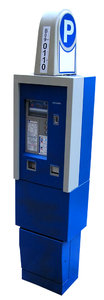
To park in these new spots, it’s only a quarter an hour. Regular sports are $1.25 an hour. There’s also no time limit at these spots. Most normal spots for passenger vehicles have a 2-hour time limit.

With this program growing each passing day, the government is starting to grab on to the benefits of these kinds of alternative transportation methods in the big-city environment. These smaller vehicles produce less pollution, they help to alleviate congestion, they help to sustain the environment and they take up less space when parking.

Regardless of where they park, travelers need to be cautious when traveling with these smaller vehicles. Scooter riders and motorcyclists are more vulnerable to injury and death in the event of a traffic accident. Remember that they have rights to our roadways too, and they need to be treated with the same respect as any other driver. Help to keep them safe out there and travel courteously.
Continue reading

Did you know that choking and suffocation are the 3rd leading cause of at-home and community fatalities in the country. In most of these cases, foods are the culprit.

But when we’re talking about young children, small toys, marbles, nuts and even coins can get caught in their throats. Choking can cause a simple coughing fit, but can also turn into something more serious — like a complete blockage of the child’s airway. In many of these more serious cases, death results, according to the National Safety Council (NSC).
2dQNk9Y.jpg
Our Boston personal injury attorneys understand that choking can happen to people of any age, but children who are under 3-years-old are the most vulnerable. Also, older adults face an increased risk of choking on food.

For kids who are younger than 1, everything goes in their mouths. They stick food, household items and anything else they can get their hands on into their little chompers. It’s important for parents to not only keep these small items away from their kids, but to always become familiar with the signs of a choking child.

Signs of a Choking Child:

-Unable to make sounds, like crying.

-Letting out a soft cry, a weak cough or both at the same time.

-Having a tough time breathing.

-Turning blue in the skin.

-Losing consciousness.

-High-pitched or soft sounds while trying to inhale.

Preventing Choking:

-Always keep small objects out of reach of infants and other small children.

-While a child is eating, make sure that they’re sitting. Never allow them to move or run around.

-Always cut up their food into bite size pieces.

-Only give them a tiny amount of food at a time.

-Never give a child any hard candy.

Choking is the third leading cause of at-home injury for residents over the age of 76. These risks peak when they turn 85 and it becomes the second leading cause. Failing to thoroughly chew food is the number one cause of these accidents, but consuming alcohol, chowing down too fast and health conditions also increase the risks.

Signs of a Choking Adult:

-Gagging or coughing.

-Pointing to or clutching the throat.

-Suddenly being unable to talk.

-Wheezing.

-Losing consciousness or passing out.

-Turning blue of the nails, lips or skin.

If you see someone choking, your best bet is to call 9-1-1 right away. If you’re familiar with how to complete abdominal thrusts to clear the victim’s airway then do so. If you have young children in your household, you’re urged to get certified in CPR and other lifesaving techniques.

If you are choking and you’re home alone, even if you can’t speak, call 9-1-1. Emergency responders will still handle a phone call even if there are no details given. You can attempt to clear your airway yourself by thrusting your mid abdomen on something firm, like a chair or a table or even a railing.

If you are able to clear the airway, it’s important for you to seek medical attention anyways. There could have been damage done to your airway and you may face increased risks for an future choking incidents.
Continue reading

Massachusetts State Police were forced to close down Route 3 in Plymouth between Exits 5 and 6 because of a rollover car accident.

According to Wicked Local, drivers were backed up way past Exit 5 and were forced to sit in near stand-still traffic on Route 3A as the detour was also backed up.
566449_stop_light.jpg
The car crash happened at a portion of the road identified as part of a repaving project in the area. According to Capt. John Rogers with Plymouth Police, only one vehicle was involved in this accident. The female driver was taken to Jordan Hospital and then was taken via Medflighted to Boston.

Our Plymouth car accident lawyers understand that some vehicles are more prone to rollover accidents than others. Still, everyone’s at risk. According to the National Highway Traffic Safety Administration (NHTSA), there are close to 300,000 rollover accidents that claim about 10,000 lives each and every year. In 2003 in particular, more than 35 percent of deadly SUV accidents were the rollover accidents. Sport utility vehicles (SUV) have the highest rates for rollover accidents than any other kind of vehicle. Most commonly, the cause of these accidents is the fact that SUVs are more likely to carry heavy leads. This means that they’re more likely to topple over.

Most of these accidents are directly related not only to the load carried on a vehicle, but the vehicle’s stability when it turns. This is related to the vehicle’s center of gravity and the track width, meaning the distance between the wheels from left to right (not front and back). When a vehicle has a high center of gravity and it has a narrow track, taking fast turns greatly increases the risks for a rollover. This problem is most common on vehicles that are 4-wheel-drive. These cars have a higher ground clearance for off-road driving.

There are ways that you can reduce your risks for a rollover accident though. According to the NHTSA, these are 5 tips (listed below) that all drivers should follow.

Rollover Safety Tips:

-Avoid conditions that increase your risks for a rollover accident, including driving under the influence, speeding, driving while drowsy, driving through inclement weather and driving erratically.

-Be cautious when driving along rural roads.

-Avoid erratic steering. If you lose control of your vehicle and slide off of the road, you want to calmly steer back onto the street. Jerking the wheel into one direction only increases your risks for a rollover.

-Make sure that your tires are always in good working condition. Make sure they’re never too worn and that the tire pressure is always accurate. When your tires are worn, they’re more likely to lose traction with the pavement and cause a rollover accident.

-Make sure you’re not overloading your car. Your vehicle’s manual should have a weight limit listed inside. When loading your vehicle with additional weight, make sure that you’re driving slower and more cautiously.
Continue reading

The meningitis outbreak connected to a New England compounding facility quickly escalated over the weekend and has now sickened more than 200 and claimed 15 lives. NBC News is now reporting that two more drugs are being linked to the fungal meningitis outbreak being blamed on contaminated back pain injections.

Both those drugs also came from the New England Compounding Center, according to a statement from the Food & Drug Administration. One is a steroid called triamcinolone acetonide and another is a product used during heart surgery. 861689_intradermic_needle.jpg

Boston Personal Injury Attorney Jeffrey S. Glassman notes the New England pharmacy has now issued a recall of its entire product line — a PDF on the FDA website that scrolls on for pages.

“Triamcinolone acetonide is a type of steroid injectable product made by NECC. The cases of meningitis identified to date have been associated with methylprednisolone acetate, another similar steroid injectable product,” The FDA said in a statement.

Previously, three batches of methylprednisolone were recalled. The steroid is injected into the back to treat pain. Authorities remain concerned about the crisis’ continuing escalation because the initial recall impacted as many as 14,000 patients and victims are not being diagnosed until about three weeks after injection.

Back injections may also be a particularly effective way of transmitting fungal meningitis, which attacks the membrane around the spine and brain. Meningitis is a life-threatening health emergency with symptoms at onset similar to those of the flu, including headache and nausea. A number of patients have suffered strokes.

The FDA is reiterating its warning: All products distributed to medical professionals by NECC should be retained, secured and withheld from use.

It’s not the first time the the compounding facility has run afoul of regulators. In 2006, it was warned that is was going far beyond its licensing authority in compounding and packaging drugs. Unfortunately, these facilities, which mix custom drugs from FDA-approved compounds, are not subject to federal oversight. Such oversight is left to the states — Congressional gridlock has failed to tackle the issue in recent years.

“FDA is particularly concerned about the manipulation of sterile products when a sterile container is opened or otherwise entered to conduct manipulations,” the agency said in its 2006 warning letter to NECC.
Continue reading

Officials with the Massachusetts Bay Transportation Authority (MBTA) report that there were close to 4,000 citations issued so far this year to people who evaded paying their fare.

This is up close to 60 percent from this same time last year, when only 2,270 citations were issued, according to the Boston Globe.

Chief Joseph O’Connor, Superintendent with the MBTA Transit Police, says that officers are cracking down on these fare evaders because that’s what the public wants. The MBTA is already short on funds. What they do make they make on fares. These funds help to support the system and help to make it safer for you and other riders.
mCezWJa.jpg
“Policing at our point of entry is a good law enforcement strategy and it has had positive effects on preventing crimes on our system,” O’Connor said.

Our Boston MBTA accident attorneys understand that there was a fare evasion law that went into effect back in 2007. Earlier this year, the penalties for not paying went from a $15 fine to a $50 fine. Officials think that the fines will not only act as a deterrent but also may help to make up for some of the money that’s being lost, too! According to studies, those who are busted and cited typically do not re-offend. The high visibility of enforcement officers helps to keep people from offending. We just need the man power on site.

What is also common among those who evade the fare is that they are commonly wanted on warrants for other crimes that they’ve already committed in the area.

The recent announcement of the increased patrol against these individuals comes the same day that two different men were cuffed for not paying their fares. Both of them happened at the Quincy Center Station’s Red Line. Both of the men who were arrested were already wanted on drug charges.

The first guy tried to get away without paying by following a paying customer closely through the gates. He was also arrested back in August and accused of distributing marijuana at that same station. He posted bail, but never made it to court.

Just an hour later, another local man did the same thing and tried to follow a paying customer closely through the gates. Officers issued him a citation then discovered that he was already wanted on three warrants and was wanted for various drug charges.

You’re urged to submit a report, which can be done anonymously, if you see any suspicious activity throughout the MBTA’s services.

Safety should be the number one concern of everyone while using the MBTA. Smooth-running transit helps to decrease travel time, better fund the program and increase rider safety.
Continue reading

Contact Information