
Durban v. Waverly Sales Company, an appeal argued before the U.S. Court of Appeals for the Eighth Circuit, involved a woman who attended a horse auction with her husband. The arena was set up in such a way that there were bleachers erected around the show floor. The plaintiff and her husband were sitting in the bleachers on the northeast side. During the auction, she left her seat to go the restroom.

the-horse-1439653-m.jpgIn order to get to the restroom, the plaintiff had to walk down an alley created at the northeast end of the arena between the bleachers. This is the same alley that the horses were led down after they were sold. While returning from the restroom, the plaintiff tripped and fell to the ground. At this point, an employee opened a door overhead that caused a horse to become startled.

The startled horse trampled the plaintiff, and she was very seriously injured. The plaintiff sued the defendant for personal injury, claiming that the show presenter was negligent for arranging the seats in such a way that people had to walk down the same alley as the horses. Additionally, she alleged the worker’s negligent opening of the door that startled the horses.

Our Boston personal injury lawyers know that companies often do whatever they can to get a case dismissed.
Continue reading
Our Boston personal injury lawyers know rules of evidence can lead to complex litigation.

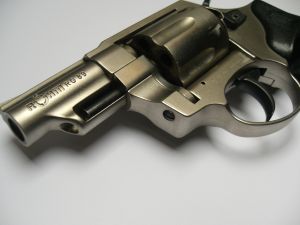
pistol-443691-m.jpgIn Lee v. Smith & Wesson Corporation, the plaintiff was injured while shooting target practice with his revolver manufactured by the defendant. The plaintiff fired two shots without incident and, on the third shot, was severely injured when the gun hit him in the eye.

According to the plaintiff’s testimony, the cylinder that holds the bullets swung open after the shot was fired due a manufacturing defect and hit him in the safety glasses. The safety glasses broke, causing significant trauma and loss of vision to his right eye.
Continue reading

Our Boston personal injury lawyers know such cases require a thorough understanding of both state and federal negligence law.

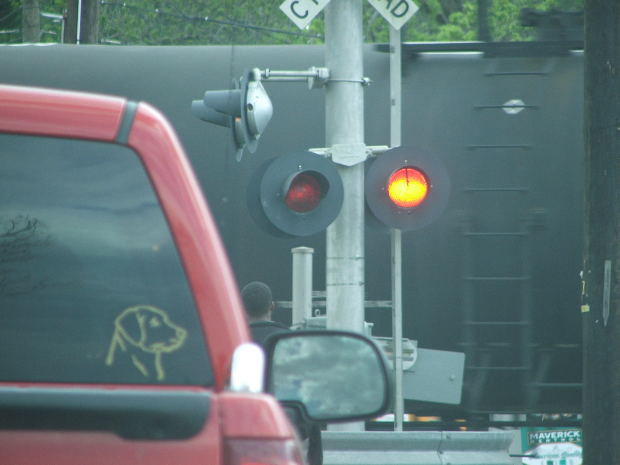
train.jpgIn Partenfelder v. Rhode, a case heard in the Wisconsin Supreme Court, a freight train hit a minivan. According to the record, the local police department sent a letter roughly two weeks before the fatal accident to a member of the rail police. The letter stated the town would be holding a Memorial Day parade, which might increase pedestrian traffic in the area along the railroad tracks.

The letter asked the rail police to notify all train conductors of the possibility of pedestrian and vehicle hazards on the tracks at a particular location. The letter did not request that trains operate at reduced speed. The officer did not get any response to his letter and sent another copy of the same letter the following week. The rail police officer who received the letter sent a memo to the train dispatcher, who generated a special bulletin telling train crews to sound the warning bell continuously and look out for crowds at a particular location.
Continue reading

Our Boston personal injury lawyers know storeowners who do not properly inspect and maintain their premises may subject themselves to a negligence lawsuit.

269548_emergency.jpgAccording to recent story from CBS, a security gate at a Philadelphia Italian ice store killed a three-year-old child. Authorities are reporting that an accordion-style metal gate that rolls down to protect the store from burglars came loose from the building structure. The 2000-pound gate, along with the metal frame constructed on steel beams, detached from the building and fell on the child.

This tragic accident occurred during a fundraising event hosted by two college fraternities. Witnesses say that dozens of people tried to lift the gate off the child. At one point there were 12 to 15 people on each side of the gate but it was too heavy for them to quickly lift. Eventually, with the help of 30 people, they were able to lift the gate off the young girl, but she was not moving at that point.
Continue reading

Our Boston personal injury lawyers know the statute of limitations is always a major concern in the timing of filing a negligence action.

healthcare-upclose-885334-m.jpgIn Wilkinson v. East Cooper Community Hospital, an appeal heard in the South Carolina Supreme Court, the plaintiff was admitted to the defendant hospital in 2008 to undergo reconstructive breast surgery.

Once the surgery was complete, the plaintiff began to experience medical complications, and she required additional surgical procedures. Just short of three years following the surgery, the plaintiff filed a Notice of Intent (NOI) to file a lawsuit, because the statute of limitations was about to run.

Our Boston personal injury lawyers know insurance cases involving defendants with multiple insurance companies may result in additional litigation.

959017_swimming_pool_water.jpgIn Fellowship of Christian Athletes v. Ironshore Specialty Ins., a case heard in the U.S. Court of Appeals for the Eight Circuit, two boys attended a youth sports camp operated by the defendant. Neither of the boys could swim, and the parents indicated that they could not swim on the appropriate form.

One day during camp, there was a pool party for all campers. Once the pool party was over, the staff noticed the two boys were missing. Their bodies were eventually discovered lying next to each other on the bottom of the deep end of the pool. The medical examiner concluded that the cause of death for both children was drowning but the most shocking finding were that the times of death for the boys was determined to be at 10:42 p.m. and 10:44 p.m. respectively.
Continue reading

Our Boston personal injury lawyers know cases involving injuries to children can be especially hard on families.

880737_brain_001.jpgAccording to a recent story from News10.com, the family of a ninth grade student at a school in Hialeah, Florida filed a negligence lawsuit against an event company. The girl was attending Spirit Day at the school and was participating in a sumo wrestling game.

The girl was wearing a sumo wrestler suit provided by the event company. The suit allegedly did not fit her properly. The family, through their attorney, alleged that the improperly fitting suit and insufficient supervision caused the girl to have her head banged against the floor several times.
Continue reading

Our Boston fall injury lawyers know premises liability law in Massachusetts is distinct from many other states.

1031747_hospital.jpgIn Demag v. Better Power Equipment, an appeal heard by the Vermont Supreme Court, the plaintiff worked at a car dealership. One of the services offered by the dealership was that they would pick up the customer’s car and return with the car after service was completed.

The plaintiff was a driver who would drive his own car to the location where the customers’ cars were, leave his car, and return to the dealership with the customers’ cars. The plaintiff was responsible for picking up the cars owned by the defendant and his wife several times a year.
Continue reading

Our Boston personal injury lawyers understand that, in premises liability cases, the defendant will often to try to escape liability by claiming that the plaintiff was injured by an obvious danger.

993863_ladder.jpgIn Pinson v. 45 Development, a contractor was hired to install an electronic sign at a store. He was a master sign electrician with years of experience. He was using a bucket truck to get to the sign canopy. The canopy was constructed in such a way that he not have a place to stand. It was basically a metal frame with vinyl stretched over top. There was no way to gain access from underneath the sign.
Continue reading

Our Boston personal injury lawyers understand that the need to prove both liability and damages separately can be confusing to plaintiffs.

hospitalroom1.jpgMetzler v. BCI Coca-Cola Bottling, decided by the Supreme Court for the State of Arizona, involved a plaintiff who was shopping at a grocery store in Tucson. While in the store, she slipped on water that was leaking from a refrigerator. The refrigerator was not owned by the store; rather, a soft drink company that had placed the refrigerator in the store owned it.

The personal injury suffered by the plaintiff was severe, and she made an offer to settle the case for $150,000. The defendant rejected the case, and it went to trial. The jury found that the defendant was responsible for the plaintiff’s injuries and awarded her a verdict in the amount of $1.5 million.
Continue reading

Contact Information