
Articles Posted in Car Accidents

Everyone today knows that it is illegal to drive with a blood alcohol content (BAC) above .08. The laws impose this limit to ensure that people do not drive when they are too impaired to react quickly, to pay attention and to make safe choices behind the wheel. Unfortunately, the laws may not be doing enough, as it is possible that those with a BAC below .08 may still be affected by alcohol and thus unable to drive safely. 1231362_sign_no_alcohol.jpg

Our Boston car accident attorneys knows that drunk driving accidents can be devastating and that it is important to do everything possible to prevent intoxicated people from getting behind the wheel. This is why new NTSB proposals on lowering the alcohol level constituting drunk driving could be a good thing that helps to reduce the risk of drunk driving crashes.

NTSB Considers Changing Permitted BAC Levels
According to NBC News, the National Transportation Safety Board (NTSB) recently voted to recommend that states lower the permitted blood alcohol content levels and change their definitions of drunk driving.

The NTSB recommends that states drop the permitted BAC level down from .08 to .05. Currently, all 50 states in the United States define drunk driving using the .08 BAC rule, so this would be a widespread shift in drunk driving policy in the United States. However, changing the BAC level from .08 to .05 would put the United States more in line with other countries.

Currently, only Canada, Iraq, the United States and a few other locations have their drunk driving BAC set at .08. The majority of locations throughout Europe, including Russia, define intoxicated driving as having a BAC of .05 or higher. Most of South America and Australia also have a lower permitted BAC than in the United States and when Australia changed their laws from allowing a .08 BAC to .05 BAC, provinces in the country reported between a five and 18 percent decline in the number of traffic deaths.

Arguments for Change
Of course, adjusting our laws to match the rest of the world’s is not the only argument, nor the strongest argument, for reducing the allowable BAC level. The fact is that reducing the permitted BAC level could save lives.

According to the NTSB, some drivers begin to experience problems with depth perception and other visual functions once they have a BAC of .05 or higher. The chances of an accident at this level increase by 39 percent. By the time a person’s BAC level reaches .07, his or her cognitive abilities are likely to be impaired, and by the time the BAC rises to .08 percent, then the chances of an accident are increased by a full 100 percent.

Since a person begins to suffer impairment at .05 and the accident risk increases so dramatically, there is little reason to allow people to drive after they are at this stage of intoxication. Changing the law could reduce crashes and save lives, and lawmakers should seriously consider embracing the NTSB’s recommendation.
Continue reading
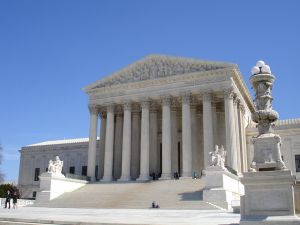

The U.S. Supreme Court recently issued a decision in the case of US. Airways, Inc. v. McCutchen in a ruling that underscored common sense must be applied when third-party compensation litigation is involved.
ussupremecourt2.jpg
In the end, the court found that an insurance company can’t force a person to reimburse the full cost of third-party compensation if doing so would actually make them worse off than had they not pursued third-party action in the first place.

This kind of scenario actually crops up fairly frequently, so our Boston injury lawyers were pleased to hear it being addressed.

This important case started in a rather ordinary way: With a car accident.

The plaintiff was an injured airline mechanic. He was injured in an off-the-job motor vehicle crash in which he was not at-fault, though he was badly injured. This individual had medical insurance through his employer, US Airways.

His total medical expenses ended up being nearly $67,000, which the company insurer covered without issue.

But here’s where it got tricky: The injured man then sued the other driver and his insurer. He won. As a result, he received total compensation in the amount of $110,000.

However, about 40 percent of that went to his attorneys, who helped him to win the case. What that meant was that he was then left with $66,000. This is a little less than what US Airways had paid.

The firm’s health plan had a clause that required injured parties to reimburse the company for any money it had paid out of what had been recovered by the third party.

What the justices were asked to decide was whether that policy meant that this injured man would have to fork over every single penny of that $66,000 he was awarded – plus another approximately $1,000 – or whether he was only required to reimburse a portion.

In the end, the court decided in favor of the injured man. The reasoning went this way:

There wasn’t actually any language at all in the health plan that mentioned the issue of attorneys’ fees. As Justice Elena Kagan wrote, that could be interpreted one of a couple of different ways. The first would be that the injured party would be required to pay back every single penny of the total he received from that third party. The second would be that the reimbursement would only be deducted after the “true” cost of recovery.

In other words, while the judgement was for $110,000, the true recovery in this case for the plaintiff was $66,000.

The justices reasoned that fairness would require the court to interpret the plan in the second way. She rightly pointed out that when it comes to third-party recoveries, they aren’t free. This man could not have expected to receive any compensation without the help of an attorney, whom he would rightly be expected to pay. But should the injured party be worse off for the fact that he pursued legal damages from the wrongful party?

The justices decided that unless there was some amount of cost sharing, the injured party’s health insurer would basically be getting a “free ride” – receiving all the compensation without having to put it any of the effort or investment it would take to receive reimbursement.

Further, by leaving the injured party even worse off, Kagen remarked, this man was in effect paying for the “privilege” of serving as a collection agent for the insurer.

Such an injustice could not stand.

The court did not decide exactly how much the injured man should have to pay. That question was remanded back to the lower court.
Continue reading

A majority of parents say that they wish they would have spent more time with their teen drivers in high-risk situations. According to the National Safety Council (NSC), our teens aren’t always getting the proper education they need behind the wheel to stay safe out there.
739118_crash.jpg
To help parents and guardians with this important task, officials with The Allstate Foundation and with the NSC have teamed up to create life-saving and unique approaches to get the job done. It’s all there within the “Drive it Home” website.

Our Quincy car accident lawyers understand that motor vehicle accidents continue to be the number one cause of death for teens across the country. They’re actually more likely to get into a car accident during their first year behind the wheel than during any other time in their lives. Luckily, parents, guardians and mentors can help to reduce these risks — all it takes is a helping hand. We all have to make sure that we’re staying active in our young drivers’ lives. And now “Drive it Home” is going to make it a little easier.

“Drive it Home can help protect teen drivers, educate parents on the crucial role they play in the driving process, and help ensure our sons and daughters return home each and every night,” said Vicky Dinges with Allstate.

So how bad are we at helping? According to recent studies with Allstate, parents aren’t doing enough — and they’re regretting it later.

-Parents aren’t understanding the risks that their young drivers are up against.

-Driver inexperience is the number one cause of accidents and fatalities among this young age group.

-Even though about 90 percent of parents say that it’s important that their teens learn the importance of driving at night and driving with passengers, only about a third say that they’ve even covered these points with them.

-About 30 percent of parents aren’t settling household driving rules for their teens to follow. It’s important that we set these rules (and lay out the consequences for breaking them) to keep them safe behind the wheel. More enforcement means safer driving.

-More than 60 percent of parents say that they’re currently seeking help with their teen’s driving education.

One of the best things that you can do is to create a parent-teen driving contract. This is a contract signed by both you and your teen that agrees on driving privileges, rules and bad behavior consequences. When creating your contract, make sure you include rules regarding the number of passengers allowed in the vehicle, their driving curfew and communication standards.

You also should make sure that you’re spending plenty of time in the passenger’s seat. Ride along with your teen driver often. Make sure they know what they’re doing behind the wheel and offer them constructive criticism when you think they need some. Make sure your teen has lots of practice – the more practice, the better. Start off driving during the daytime, then gradually add practice at night and bad weather. You want to make sure that they’re ready for anything and everything out there.
Continue reading

Ambien and other sleeping pills help people throughout the Boston area to get a good night’s rest. Unfortunately, new research has revealed that the active ingredient in Ambien, Zolpimist, Edluar and certain generic sleeping pills doesn’t completely wear off by morning. As a result, there are lots of drivers on their morning commutes who are still groggy due to sleeping pills.

According to Boston.com, the FDA has recently issued an order requiring drug makers to lower the dose of sleep medication in these popular sleeping pills. Our Boston car accident attorneys want to make sure everyone is aware that these sleeping medications can create an auto accident risk. If you have old pills in your cabinet, you should use proper safety precautions to make sure you are not driving when you are impaired. 1394618_pills_out_of_bottle.jpg

The New FDA Requirements for Sleeping Pills
The FDA is targeting all sleep aids that contain the active ingredient zolpidem, which includes Ambien and several other brands. Sleep pills with different active ingredients, such as Sonata and Lunesta, are not required by the FDA to make any changes at this time.

For the affected drugs, the FDA is mandating that doses for women be cut in half since women’s bodies are slower to process the drug. This means that doses for women should be reduced from 10 milligrams to 5 milligrams for standard sleeping pills. For extended dose pills, the doses for women should be reduced from 12.5 milligrams to 6.25 milligrams.

The FDA also recommends that the newer lower dosages also be used for men, although this is not required. In fact, in any situation, the FDA urges doctors to prescribe the lowest possible dose of sleep medications to patients.

The new lower FDA limits are necessary because testing has revealed that the drugs can remain in people’s system at levels that interfere with both coordination and alertness. This, of course, increases the risk of an auto accident occurring because the driver is impaired.

Avoiding Accidents With Sleeping Pills
If you currently have sleeping pills that you are taking, it is important to be aware that these pills have the higher doses of medication. Therefore, the pills may impact your ability to drive, especially in the morning when the active drugs have not yet been processed and removed from your body.

Driving when you are impaired by sleeping pills can be dangerous for you and it can also be dangerous for every other driver and pedestrian who has to share the road with you. The drugs carry a warning that they could potentially cause drowsiness, and this warning must be respected.

If you do cause an auto accident as a result of being impaired by a sleeping pill, this can constitute impaired driving even though the pill is legal. Those who cause auto accidents because they drive while under the influence of sleeping pills can also be sued by injured victims of auto accidents or by surviving family members of people killed in a crash.
Continue reading

The time between Thanksgiving and New Years Eve is among the most dangerous periods to be on the road in Massachusetts and throughout New England. Recently, Boston.com reported that more accidents occur during the year-end holidays than at other times throughout the year, in large part because of more travelers as well as an increased risk of drunk and aggressive driving.

As you enter into the holiday season, our Boston personal injury attorneys urge you to understand the increased risk of auto accidents and to take steps to avoid the most dangerous behaviors that contribute to such wrecks. 1406789_winter_blizzard_scene.jpg

The Causes of Holiday Auto Accidents
There are many reasons why the number of accidents increase from Thanksgiving to New Years. One reason is that there are simply more drivers on the road as people go see friends, take trips and travel for the holidays. The bad winter weather may also contribute to the increased car accident risks. However, while these factors are beyond the control of drivers, there are also some driver behaviors that significantly up the chances of a holiday car wreck.

Law enforcement officials have identified three specific behaviors that tend to be factors responsible for causing holiday auto accidents. CBS Boston reports that state police in Massachusetts as well as the five other New England States will be teaming up to help put a stop to these behaviors this holiday season.

The behaviors of concern that lead to crashes over the holidays include:

  • Driver aggression
  • Driving while under the influence of drugs or alcohol
  • Driving while distracted

Each of these behaviors presents some serious dangers. For example, the National Safety Council (NSC) indicates that speeding, a form of aggressive driving, is a contributing cause of one out of every three deadly car crashes in the U.S. The AAA Foundation for Traffic Safety statistics also indicate that aggressive driving is a factor in 56 percent of U.S. fatal car crashes. Aggressive driving behaviors of concern include speeding, tailgating, failing to give another driver the right-of-way and engaging aggressively with another driver.

Distracted and drunk driving are no less dangerous. Statistics from Distraction.gov indicate that 3,092 car accident deaths in 2010 can be attributed to distracted driving and the Century Council reports that there were 114 drunk driving deaths in the state of Massachusetts in 2010. Distracted driving can include driving while on a cell phone, while texting or when otherwise focusing on anything besides the road. Drunk driving typically refers to driving with your blood alcohol content exceeding .08, but can also include other situations where your driving abilities are impaired by either alcohol or drugs.

Avoiding Auto Accident Dangers This Holiday Season
Law enforcement hopes that tougher enforcement, a larger police presence and driver education will help to curb these dangerous behaviors this holiday season. As a driver, you should be aware of the increased risk, however, and you should also be aware that you have legal rights if other drivers are careless or break the laws and cause you harm.
Continue reading

Officials with the Massachusetts Department of Transportation (MassDOT) recently unveiled a new and more effective snow-clearing machine. It’s the Tow Plow and it can clean 2.5 travel lanes in just one pass. A typical snow plow can’t even clear one lane at a time.
mhYmRiI.jpg
“This Mega Plow takes the place of three pieces of equipment. We are reducing emissions, man-power, and still clearing the roads for our customers,” said MassDOT CEO and Secretary Richard A. Davey.

Our Braintree personal injury attorneys understand that the snowplows may serve as a nice convenience for us as they help us to navigate our roadways in the snowiest of conditions, but they also serve up some serious dangers. Snowplow operators are typically safety-conscious, but they need your help. Stay back and allow them to safely do their job of clearing the road for you. Don’t take a chance. Don’t crowd the plow!

This season, there are 12 new Tow Plows on order and already 40 new plows with spreaders and 9 new loaders. There are also 4,000 private vendors who join MassDOT in working to clear our roadways.

This year’s ice and snow budget is $45 million. Already this year, District 2 (consisting of New Braintree to Westhampton and Warwick or Southwick) has spent close to $250,000 because of the storm on the 7th of November. Currently, District 2 has close to 80,000 gallons of liquid de-icers and anti-icers, more than 2,000 tons of sand and close to 40 tons of salt. All we need is safe drivers to help them to lay it down safely — without car accidents.

To help to keep you safe around these snow and ice-removing vehicles, we’re here to offer you some safe driving tips. Please review them and share them with your loved ones. Safe roadways is a group effort from all motorists.

Safety Tips — Snowplows:

-Remember that these vehicles have large blind spots and can’t see behind their vehicles. Sometimes they stop or backup to complete clearing the roadway. Keep your distance from these vehicles.

-Keep an eye out for these vehicles. They can be in one lane or in all of the lanes. Make sure you know where they are.

-Stay out of “authorized vehicle only” areas. These are areas for snowplows and other official vehicles to make turnaround.

-Slow down your speed when passing snowplows.

-Always wear a seat belt to help to prevent injury and death in the event of an accident.

-Make sure your headlights are on to increase your visibility and to help others to see more easily.

-Before heading out, check the weather and the traffic reports. This will help you to steer clear of congested and closed areas. This way you can plan a more effective route.

-Never drive through a snow cloud or in whiteout conditions.

-Keep it calm. Remember that snowplow operators periodically pull over to allow traffic to pass by.
Continue reading

Our youngest drivers are at the highest risks for drowsy driving car accidents.

According to a recent study from the AAA Foundation for Traffic Safety, drivers between 16- and 24-years-old are more likely to drive while feeling sleepy than any other age group of drivers. Officials with AAA conducted a survey with these young drivers and found that one out of every seven of them reported that they’ve nodded off behind the wheel at least once in the last year. With drivers in other age groups, only one out of every ten admitted to falling sleep at the wheel.

571215_afternoon_nap.jpgThe new findings come with the most recently drowsy driving statistics from the National Highway Traffic Safety Administration (NHTSA). According to data, these young drivers were more than 75 percent more likely to get into a drowsy driving car accident than older drivers.


There’s a new telephone number that’s going to help drivers to get the transportation information they need. It’s all a part of the Massachusetts Department of Transportation‘s (MassDOT) internal OneVoice transition.
mBuRB5q.jpg
“It’s a voice that is focused on the customer. Maybe you don’t know your highway district, nearest airport, bus route or what time the local RMV opens. Today, we are telling our customers all that information is just one call away, 857-DOT-INFO,” says Richard A. Davey, the MassDOT Secretary.

Our Boston personal injury attorneys understand that the Transportation Reform, launched in 2009, brought together agencies, like MassHighway and the Turnpike Authority. While that was a giant step at the time, we’ve come leaps and bounds since then. Today, there are four divisions within MassDOT. These divisions include the Aeronautics Division, the Rail and Transit Division, the Registry of Motor Vehicles Division and the Highway Division.

This union has allowed officials with MassDOT to consolidate functions and to save some money. One of the few things that hadn’t been consolidated, until recently, was the phone system. This system, the OneVoice phone transition, will result in $420,000 in maintenance savings each year.

The existing customer service line, 617-222-3200, is still working.

We understand how vital it is to make sure you know where you’re going, how to get there and how the traffic and weather are looking. The OneVoice hotline is going to help you to get all of this information.

While useful, we’re asking drivers not to take advantage of the new technology while they’re behind the wheel. There should never be a time when you have to use the phone while driving. If there is something you need to know and you can get it from OneVoice, we are asking you to hand the phone off to a passenger and let them handle it. Keep your attention on the task at hand. If you’re driving alone, we’re asking you to pull over to a safe area, stop the vehicle and then continue to make the call.

Every year, there are thousands who are killed in distracted driving car accidents. The main cause of these kinds of accidents is cell phone use. As a matter of fact, about 20 percent of all of the people who are killed in traffic accidents are killed in a car crash that involved a distracted driver. In 2010, there were more than 3,090 people killed in these crashes. Another 420,000 were injured in these same types of accidents.

As a matter of fact, you’re 4 times more likely to get into a car accident while using a hand-held cell phone. According to a recent Distraction.gov survey, roughly 40 percent of American teens say they have been in a car when the driver used a cell phone in a way that put people in danger.
Continue reading

Would your airbags protect you and your family if you were involved in a car accident?

Officials with the National Highway Traffic Safety Administration (NHTSA) are saying that they might not if you’ve had them replaced within the last 3 years.
208305_airbag.jpg
Recently, safety officials announced a safety advisory alert for counterfeit airbags. There have been some problems with organized criminals selling fake airbags to various mechanics in the state. These airbags were most commonly purchased online.

Our Boston personal injury attorneys understand that the untrained eye may never be able to identify one of these airbags. They have the same insignia and the markings of major automakers. They’ve been created to mimic original, certified airbags. The NHTSA has already completed a test that has determined that these airbags run the chance of not deploying at all when needed, and some even caused explosions and shrapnel deployment.

Officials have also not been able to pinpoint which cars they can be found on. This is not a risk you should consider taking. If you’ve had your airbags replaced in the last 3 years by a shop not affiliated with a new-car dealership, you should consider getting them checked out by a professional. That’s the only way that you’re going to be able to tell if you have one of these counterfeit airbags.

If this pertains to you, then you should get in touch with the call center that has been created by each auto manufacturer to schedule an inspection of your vehicle. You can get more information about these call centers and more information on the counterfeit airbags on the SafeCar website.

“Anytime equipment that is critical to protecting drivers and passengers fails to operate properly, it is a serious safety concern,” said Ray LaHood, Transportation Secretary.

It’s important that all vehicle owners are alerted about this situation. Share this information with your friends, your family and your loved ones. It could help to save lives. It’s also important that you keep up with the latest vehicle safety recalls. Many times, vehicle owners are never informed about their vehicles and the dangers that accompany them, including problems with the tires, the internal and external devices and even the airbags.

Airbags are one of the most important lines of defense in the event of a car accident. It’s critical to make sure that these devices are working correctly — at all times.

To help to stop these airbags from being installed in our vehicles, the NHTSA is working alongside the U.S. Department of Justice, the U.S. Customs and Border Protection and the U.S. Immigration and Customs Enforcement to make sure that none of these airbags are making their way into the country. Organized criminals are developing and selling these kinds of dangerous products. It’s clear that they have little to no regard for U.S. safety. Have your airbags checked today!
Continue reading

Officials with the National Highway Traffic Safety Administration (NHTSA) recently announced that they would be offering close to $600,000 to both Massachusetts and Connecticut to help them to create, plan and conduct campaigns and high-visibility enforcement efforts to get drivers to stop text messaging behind the wheel.

Each state is going to receive about $300,000 to train its officers on more effective ways to hunt down and spot drivers who are text messaging behind the wheel. The money will also help to fund more campaign messages and media spots to help to spread the word about the dangers of texting and driving.
mfXibUs.jpg
“We have come a long way in our fight against distracted driving, but there is still much work to be done,” said Ray LaHood, U.S. Transportation Secretary.

Our Quincy accident lawyers understand that the State of Massachusetts already bans all drivers from text messaging behind the wheel, according to the Insurance Institute for Highway Safety (IIHS). The problem is that drivers aren’t listening. One of the most effective ways to get drivers to follow road laws and to help to increase safety on our state’s streets is to up the ante. This is done by more campaigns, more awareness programs and more police enforcement. And that’s where the NHTSA is coming in.

Currently, there are only 39 states that have laws that place bans on drivers text messaging. Only 10 states have laws that are designed to stop all drivers from using a hand-held cell phone at the wheel. Even though these laws are spread out across the nation, there are still far too many drivers who are getting into distracted driving car accidents because of these devices. In many states, like in Massachusetts, drivers are banned from text messaging behind the wheel but not from using a cell phone. With the mixture of these laws, it’s tough for officers to be able to tell if a driver was text messaging or was dialing a number to call — one illegal and one not, but both looking similar.

When all of these activities are banned, it’s much easier for an officer to bust a driver.

To help to stop drivers from text messaging behind the wheel, officials in both Connecticut and in Massachusetts will be using spotters and stationary patrols on elevated roadways. They will also be able to perform more roving patrols. The funds are to help these states to judge the effectiveness of each wave of high-visibility enforcement. The study period will be two years. The results are going to be used to help to determine which efforts should be used in other states to help to get drivers to hang up the phone.

In just 2010, there were more than 3,000 people who were killed in car accidents that involved a distracted driver. Another 415,000 people were injured in these same incidents. It’s such a problem, that these accidents account for close to 20 percent of all of the injury accidents reported that year.
Continue reading

Contact Information