When you hear the words “tire recall,” your mind likely goes to the major recalls that took place in 2000. These recalls were of Firestone tires on Ford vehicles including Ford Explorers and Mercury Mountaineers. The problems were occurring due to the tread of the tires peeling off in a process called tread separation. Once the tread peeled off, the tire began to disintegrate. When the vehicle was going at full speed with the failing tires, there was a significant risk of the vehicle rolling over. Several hundred deaths and injuries resulted from these roll-over accidents and a widespread and famous tire recall occurred that was widely reported.

While the Ford and Firestone tire recall was perhaps the most famous and well-known tire recall in recent years, the fact remains that there are also other dangerous tires out there. Our Boston defective tire attorneys have a list of a few other tire recalls that occurred during 2012 as well as some tips for staying safe and making sure you aren’t driving on defective tires. 898505_tires.jpg

Tire Recalls in 2012
As 2012 draws to a close, several tire recalls have occurred or are underway. For example:

  • In July of 2012, CBS 6 reported that Michelin North America had instituted a voluntary recall of 841,000 BFGoodrich and Uniroyal Tires. The affected tires were produced between April 2010 and July 2012 and were mainly found on full-sized heavy duty vans and light commercial trucks. Some drivers, however, might have bought the tires and used them on their personal cars. The tires were being recalled due to a potential tread-belt separation issue. No injuries had been reported at the time of the recall, although there is an increased injury risk.
  • In October of 2012, Consumer Reports indicated that Yokohama Tire was recalling almost 11,000 of its Avid Touring S Vehicle tires. The recall was apparently necessary because improper geometry created production flaws. The consequences of the flaws could include cracks in the sidewalls of the tires or a sudden decrease in air pressure in the tires, causing the risk of a crash to increase. Again, no injuries were reported at the time of the recall. The recall was limited to only one size of all season tires.

These recalls demonstrate that tire dangers are still present and that drivers of cars, trucks, motorcycles and other vehicles all could potentially be at risk.

Staying Safe From Tire Recalls
Since many tire recalls are not as well publicized as the Ford and Firestone tire disaster, it is important for every driver to stay aware about potential recalls that could affect him. Recalls.gov provides you with online resources where you can find out about any recalls related to consumer products and motor vehicles. Checking their website routinely can be a smart way to make sure you do not miss any news about tire defects.

If you do receive something from the manufacturer of your car or tires, then it is a good idea to open the correspondence immediately to make sure it is not a recall notice.

By keeping tabs on what tires are recalled, you can help to ensure that you and your loved ones avoid accidents due to tire defects.
Continue reading

When a defective product or a defective medical device causes you harm, you can file a lawsuit against the manufacturer who produced that product. If a person is killed as a result of a defective medical product or device, his or her surviving family members can bring a wrongful death claim. Unfortunately, in some cases, it is very challenging to prove that the defective product was actually the cause of some type of compensable harm. For example, a drug may cause a bad side effect such as high blood pressure, but since lots of things cause high blood pressure it can be hard to link the use of the drug to the resulting medical problem.

In the case of GranuFlo, however, proving that the drug is dangerous may be a little bit easier. Our Boston dialysis malpractice attorneys explain why.986815_medicine.jpg

The FDA Recall of GranuFlo

In the United States, an estimated 400,000 people receive dialysis each year and approximately a third of those receiving dialysis use products from a company called Fresenius. One such product is called GranuFlo. GranuFlo is an alkaline intended to neutralize acids that build up in a patient’s body during dialysis. Unfortunately, GranuFlo contained a lot of a substance that converted to bicarbonate in the body. Clinicians weren’t aware of this and didn’t adjust their treatment accordingly, and many patients began to experience bicarbonate overdoses.

A bicarbonate overdose creates a risk of sudden cardiac arrest. Patients in Fresenius’ own dialysis clinics began experiencing serious complications and more than 900 suffered heart attacks by November of 2011 when Fresenius sent out an internal memo to care providers in their clinics warning them of the dangers. Despite the huge number of heart attacks, Fresenius did not warn the general public and many more patients at dialysis clinics throughout the U.S. continued to be given GranuFlo and continued to be at risk for cardiac problems.

The FDA, however, took action and a Class I recall was issued in March of 2012. Class I recalls are limited only to situations where there is a serious risk of injury or death.

What the Recall Means For Your Dialysis Malpractice Case
The FDA Class I recall is very important for patients who have already suffered a cardiac event as a result of a Fresenius product. It is also very important for family members who have lost loved ones due to the sudden development of cardiac arrest due to dialysis. The recall is important to these individuals not because it can stop a heart attack that has already happened, but because it provides evidence that the injured victims can use to get fair and just compensation from Fresenius.

The FDA warning helps patients to overcome the difficulties inherent in proving that a drug or device specifically caused harm. With the FDA’s class I recall, it is openly and clearly acknowledged that GranuFlo is dangerous and that it is linked to cardiac arrest. Patients, therefore, will be able to use this information in a personal injury action against the manufacturers for the defective dialysis drugs.
Continue reading

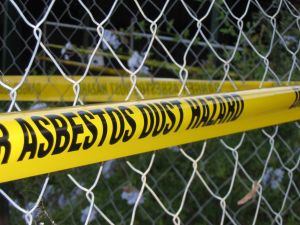
As buildings throughout Boston age and become depilated, some old buildings need to be torn down or demolished to make room for new growth and to remove dangerous and failing structures. Unfortunately, demolition of old buildings presents many dangers both for construction workers involved in the demolition and for the public as a whole. One such danger is the risks associated with asbestos.

Recently one Boston demolition firm has been fined $100,000 for violations involving a failure to report and contain asbestos materials. Our Foxboro construction injury attorneys are concerned that this demolition firm and other violators throughout the state are putting people at risk. 244234_asbestos.jpg

Demolition Presents an Asbestos Danger to Construction Workers & The Public
Many older buildings were constructed with materials, such as insolation, that contained asbestos. Unfortunately, when these buildings are demolished, the asbestos can be breathed in and can create a significant public health hazard. Breathing in asbestos fibers puts a person at risk of various respiratory problems and health issues such as asbestosis, a chronic inflammatory lung condition. Breathing in asbestos also puts a person at risk of developing a type of cancer referred to as mesothelioma. The consequences of breathing in asbestos, therefore, can be fatal.

Unfortunately, when an old building is demolished, the demolition process can create a very significant risk that asbestos fibers will be breathed in by construction workers doing the demolition and others in the area surrounding the demolition. This is why Massachusetts has strict laws on containing the asbestos and on reporting requirements prior to demolition work being done.

Some demolition companies, however, violate these rules and put everyone at risk. According to the Construction Demolition and Recycling website, a demolition company in Swampscott Massachusetts risked public health and safety when they failed to notify the Massachusetts Department of Environmental Protection of demolition work they intended to perform. In failing to provide appropriate notification, the company violated the state’s Clean Air Act.

The company not only performed a demolition without proper notice, but they also allegedly failed to remove and dispose of asbestos-containing materials in the manner required by law to ensure safety. The company demolished the building without first removing the asbestos and failed to use containment procedures both during demolition and during transport. Finally, the company took the asbestos-containing materials to a storage site in Revere Massachusetts that they were not permitted to use.

By failing in their safety obligations, the demolition company endangered the health of the construction workers’ performing the demolition. They also endangered people in the surrounding areas, which in this case included a heavily-traveled area in the Boston waterfront. Because of their violations, the company was required to pay a $100,000 civil fine.

Construction workers employed by the demolition company could also have a claim against the company who exposed them to asbestos if they develop medical problems or complications that can be tied to the toxic exposure.
Continue reading

The Food and Drug Administration (FDA) is responsible for regulating the drug and medical device industry in the United States. While the FDA has broad power when it comes to drugs and medical devices, many drug recalls are not done at the behest of the FDA but instead are voluntarily done by manufacturers who realize their products are dangerous. When the FDA recalls a drug product or medical device, it is because there are serious and proven complications associated with the drug or device.

In 2012, there were two products that the FDA recalled. One was called GranuFlo and one was called NaturaLyte. These products were dialysis products that were made by a company called Fresenius Medical Care. Our Boston dialysis malpractice attorneys want to make sure everyone is aware of the recall as well as of the impact that the recall has on the legal rights of patients who have experienced complications due to the defective dialysis products.1314902_medical_doctor.jpg

The Dangers of GranuFlo and NaturaLyte
GranuFlo and NaturaLyte are both alkaline substances that are administered to patients undergoing dialysis in order to neutralize the acid that can build up in the patients’ blood streams. Unfortunately, they also contain more of a substance called acetate that converts to bicarbonate in the body.

Doctors and care providers in dialysis centers who are not aware of this may not adjust the amount of bicarbonate that they administer to patients. The acetate in the GranuFlo and NaturaLyte can, therefore, lead to an overabundance of bicarbonate in the body. This creates a serious cardiac risk. As a result, dialysis patients given GranuFlo or NaturaLyte had a higher rate of sudden cardiac arrest.

On November 4, 2011, Fresenius sent out an internal memo alerting its own clinics of the increased risk of cardiac arrest. The memo indicated that 941 patients undergoing dialysis had experienced cardiac arrest at a total of 557 different dialysis clinics run by Fresenius. When Fresenius compared the patients at their facilities experiencing heart problems to a group of 80,000 other dialysis patients, they found that there was a significant increase in the risk of heart problems in patients with excess bicarbonate. In other words, their GranuFlo and NaturaLyte were putting people at serious risk.

Fresenius unfortunately sent their memo only to their own clinics, not to the other dialysis patients throughout the country who were using their products. These patients were left facing a great risk of heart attack. The F.D. A., however, stepped in to issue a class I recall. The FDA initiated the Class I recall on March 29, 2012. The recall stated that the manufacturer cautioned clinicians to be aware of the bicarbonate problem.

Class I recalls are the most serious type of FDA recalls issued. They are issued in situations where there is a reasonable possibility that using the recalled product could cause serious adverse health consequences or could cause fatalities. The fact that the recall was issued is a strong condemnation of GranuFlo as a terribly dangerous product.

The FDA recall not only helps to prevent more people from being harmed by the dialysis defects but it also provides strong evidence of the link between the dangerous products and the resulting harm (in this case, the increased risk of heart attack). This makes it easier for patients who suffer harm, or for family members of those killed by sudden heart attacks, to take legal action since the FDA recall can be used as proof that the dialysis products were unreasonably dangerous.
Continue reading

In the United States, there are approximately 400,000 Americans receiving dialysis. Unfortunately, those Americans were put at risk in 2012 because of a failure on the part of a company called Fresenius to warn doctors that its GranuFlo contained more of an ingredient that the body converts to bicarbonate. This was a problem because doctors failed to account for the extra bicarbonate, leading to a potential overdose.

Our Boston dialysis malpractice attorneys want to make sure patients and care providers are aware of the dangers of GranuFlo. We also want patients to understand that they may have legal rights due to the failure of Fresenius to act in making sure the risks of their products were properly disclosed. 1285558_injection_needle_macro_2.jpg

FDA Investigation Into Fresenius After Reports of Trouble
In July of 2012, the New York Times published an article informing the public that Fresenius was under investigation as a result of their behavior surrounding GranuFlo. The New York Times succinctly summarized the problems that had arisen with GranuFlo and the failures of Fresenius to keep patients safe.

The Times article pointed out that in November, the medical office at Fresenius sent an internal memo to doctors practicing in the company’s own dialysis clinic. The memo contained a warning that the failure of doctors to use GranuFlo properly was leading to a sharp increase in the risk of patients suffering a sudden and fatal cardiac arrest. The memo urged doctors to address the issue “urgently.”

Despite the fact that the memo clearly acknowledged that GranuFlo could be extremely dangerous when doctors failed to account for the extra bicarbonates being produced, Fresenius did not issue a widespread warning to other dialysis centers. Fresenius Medical Care not only treats around a third of all U.S. dialysis patients, but it is also the leading supplier of dialysis products. Their failure to issue a warning on the GranuFlo risks, therefore, led to a serious and widespread risk for all dialysis patients throughout the country.

The New York Times explains that this failure on the part of Fresenius came to the attention of the Food and Drug Administration, who launched an investigation into whether the company violated federal operating regulations. Although the FDA is the regulatory agency in the United States responsible for overseeing the safety of drug and alcohol products, they do not have the resources to individually test for problems and monitor for every single potential complication for every drug on the marketplace. They rely, in large part, on data from manufacturers as well as reports from independent studies and details on consumer complaints in overseeing the drugs already for sale. Fresenius’ failure to alert the public, therefore, is a major problem since they may have failed to fulfill their obligations under federal law.

The New York Times indicates that a spokesperson for the company argued that they had no way of getting in touch with the dialysis centers using their product except by medical journal and that the findings were still too preliminary for publication. The problem, however, is that the company could have made the effort to communicate with customers and instead they failed to do so, putting patients at serious risk.
Continue reading

The holiday season is a time when your kids probably got a lot of new toys. All of these new products coming into your home can provide your children with hours of fun over the holiday break and in the coming months. Unfortunately, they can also present a risk to your kids. The problem is that not every toy is safe and that parents often are unaware of recalls or dangers until it is too late and their kids have suffered an injury.

Every effort is made to try to stop defective and dangerous toys from coming into the country or being sold. Unfortunately, our Watertown personal injury attorneys know that bad toys still make it to the shelves and into people’s homes every day. As a parent, the best thing you can do is to become aware of toy recalls, to educate yourself about toy dangers and to supervise your kids as they play with new gifts. 1186433_old_games.jpg

The Latest Toy Recalls
On November 29, 2012, the U.S. Consumer Product Safety Commission (CPSC) released a news report on their joint efforts with U.S. Customs and Border Patrol (CBP). According to their report, they indicated that more than 2 million dangerous or defective items were kept out of the hands of kid this year as a result of CPSC and CBP efforts. Further, over the past four years, more than 8.5 million units of around 2,400 different toys and products have been seized at ports coming into the United States.

Despite the effectiveness of efforts to stop dangerous toys from coming into the U.S., kids still die each year as a result of incidents involving either imported or locally-made toys. The CPSC 2010 report on toy recalls indicated that there were 44 recalls in 2010 and that 15 kids died because of toys in 2009.

Avoiding injuries and deaths due to dangerous toys is a top priority in 2013 and in the future. To help ensure your child doesn’t become a statistic, keep up to date with the latest recalls on toys. Some of these recalls include:

  • The Izoard XP Bicycles. These bicycles were recalled by Wilier Triestina due to a fall hazard. Information on refunds or replacements can be obtained at (888) 849-7779.
  • Norco Havoc Bicycles from 2011. Norco is recalling the bikes as a result of the risk of cracking at the joint near the intersection of the down and top tube. For more information on the recall or a replacement, call (800) 227-5579
  • Bath seats from Dream on Me. The recall in this case was prompted by a drowning hazard. The seats tip over too easily, putting kids at risk. Call (877) 201-4317 to get your free replacement.

These are just a brief sampling of some of the latest toy and kids products that could present a danger. To make sure that your child has a safe holiday season, Recalls.gov provides you with a detailed list of appropriate websites to visit to learn all about recalls on all different products. The U.S. Consumer Product Safety Commission also maintains a page on their site dedicated to Recalls and Product Safety News that you can visit to keep up-to-date.
Continue reading

In early December, a Boston University student was killed when riding his bicycle. On the same day of the tragic death, a hearing had already been scheduled at City Hall to discuss efforts to make Boston safer for cyclers. The death of the young student has prompted the mayor to urge new bike safety efforts.

Our Foxboro personal injury attorneys are strong supporters of better bike safety measures. Bike accidents are very dangerous to riders since a bike provides no protection from the impact of a vehicle. Any steps that can be taken to improve safety and to make bike accidents less likely could potentially help to save lives. 1396741_cyclist_silhouette_1.jpg

Boston Bike Safety Programs
The hope is that the recent tragic bike death, along with encouragement from the mayor, will help to increase the focus on bike safety. According to Boston.com, however, there are currently a number of bike safety initiatives in Boston, although there is more work to be done. The Boston Bikes Program, for example, has been instrumental in helping to increase the presence of bicycle infrastructure in neighborhoods throughout Boston.

Some of the other safety measures that have been put in place to improve bike safety include:

  • Education on bicycle safety. Education targets both bicycle riders and drivers. For example, information on bike safety is included in all mailings that go out with parking violations. A Youth Cycling program also provides instruction to more than 4,000 young bicycle riders each year.
  • Engineering efforts to improve the bicycle network throughout Boston. The majority of streets in the city have been evaluated and recommendations will be made for how to create a better and stronger bicycle network. The improved network will include more bicycle lanes and also new solutions such as priority-shared lanes.
  • Enforcement efforts to prevent drivers from parking in bike lanes. According to Boston.com, more than 1,500 tickets were written by Transportation Department Officers to drivers illegally parked in bike lanes. Bike riders who don’t obey the rules, such as riders who drive through red lights, can also be ticketed.
  • Efforts to provide bicycles for all citizens and to increase ridership. A Roll it Forward Initiative, for example, has repaired more than 1,600 bikes and provided them to residents along with a bike helmet, a lock and bike education. This program, along with efforts to build a strong cycling community, is helping to increase the number of riders, which in turn increases public and legislative focus on bike safety.

Although tragic accidents like the death of the Boston student still occur, the hope is that with greater education and enforcement, as well as with more bike lanes and bike facilities, bike ridership will continue to grow and riders will become safer than ever before.
Continue reading

In April of 2007, a Northeastern Student went to a bar near the Massachusetts campus. According to Boston.com, tragically, the 21-year-old young student fell down the basement staircase at the bar, suffering a severe head injury that led to his death two days later. The family of the young man filed a wrongful death lawsuit against the bar and the owners were found not liable. A judge, however, ordered the owners of the bar to pay $6.7 million in damages to the family of the deceased student. The judge issued the order based on the bar’s violation of state consumer protection laws.

While the case is still being appealed, our Boston personal injury attorneys want to remind property owners that it is always better to be safe than sorry. We urge compliance with all consumer protection laws and we recommend that both property owners AND patrons take responsibility for avoiding a potentially deadly fall. 1243546_stairs.jpg

The Staircase Accident and the Bar’s Responsibility
In the case of the 21-year-old Northeastern student, the bar owners indicated that the injured student had not had permission to be on the stairs, which were in a private part of the building used by employees and not open to patrons. However, others testified that the owners of the bar and the managers were well aware that customers seeking a quiet place to talk on their cell phones routinely went into the area close to the stairs.

The stairs, however, present a very obvious danger. The stairs were built in the 1980s and they went from the kitchen to a downstairs basement where kegs of beer and other bar or restaurant supplies are kept. There were colored vinyl strips at the top of the stairs but there was no door because employees needed to be able to carry supplies up from below. Employees who used the stairs regularly repeatedly told managers that the steps were dangerous. The stairs had not been rebuilt or changed by the restaurant owners, who allegedly ignored the warnings.

The judge who awarded the damages indicated that it was plainly obvious that the steps were very dangerous and an accident waiting to happen. The judge also indicated that the staircase clearly wasn’t compliant with the building codes, and that the vinyl on the top of the steps obscured the young student’s view. Further, the stairs were lacking a required top landing and a required second railing.

Because the stairs were so dangerous, the bar owners were required to pay damages despite the fact that the young student who was killed had a blood alcohol content (BAC) more than twice the legal limit. The judge acknowledged that the student was under the influence but put forth the position that the student was a heavy drinker with a high tolerance who wasn’t experiencing typical signs of intoxication.

Although the case is being appealed, it serves as an important reminder that property owners or occupiers have an obligation to their patrons to follow all building codes and consumer protection laws. If they fail, they may face a lawsuit and significant legal liability. This may be true even if the consumer protection violation is in an ostensibly private area of the bar, if the restaurant managers are aware that patrons are using that space.
Continue reading

A great deal of attention is typically paid to nursing home abuse cases in light of the fact that around a million elderly adults suffer some type of abuse each year. Unfortunately, the elderly are not the only vulnerable group that may face sub-par care in residential treatment facilities. The elderly are also not the only group who may experience abuse from their caregivers and who may be harmed as a result. 1031747_hospital.jpg

Our Boston nursing home abuse attorneys want to alert you that group homes in Massachusetts have also been found to fall short when it comes to patient care. This puts the disabled and the mentally ill at risk since they depend upon group home care providers to offer the care that is promised.

Massachusetts Group Homes Failing Patients, Negligently Falling Short In Care

According to 90.9 WBUR Boston, the Massachusetts Department of Mental Health (DMH) has hired many private vendors to supervise group homes and care facilities for the mentally ill. Under the system established in Boston, more than 29,000 people are treated under a component of the state mental health system referred to as Community Based Flexible Supports (CBFS). Unfortunately, numerous high-profile incidents in recent years have suggested that the proper care is not being provided and that both patients and group home staff are at risk.

In one tragic incident, for example, a group home worker was killed by a resident with a long history of violence. In another tragic incident reported by WBUR, a 24-year-old mentally ill woman hung herself from a pipe in a closet. These incidents, and others like them, may have occurred because group homes are underfunded and understaffed.

A joint investigation by the New England Center for Investigative Reporting and WBUR also indicated that even six months after the suicide occurred, problems still persist that make group homes dangerous. DHM records also have bad news, as they show an increase in the number of safety violations and violent incidents between January 2009 before CBFS and February 2011.

Legal Responsibility for Injuries in Group Homes

When a patient who cannot care for himself or herself is accepted into a group home, the group home becomes responsible for providing reasonable supervision and care. If the group home fails to do so, then the home may be considered negligent and can be held legally accountable for loss. In the event that the group home’s failure to provide adequate care led to a death, then surviving family members may be able to bring a wrongful death claim.

Legal claims against group homes for failure to provide sufficient care can be complicated, however, as it can be challenging to prove that the death or injury to the resident occurred as a direct result of some negligent breach of duty. In some cases, determining who the appropriate defendant is may also be complicated.

Still, like abusive nursing homes that mistreat their patients, a group home that fails to live up to its obligations should be held accountable for the actions they have taken that led to harm.
Continue reading

According to the Worldwide Cleaning Industry Association, more than one million patrons of restaurants slip and fall each year. In addition, another three million food service employees are involved in a restaurant slip and fall. With so many falls and resulting injuries, the food service industry spends more than $2 billion on these injuries annually. The number of injuries and the money lost may also be growing, as the Worldwide Cleaning Industry Association reports that the rate of injuries in restaurants is increasing by about 10 percent annually. 1337952_rusted_neon_green_and_white_cafe_sign.jpg

Our Boston personal injury attorneys urge every restaurant owner and patron to be aware of the large number of slip and fall accidents in restaurants. We also wish to remind patrons and restaurant owners that the owner or renter/occupier has a duty to make sure the premises is reasonably safe for visitors who enter the restaurant.

How Restaurants Can Help Guests Stay Safe from Slip and Fall Accidents
Restaurants have a duty to their patrons to provide them with a reasonably safe environment. Because those who visit a restaurant are paying guests invited to the restaurant to do business, the owner or operator of the restaurant must regularly inspect the premises for any potential dangers that could impact the patrons. If there is a potential hazard or danger in the restaurant, then the owner or operator either needs to fix it (or have it fixed) so it is no longer dangerous or needs to warn patrons about the hazard when repair isn’t an option.

If a restaurant owner/operator fails to do as required and a patron is hurt as a result, the restaurant can be sued by the injured victim or by the victim’s surviving family members. As such, restaurant owners/operators should take affirmative steps to keep their guests safe and to avoid a potential lawsuit. These restaurants should:

  • Wipe up any spills immediately.
  • Warn patrons of wet floors and/or only mop/wash floors when the restaurant is closed
  • Ensure the restaurant is adequately lit to avoid a tripping hazard
  • Keep walkways and aisles free of debris or dirt that could create a tripping hazard
  • Maintain their parking lot to avoid fall risks

Inspecting the restaurant regularly for any potentially hazardous conditions is also important to avoiding injury and legal liability.

How Patrons Can Stay Safe from Slip and Fall Injuries
While the restaurant owner or operator is responsible for maintaining a safe premises, individuals visiting restaurants should also be aware of the potential risk and should do everything possible to stay safe. This includes watching for wet and slippery floors (especially when there are icy conditions outside and ice could be dragged inside). This also includes avoiding over-crowded and narrow restaurant aisles and being on the lookout for potential hazards and debris that could create a tripping risk.

Visitors to restaurants should avoid open and obvious hazards or dangers, but it is the job of the restaurant to take responsibility for making sure that no hidden or unexpected fall risks exist.
Continue reading

Contact Information