Recently in MBTA Accidents Category

August 5, 2011

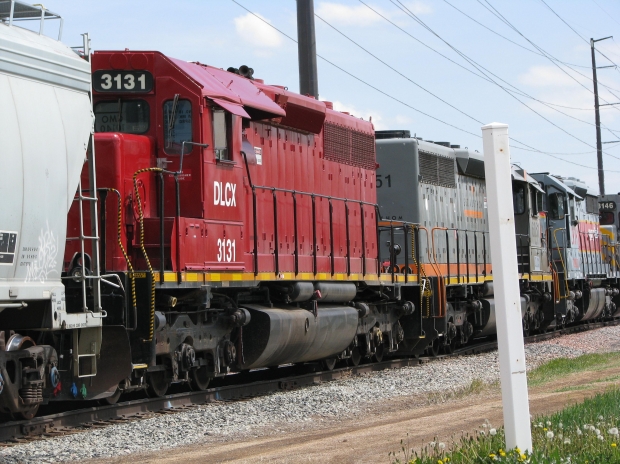
Train Accident Shuts Down AmTrack Trips between Boston and New York

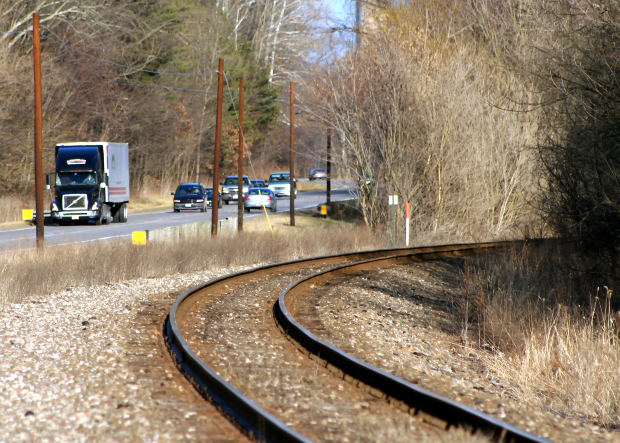
A large truck was the cause of canceled train trips after the driver ran his vehicle into an overhead power system near New Haven, Connecticut. The collision caused Amtrak to suspend all trains traveling between Boston and New York for more than three hours last week, according to The Wall Street Journal. Trains between New York and Boston were the only ones affected in the accident.
mHhqv44.jpg
Our Boston personal injury lawyers urge all residents and visitors to take advantage of the convenient public transportation options that are offered throughout our state. We would also like to take this time to raise awareness about the importance of passenger safety on these rides. This goes out to those traveling near these modes of mass transit as well. Transportation companies are responsible for providing safe transportation for residents and visitors of our city. A number of injuries that occur within mass transit accidents can be easily prevented by taking a few precautionary steps.

As we recently reported on our Boston Personal Injury Attorney Blog, the MBTA witnesses nearly 2,500 accidents each year that are caused by motor-vehicle drivers. The MBTA believes that roughly 500 of these accidents could be prevented.

New Haven police are investigating the AmTrak accident from earlier this week. No train passengers were hurt in the accident, according to Amtrak spokesman Marc Magliari.

Amtrak crews have already made repairs to the damaged tracks and to the overhead power system. Service between New York and Boston has been restored.

There are more than 600 railroads in the United States. About 200,000 miles of track help these trains navigate throughout the country. There have been about 12,000 train accidents annually since 2002. Unfortunately, these accidents took the lives of about 1,000 people. Train accidents can be caused by a number of factors, including the negligence of the train operator, lack of safety provisions by train companies, locomotives, trolleys and even motor-vehicle operators.

These companies are required by law to effectively protect all passengers and operators of their vehicles. These accidents can occur in any number of places, including at railroad crossings where light is dim and where signals fail to notify passenger vehicle occupants that a train is approaching.

Trains are also able to derail. This can happen because of mechanical failures or improper track and equipment maintenance. Speedy or fatigued drivers also contribute to these accidents. Oftentimes cargo can become loose or unsecured in the event of an accident, resulting in spills of hazardous waste or other dangerous objects.

Determining the cause and the fault of a train accident, or any other mass transit accident, can be a complicated and lengthy process. You are urged to seek an attorney if you've been involved in one of these accidents as they can help you determine fault and proper compensation.

Continue reading "Train Accident Shuts Down AmTrack Trips between Boston and New York" »

July 18, 2011

Seven Passengers in Hospital after Massachusetts Bus Accident

A Massachusetts bus accident sent seven Massachusetts Bay Transportation Authority bus passengers to area hospitals recently. The bus accident happened on Route 28 when a motorist reportedly made a sharp left turn in front of the MBTA bus and forced the bus driver to slam on the brakes to avoid a major collision, according to The Milford Daily News.

The driver of the SUV that cut off the bus, a 72-year-old Milton resident, was taken to Beth Israel Hospital in Boston and reportedly suffered a neck injury. The elderly driver will be cited for failing to yield when turning, says T spokesman Joe Pesaturo.
976884_bus_stop.jpg
We know that Massachusetts residents and visitors rely on this form of public transportation on a daily basis. We expect these buses to get us to and from our destinations safely.

Our Boston personal injury attorneys understand that these travelers also trust that the operator of these buses, trains and subways have completed proper training and possess safe, alert and cautious driving habits. Unfortunately, this is not always the case. According to the MBTA website, its drivers are typically involved in nearly 2,500 accidents every year. About 500 of these accidents are considered to be preventable. The MBTA buses take about 4.5 million bus trips every year. MBTA buses have been involved in 11 fatalities since 2000.

The injured bus passengers were from Randolph:

-Marie Dory, 60

-Felicia Florence, 45

-Connie Harding, 55

-Linda Whittaker, 48

-Evelyn Morales, 37

-Kennie Boulin, 21

-Jean Nelson, 39

The bus driver reports that the bus was heading north on Randolph Avenue when the SUV tried to turn left onto Chickatawbut Road in front of the bus. The driver says that the bus and the SUV still made some contact after she braked.

Luckily, about 350 buses of the MBTA fleet of more than 1,000 come equipped with eight cameras a piece. These bus cameras provide views of inside the bus, in front of the bus and on either side of the bus. Some MBTA subway cars and stations also have video cameras. These cameras can help implicate some people and vindicate others in the event of an accident.

According to the Federal Railroad Administration Office of Safety Analysis, nearly 40 MBTA accidents have been reported to have occurred from January to March of this year. During the first three months of 2011, there were 2 reported fatalities involving an MBTA accident or incident. In 2009, there were 221 fatal bus crashes reported across the United States. The same year in Massachusetts, there was one single bus accident that resulted in a fatality.

We rely on the operators of these buses every day to travel our roadways safely. With the proper training, cautious driving techniques and safe driving habits, we can all hope to enjoy public transportation without injury.

Continue reading "Seven Passengers in Hospital after Massachusetts Bus Accident" »

June 4, 2011

Two New Locomotives to MBTA to Save Money and Reduce Risk of Injury in Boston Train Accident

The Massachusetts Bay Transportation Authority (MBTA) recently purchased two advanced locomotives from the Utah Transit Authority (UTA), making for the newest editions to the fleet in decades. These new additions were picked up by the MBTA because they were not only more fuel and energy efficient, but they meet new safety regulations. With these new locomotives, passengers are expected to be better protected during a train accident Boston and elsewhere throughout the area.
1295277_tren.jpg
"These new locomotives are more fuel efficient and more reliable, improving on-time performance for the benefit of the commuters," said Massachusetts Lt. Gov. Timothy Murray.

Many residents and visitors use our public transportation system for quick and efficient travel throughout the area. However, riding on our subways and trains is not always a safe endeavor. Riding public transportation comes with its own risks. Our Boston personal injury attorneys have reported incidents involving the MBTA and the injuries caused to residents and visitors involved in these mishaps. Riders must put total trust in the drivers and rely on these drivers to get them to their destination safely and in a timely manner. If you are injured in one of these accidents, it is critical that you contact an experienced attorney to help you to fight for your rights against these large transportation companies.

The upgrades to the fleet are expected to lower fuel costs, prevent unnecessary idling and reduce nitrogen oxide levels by 20 tons per engine annually. The reduced fuel usage is expected to save nearly 40,000 gallons of fuel and roughly $80,000 per locomotive each year, according to Government Technology.

"We were able to utilize this technology on the new locomotives," said Steven Mudge, the MBTA's director of vehicle engineering, "because in the older [locomotives], if you were to shut down the main engines, then you'd also shut the lights, air conditioning and heat off on all the coaches behind it."

After calculating the total cost savings the MBTA is considering to update all of their rail fleets to these more fuel efficient cars. The MBTA was able to purchase these new locomotives when the recession reduced the need for Utah's rail fleet.

"We wanted to have extra locomotives available as our system grew and as we increased our frequency," said Mudge. "But we were really planning for long range -- a 2030 time frame."

The new train purchases are part of a larger procurement plan by the MBTA. Back in July of 2010, the Massachusetts Department of Transportation board of directors approved a near $115 million contract with Idaho-based Motive Power to supply 20 new diesel-electric locomotives. These 20 locomotives are not expected to be in service until 2013.

The MBTA is currently operating under a contract with the Massachusetts Bay Commuter Railroad Co. The current contract includes their fleet of more than 400 coaches and 80 locomotives that carry about almost 150,000 passengers roundtrip every weekday.

"Some of this equipment that was originally built in '79 is getting fairly expensive to maintain," Mudge said, "and we're facing obsolescence on a lot of the components we need on a day-to-day basis."

Aside from the technology efficiencies, these newly purchased locomotives come equipped with improved safety features. These features meet the American Public Transportation Association's crashworthiness standards,

They also include conventional strength-based requirements for equipment used at less than 125 mph, dynamic sled testing of occupant seats and crash-energy management for equipment used above 125 mph.

Because of previous accidents, MBTA's director of vehicle engineering says they've pushed to employ crashworthiness techniques and crumple zones to ensure crew and rider safety in the event of an accident.

Continue reading "Two New Locomotives to MBTA to Save Money and Reduce Risk of Injury in Boston Train Accident" »

February 26, 2011

Winter increases risk of slip-and-fall, accidents on MBTA property

Our Boston personal injury lawyers know busy commuter systems increase your risk of slip and fall injuries during winter months. We have noted on earlier posts to our Boston Personal Injury Attorney Blog issues regarding the MBTA.

The Boston Globe reports the brutal winter is taking a heavy toll on commuters, the Department of Transportation and the Massachusetts Bay Transportation Authority. Bitter cold temperatures and high snow totals have taken their toll on the state's snow removal budget, the T, and the roadways.
989112_checking_the_mail.jpg
Eight big storms have averaged 34 hours of plowing or salting apiece, and 6 highway districts needed trucks to remove snow or ice on at least 18 occasions. District 1 (Western Massachusetts) had trucks go out 24 times and District 3 (which has 77 communities including state roads in Worcester and Framingham) needed trucks 31 times.

Due to heavy snowfall the roofs on 4 of Massachusetts' 140 salt barns have collapsed. These barns are used to store the salt around the state for use on roadways. So far $75 million has already been spent and another $10.9 million has been billed. The cost to fix the salt barns has not been added to these amounts. Considering the fact that the state is $22.5 million over budget for snow removal, the Department of Transportation will need help from lawmakers to get through the rest of the winter.

On the T, disruptions and delays were abundant on the Red and Orange Lines. It could be due to their aging cars, all cars on the Orange Line were bought in 1979 and about 1/3 of the Red Line cars were bought in 1969. A useful life for one of these cars is 25 years according to the manufacturer. The 5- and 6-year-old cars on the Blue Line have performed well in the tough winter conditions.

A review of all Red and Orange Line cars will be conducted to see what can be done to keep them in service-ready condition.

The aging commuter rail system has had its share of snow-related track problems and breakdowns, causing headaches to thousands of commuters. Though two new surplus locomotives arrived two weeks ago, it is little help for a fleet of 80 locomotives and 400-plus coaches that are 30+ years old. At a cost of $300+ million the delivery of 20 locomotives and 75 coaches is over a year away.

Analysts and officials believe it will take about $3 billion to address the T replacement, vehicle and infrastructure maintenance needs.

Continue reading "Winter increases risk of slip-and-fall, accidents on MBTA property" »

January 1, 2011

Driver pleads guilty, admits to texting, in Boston MBTA Subway accident that injured more than 60

The driver responsible for a Boston subway accident that injured more than 60 people has admitted to text messaging at the time of the accident and pleaded guilty to criminal charges in connection with the May 2009 rush-hour crash, the Associated Press reported.

As our MBTA injury lawyers have reported, the crash lead to tough new rules preventing MBTA employees from using cell phones while on the job.
550783_boston_chinatown_t.jpg
The driver pleaded guilty in Suffolk Superior Court to gross negligence by a person in control of a common carrier. He was sentenced to two years of probation and 100 hours of community service. He admitted to texting his girlfriend in the moments before the accident at the Government Center subway stop. He ran through red and yellow warning lights and crashed into the two-car train ahead.

He was fired. The assistant district attorney had asked for a six-month jail sentence, citing the number of injuries and the cost of the crash -- which has been tagged at about $10 million.

The driver submitted a letter of apology to the court.

"Not a day goes by where I am not reminded of the suffering that my actions caused and the broad impact of my accident," he wrote. "I pray that one day I will be able to make amends in some ways to the affected persons."

Several personal injury lawsuit remain pending as a result of the accident.

Since the Massachusetts Bay Transportation Authority enacted the ban, which prohibits operators from possessing cell phones or similar devices while on the job, 22 MBTA employees, including bus and train workers, have been discharged or suspended for violating the policy.

Continue reading "Driver pleads guilty, admits to texting, in Boston MBTA Subway accident that injured more than 60" »

November 11, 2010

Report on Boston MBTA accident due soon; text-messaging driver believed responsible

Transit workers had no warning of a Boston trolley accident allegedly caused by a text-messaging driver, the Boston Herald reported.

As our Boston personal injury attorneys have reported, the accident injured dozens of passengers and led to a new rule forbidding transit drivers from using cell phones. The Massachusetts Bay Transportation Authority accident has been blamed on the driver's inattentiveness. This week, the National Transportation Safety Board released dozens of documents related to its investigation of the May 2009 Boston train accident. Its final report isn't expected for several months.
550783_boston_chinatown_t.jpg
The 24-year-old operator was reportedly text messaging when he ran through yellow and red warning lights and into the two car train ahead of him at the Government Center and Park Street stations. He was fired and charged with felony grossly negligent operation.

The crash led to a strict policy against cell phone use on the job. Violations result in a 30-day suspension and a recommendation that the employee be fired. At least 22 drivers have been disciplined since the new policy went into effect.

Continue reading "Report on Boston MBTA accident due soon; text-messaging driver believed responsible " »

September 7, 2010

MBTA accidents can involve premise liability, negligent security

In late August, a passenger on the MBTA Green Line D-line train was reported to have briefly come aboard with a snake around his neck, causing a nine-minute stoppage in service. Less than a week later, a 16-year-old Roxbury teen was arrested after his probation office identified him as the suspect in a stabbing on the MBTA Route 23 bus, the Boston Herald reports.

Boston injury attorneys with the Law Offices of Jeffrey S. Glassman, LLC, bring more than 18 years experience in Massachusetts personal injury matters. We understand that providing a safe environment for guests and employees is a primary concern for any business owner. Our team knows that in cases where security is questionably sufficient, a negligent security claim may be filed against a property or business owner when a victim is injured by a third party in a preventable situation.
550783_boston_chinatown_t.jpg
A fire and an escalator accident were also recently reported on MBTA property, leading to renewed questions about the system's security.

The alleged suspect in the Route 23 incident was captured in several frames by MBTA cameras. He is accused of stabbing a 47-year-old fellow rider multiple times in the arm, leg and abdomen as the bus left Ruggles Station after the pair exchanged words. After the incident, the victim was transported to Brigham and Women's Hospital. Meanwhile, authorities turned to the social networking website, Twitter, to enlist the public's help while searching for the juvenile.

Continue reading "MBTA accidents can involve premise liability, negligent security" »

August 27, 2010

"Legitimate" hand-held radios still increase risk of MBTA bus and subway accidents in Boston

The Massachusetts Bay Transportation Authority has resorted to using bright reflective logos on approve handsets to distinguish between employees using a radio for legitimate work purposes and those violating the T's ban on cell phone use by drivers, the Boston Herald reported.

Officials hope the move will further reduce the risk of a Boston subway accident or bus accident caused by a distracted driver. With or without the law, a mass transit driver's obligation is to the safety of passengers. When an accident is caused by speeding, distracted driving or other negligence, serious and fatal injuries frequently result. Such cases usually involve multiple accident victims and should always be handled by an experienced Massachusetts injury lawyer.
550783_boston_chinatown_t.jpg
Some confusion has reportedly arisen when riders spot bus drivers and subway operators using the black hand-held radios utilized by the transit system. By putting the bright stickers on the radios, they apparently hope to ease the minds of commuters.

The MBTA banned employees from carrying cell phones after a trolley accident in May 2009. The crash was blamed on an operator texting his girlfriend. Since enacting the rule, about a dozen employees have been fired and 10 others have been disciplined.

We question how using "approved" handsets can be safer. Certainly, employees will not be making personal calls on company time. But whether they are personal or business calls, the use of a hand-held device still constitutes a significant driver distraction. I guess accident victims can take heart in the fact that the next crash was caused by an operator using an approved radio as part of his job!

The stickers were put into use after nearly 150 commuter tips of operators violating the cell phone policy; officials contend most of those cases involved workers who were using "legitimate radios."

Continue reading ""Legitimate" hand-held radios still increase risk of MBTA bus and subway accidents in Boston" »

July 28, 2010

Boston escalator accident on MBTA property may also involve product liability claim

An 8-year-old tourist has been hospitalized after being seriously injured in a Boston escalator accident at a MBTA station, according to NECN.

Instead of heading to Maine for a family wedding the girl is at Massachusetts General Hospital for Children, where she is being treated for a serious foot injury that could result in amputation of her big toe.

The incident occurred after a family outing for dinner on Monday night. As they were taking the T back to their motel, Neil's plastic Croc shoe got tangled in the escalator. The escalator reportedly kept churning even after the girl's father and an attendant began pounding on the kill switch.

By the time the girl was freed, part of her foot was crushed.

Part of the blame could rest with the Croc shoes, which have been linked to serious escalator injuries for years. In such cases, a Massachusetts product liability claim may be filed to recover damages for an injury victim.

But that doesn't answer questions about why the escalator kill switch failed. Last year, an elderly Boston woman strangled to death when the kill switch failed on a T escalator.

The MBTA's words of wisdom? Parents should be "extra vigilant" when traveling with children. Sorry, but passengers are not required to use "extra vigilance" to protect themselves from poorly maintained escalators or other negligence conditions on MBTA's property.

That is MBTA's responsibility and the system can and should be held liable for the damages that result -- both to compensate injured victims and to ensure that corrective action is taken that prevents a similar incident from occurring in the future.

Continue reading "Boston escalator accident on MBTA property may also involve product liability claim" »

April 27, 2010

Boston college hockey champs involved in car accident with MBTA trolley

Members of Boston College's national championship hockey team are among seven teenagers charged after an accident with an MBTA trolley early Sunday morning, the Boston Globe reported.

The Boston car accident occurred when a Jeep carrying seven teenagers tried to make a U-turn across the tracks on Commonwealth Avenue near Greycliffe Road. The Jeep struck an outbound train heading for Boston College shortly after midnight, according to a MBTA spokesperson.

The driver and three passengers were transported to city hospitals with non-life-threatening injuries, according to a college spokesperson. The MBTA reported that the other three passengers took themselves to St. Elizabeth's Medical Center with minor injuries after fleeing the scene.

Three of the teens are members of the National Championship hockey team at Boston College.

Police reported finding Vodka in the Jeep and all seven teens face charges of underage alcohol possession. The Jeep was heavily damaged and a bar connecting two of the trolley cars was also damaged. The investigation is ongoing.

The Boston Herald reported that the trolley driver had no time to stop and said several of the teens tossed alcohol from the car as they fled the scene.

The driver of the vehicle said she had not been drinking and a spokesperson for the college told the Herald that police reported alcohol was not a factor in the crash.

Continue reading "Boston college hockey champs involved in car accident with MBTA trolley" »